

Audio By Carbonatix
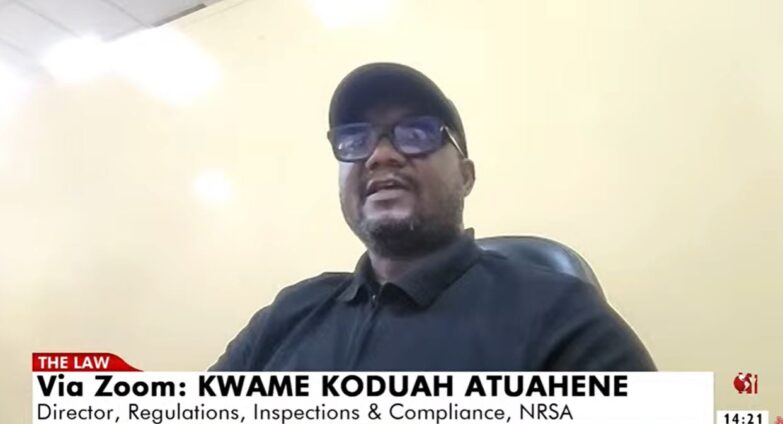
Director of Regulations, Inspections and Compliance at the National Road Safety Authority (NRSA), Kwame Koduah Atuahene, says motorists stopped by the police during traffic-related interactions have the right to record the encounter on their mobile phones, and such recordings may be admissible as evidence in court.
Speaking on JoyNews' The Law on Saturday, August 16, Mr Koduah Atuahene said motorists should be aware of their rights when interacting with police officers on the road.
He explained that when a police officer stops a motorist, the person can use a mobile phone to record the interaction.
According to him, such a recording could become important evidence if a dispute arises between the motorist and the police officer.
“If a police officer stops you, you can use your phone to record the interaction. That can be admitted in court as evidence,” he said.
He urged motorists who choose to record their interactions to continue documenting the encounter if they believe the officer is acting improperly.
He said motorists can inform officers that the law allows them to record the interaction and preserve the recording as evidence where necessary.
The use of technology in traffic enforcement, he added, would help strengthen the documentation of road offences and reduce disputes over what occurred during traffic stops.
He explained that automated traffic enforcement systems could also provide independent evidence by capturing vehicles involved in offences such as overspeeding and running red lights.
The system could record a vehicle’s registration number, identify its owner through a database and generate a notification containing details of the alleged offence.
Motorists could also be provided with access to video footage of the offence, allowing them to review the evidence.
Mr Koduah Atuahene said recorded evidence could improve accountability and transparency in traffic enforcement while helping both motorists and law enforcement officers establish what occurred during an incident.
He, however, stressed the need for police authorities to ensure that technology used for traffic enforcement is secure and that the public is properly informed about official traffic violation notifications.
He said this would help prevent fraudsters from sending fake messages and malicious links to motorists under the guise of traffic enforcement notices.
According to him, increased use of recorded and automated evidence could improve the enforcement of road traffic laws and strengthen the integrity of cases brought before the courts.
Latest Stories
-
Ethiopia’s army promises restraint amid fears of new civil war
24 seconds -
Amin Adam calls for review of fuel taxes as diesel prices remain above GH¢18
32 minutes -
World Vision Ghana, Ahafo districts sign MoU for universal WASH coverage
1 hour -
When the gold engine stutters: What Ghana’s Cedi and reserves are telling us about the new economic architecture
1 hour -
Two reportedly die after being trapped in mining pit at Juaboso
1 hour -
Petrosol cleans up Wa Municipal Hospital, to donate medical equipment
2 hours -
‘If NPP was ‘insensitive’ over fuel prices, NDC must accept same description now’ — Amin Adam
2 hours -
KiDi brings the hits to London in sold-out UK headline concert
2 hours -
The last goodbye of Ghanaian shot dead in the US
2 hours -
MCC opens door to Ghana again as MiDA revives development partnership
2 hours -
CSIR moves to turn scientific research into jobs, national growth
3 hours -
More patrons troop in as 3rd Republic Bank-JoyNews Habitat Fair clinic enters final day stretch
3 hours -
German, Russian foreign ministers hold rare talks amid rising tensions
3 hours -
Gov’t to develop policy for Ghanaian Sign Language in education
3 hours -
Accra Academy defend ODADEƐ ’90 5-a-side title
3 hours