

Audio By Carbonatix
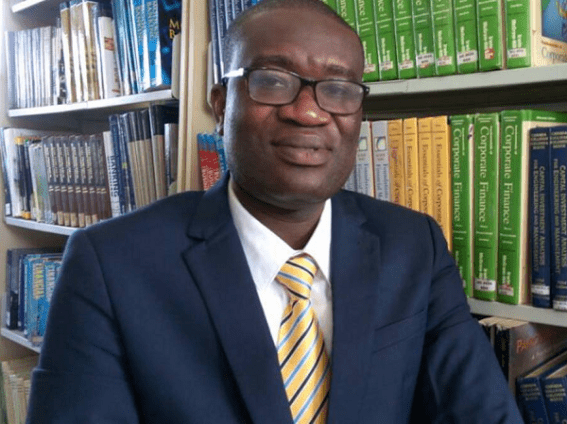
A Senior Finance Lecturer at the University of Ghana Business School, Dr. Benjamin Amoah, has forecast it will take not more than two years for banks to start paying dividend to shareholders after the shocks from the Domestic Debt Exchange Programme (DDEP)
His prediction follows a directive by the Bank of Ghana prohibiting the payment of dividends due to the programme.
According to him, the move by the Central Bank is in the right direction since it will help banks present plans to meet the recapitalization schedule.
The Bank of Ghana argued that, further incentives to banks to expedite the process will include restrictions in risk exposures, and enhanced monitoring for those that do not meet minimum Capital Adequacy Ratio, and support for early recapitalization from the Ghana Financial Stability Fund (GFSF).
It explained that, any government support for recapitalization will be designed to incentivize private capital injection and will be conditional on reforms to improve long-term profitability.
Reacting to this development, Dr. Amoah appealed to shareholders to exercise restraint as good days are yet to come.
“If for a year or two in the face of the current difficulty, you are a bank shareholder or owner and you’re being tasked to hold on, and get what is deservedly yours, I don’t think it should hurt. They should be patient, good days are yet to come”, he advised.
Dr. Amoah added that the decision will help restore stability and resilience in the banking sector.
He is optimistic the sector will soon see a rebound since banks play crucial intermediary role in the distribution of money.
He recalled that the economy has gone through such turmoil and has recovered from the shocks.
“We have had instances like this in the past in 2018 during the banking sector clean-up. A similar directive came. We saw a resilient and robust banking system later”, he stressed.
Banks told to submit recapitalization plans by September 2023
The Bank of Ghana gave banks up to the end of September 2023 to provide their recapitalization plans.
This follows the impact of the Domestic Debt Exchange Programme Domestic Debt Exchange and the challenging operating environment that has eroded the minimum capital of some banks.
According to the Governor of the Bank of Ghana, Dr. Ernest Addison, the regulator will ensure all banks comply.
He pointed out that the banks minimum capital requirement will be increased from the current ¢400 million.
Responding to a question at the Monetary Policy Committee of the Bank of Ghana press briefing, the Governor of the Bank of Ghana, Dr. Ernest Addison, said “The impact of the exchange has been to reduce the capital buffers of banks. So if you look at the analysis that was done when we take cognizance of the three percent additional buffer the banks will need to add up to their capital”.
Latest Stories
-
The Ghanaian prophet and the mysterious death of his scottish wife Charmain Speirs
8 minutes -
Nearly 400 sentenced in Nigeria for links to militant Islamists
30 minutes -
Ghana’s recovery supported by gold strength despite global oil price pressures – Standard Bank Research
37 minutes -
Kwaku Azar writes: A-G vs OSP
1 hour -
Mfantsipim–Adisadel rivalry built excellence, not division – Sam Jonah
2 hours -
Vice President launches Mfantsipim’s 150 years of shaping Ghana’s greatest mind
2 hours -
I assure Otumfuo, Mahama will join him to commission KNUST Teaching Hospital by end of this year – Haruna Iddrisu
3 hours -
Barcelona dominate derby to extend La Liga lead
3 hours -
Gov’t to roll out free special education for persons with disabilities from July 1 – Education Minister
3 hours -
Importers and Exporters Association declares full support for Publican AI port system
3 hours -
“We used it to test our officiating officials’ readiness” – Bawah Fuseini after CAA Athletics event
3 hours -
Volleyball emerges as Ghana’s fastest rising sport
3 hours -
National Sports Fund needs strong leadership from the top – Administrator David Wuaku
4 hours -
JoySports Exclusive: Steve McLaren in talks with GFA after expressing interest in Black Stars job
4 hours -
Fire guts auto parts warehouse at Bubuashie, one fire officer injured
4 hours