
Audio By Carbonatix
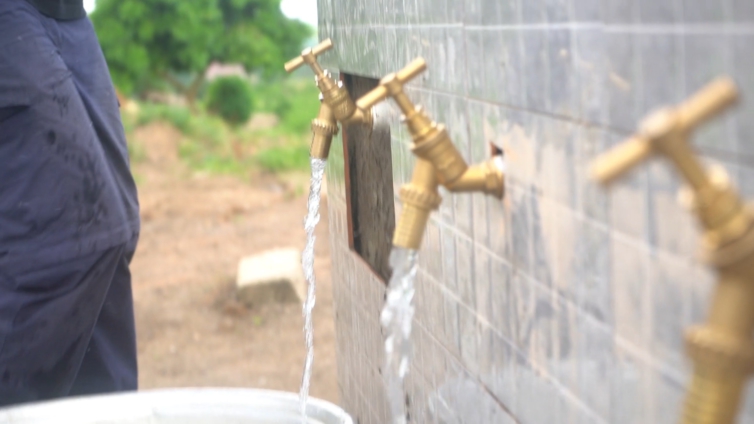
The Public Utilities Regulatory Commission (PURC) says consumers are now paying 1 Ghana cedi extra on every water bill they pay to enable the Ghana Water Company to properly treat water at the various pumps.
According to the Commission, this has become necessary due to the high cost of water treatment caused by illegal mining activities also known as 'galamsey.'
Already, the Ghana Water Company has warned that it may be forced to shut down some treatment plants due to the impact 'galamsey' is having on its operations.
Speaking to JoyNews, the Executive Secretary of the PURC, Dr Ismael Ackah said the increase in tariff is to help keep Ghana Water Company and its treatment plants running.
“For water, the major drivers, one is electricity. However, because we said the industrial customers will experience no increase, this time it didn’t have any effect.
"The (second) major driver for water is the cost of chemicals. So before recently, they were using chemical for water treatment, now what they have moved on to is what we call Colima, which is about two and half times more expensive than what they were using previously. Because of galamsey and others, they have to treat the water, go through a process over three times what they used to do, so the cost of water has really gone up. If your bill was a 100, you are paying 1 Ghana cedis extra," he explained.
Touching on the decision by PURC to exempt industries from the 4 and 1 percent tariff adjustment for electricity and water, Dr Ismael Ackah said the intention is to save jobs.
According to him, there had been a threat by owners to relocate their operations to neighboring countries with lower tariffs.
“Industries pay more than they should pay so that residential customers will at least have some space to breathe. But this is also affecting the cost of operation by industries, so we have heard from the AGI that some companies are actually moving their base from Ghana to Cote D’Ivoire or Nigeria where industrial tariffs are lower.
"The second thing is that some are cutting cost. They are introducing some efficiency measures but normally, this affects human resource. So if the cost of production is going up, 'why don’t we lay off at least some five people so that we can pay the electricity bill' therefore we thought that at least we should do it gradually to bring industry to their cost of service with the hope that this will help reduce their cost of production and help them employ more Ghanaians, so that is the intention."
Dr Ackah further stressed that PURC continues to put measures in place with the Ghanaian consumer in mind.
“When we take ECG’s data, the number of people who we consider life-line are about seven hundred and thirty thousand. When you go to NEDCO, for them about 80% of their customers are life-line. So together we are talking about 1.5 million people who are experiencing no increment at all.
“So those the World Bank even identified, we have gone beyond that and it is not just because the World Bank brought the report but we also see that at times, you are even home looking for a job and we have increased one, we have increased two, so let us break so that people can also have some relief.”
He told JoyNews' Evans Mensah that the conditions set to address the energy sector by the IMF are on course.
“We used to have what was called automatic adjustment but now it is called quarterly adjustment.
"The IMF is not asking us to bring the quarterly adjustment back, no. We have it and it's published on our website. But what they are saying is that in order not to build debt in the sector, PURC should be consistent in implementing it, so that if there are any financial gaps when we implement, at least it helps to pay, and we won’t go into 2025 saying energy sector debt is this, and government may have to introduce taxes and so many other things.
“Consistency helps to reduce the debt," he added.
The Executive Secretary emphasised that, "IMF is in town but look at June, we should have done 27% but the Board decided that that will be too much so why don’t we take 450 million out of the 27% and that brought the tariff to 18% and that was what we adjusted with.
"So yes, the IMF is there, the World Bank is there but we also looked at the welfare of the Ghanaian. Yes, we don’t have to build debt, but we can’t also kill Ghanaians, so the IMF is a factor but we made the decision even before that.”
Latest Stories
-
Jinijini–Sampa road to be completed by 2027 — Mahama
23 minutes -
Afroman wins legal battle over songs mocking US police
35 minutes -
MTN Ghana deepens role in national growth with record tax contributions and expanded investments
37 minutes -
Kevin Spacey and accusers settle before civil trial
46 minutes -
Premier League extends £30 cap on away tickets
56 minutes -
Oyarifa Police arrest pastor over alleged sexual abuse of 9-year-old stepdaughter
1 hour -
Haaland invests in new global chess tour
1 hour -
Denounce ‘abject’ Afcon decision – senior CAF member
1 hour -
Ashanti Police arrest 12 suspects in robbery, link 3 to Kusasi Chief murder at Asawase
1 hour -
Uefa calls leagues to summit over ‘microscopic’ VAR
1 hour -
Ghana’s Ambassador to US meets White House Task Force over 2026 World Cup
2 hours -
Fifa rules women’s teams must have female coaches
2 hours -
Mahama engages Bono residents, outlines key projects under Resetting Ghana tour
2 hours -
Former CDS General Thomas Oppong‑Peprah honoured by France
2 hours -
President Mahama urges MMDCEs to ignore enemies of progress, focus on performance
2 hours