

Audio By Carbonatix
The Public Utilities Regulatory Commission (PURC) is in the process of computing the necessary figures to announce approved water and electricity tariffs for the period 1st January to 31st March, 2023.
This is in line with the Commission’s Quarterly Tarrif Adjustment (QTA) policy.
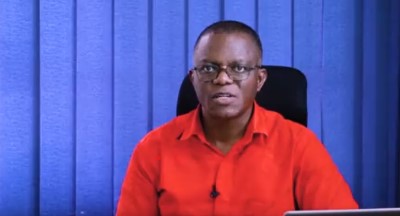
The pending tarrif review was announced by the Director of Research and Corporate Affairs of the PURC, Dr. Eric Kofi Obutey on the sidelines of a stakeholder engagement session in Accra on Monday.
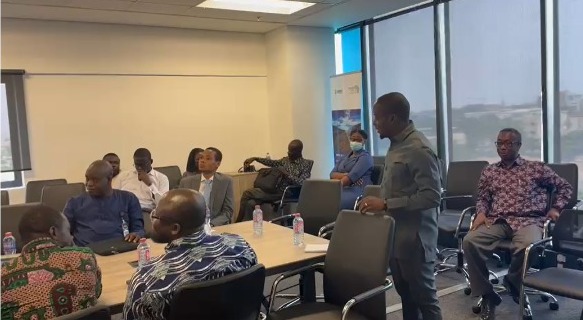
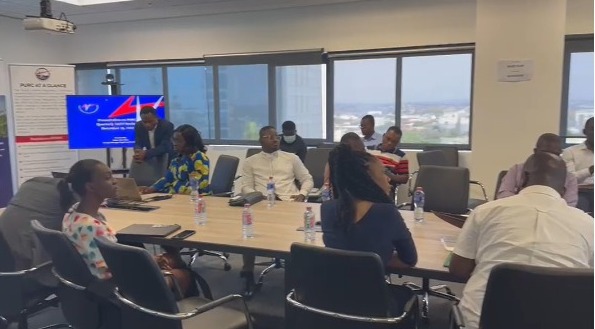
Stakeholders present at the meeting included representatives of the Ministry of Energy, Consumer Protection Agency and Media personnel.
According to Dr. Obutey, the QTA enables the Commission to reflect changes in macroeconomic variables in the operations of utility service providers. These variables are; inflation rate, foreign exchange rate and the cost of natural gas, electricity and water supply.
The QTA also helps in minimising the effect of changes in the macroeconomic and market-driven variables, as well as delays associated with passing on such effects to consumers and utility service providers within the tariff control period.
Dr. Obutey could however not say whether the yet to be announced tarrif will be lower or higher than the current one.
“We are in the process of computing the figures. When we finish, we will submit it to our Board, which will in turn present it to the government, after which the announcement will be made,” he explained.
He stressed that in arriving at the tarrif, utmost consideration will be given to ensuring that utility providers stay in business, while ensuring that consumers do not suffer.
“In all that we are doing, we want to ensure that the utility providers are financially sustainable. We do not want the recurrence of erratic power supply which we refer to in Ghana as ‘dumsor’. We will also ensure that the interest of the consumer is not compromised,” he explained.
Speaking at the same event, the Executive Secretary of the PURC, Dr. Ishmael Ackah disclosed that the Commission will introduce net metering next year.
Net metering is an arrangement whereby excess generated Renewable Energy are fed into the national grid by contracted customers.
Dr. Ackah explained that “under this system, customer generators are credited in kWh for electricity supplied to the grid. This will be done in close collaboration with Energy Commission in the identification of 35 Customer-Generators.”
So far, Net Meters have been installed for all Customers but in series with their existing Prepayment and Postpaid meters. These meters will be configured to be read remotely and electronically.
The stakeholder engagement session was held in collaboration with the USAID and the West African Engineering Project (WAEP).
Latest Stories
-
One dead as train travelling 99mph collides with lorry in France
4 minutes -
Airlines cut flights and hike fares as fuel prices surge
21 minutes -
Kane inspires Bayern to first-leg advantage over Real Madrid at Bernabéu
32 minutes -
Wireless Festival cancelled after Kanye West blocked from coming to UK
40 minutes -
Wa West MP commissions five boreholes for the benefit of his constituents
40 minutes -
Havertz’s late strike hands Arsenal narrow first-leg advantage over Sporting
42 minutes -
Damang mine award: Minority not against Ghanaian participation; we’re asking for fair process – Konadu
1 hour -
NPA to enforce stricter registration rules for petroleum tankers
2 hours -
Manhyia South MP laments decline in hospitality operations in his constituency
2 hours -
How a simple clean charcoal innovation could benefit Ghana’s climate future
2 hours -
NPA, COMAC launch Safety Week 2026 to promote risk management in petroleum sector
2 hours -
Stakeholder engagement resolves onion trade impasse
2 hours -
Gender Ministry holds staff durbar, welcomes new Chief Director
2 hours -
Unexpected illness sparked my radio career – Tommy Annan-Forson
2 hours -
Bolt Ghana awards GH¢50,000 to women entrepreneurs through “She Moves to Win” campaign
2 hours