

Audio By Carbonatix
Ghana lost nearly $941 million in a single cocoa trade deal after buying beans from farmers at $7,200 per tonne to settle pre-existing contracts priced at just $2,600 per tonne, Dr Peter Boamah Otokunor, a senior presidential official, has revealed.
The staggering loss, he says, lies at the centre of the liquidity crisis that has left hundreds of thousands of cocoa farmers unpaid since November 2025.
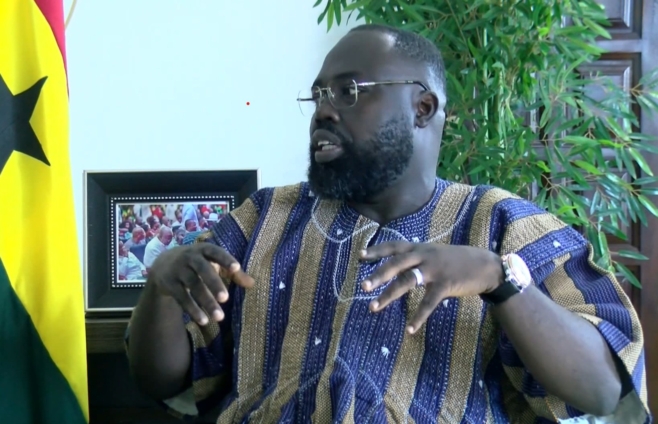
Dr Peter Boamah Otokunor, Director of Presidential Initiatives in Agriculture and Agribusiness at the Office of the President, explained the situation in an interview with JoyNews’ Gemma Appiah following field engagements with cocoa farmers in the Western Region, where many remain frustrated over delayed payments.
“You are buying cocoa at $7,200 from the cocoa farmer per tonne, then you go and use it to pay a $2,600 per tonne contract,” Dr Otokunor said.
“You can imagine the loss. When you do the estimations, we are losing almost about $941 million from that trade alone.”
He explained that around 240,000 metric tonnes of cocoa were used to service inherited rollover contracts from the previous administration, while the remaining volume was sold on the international market at unfavourable prices.
COCOBOD entered the 2025/26 season carrying an estimated GH¢60 billion in total liabilities, including GH¢17.8 billion in loans and GH¢26.5 billion in cocoa road contracts awarded between 2014 and 2024. According to Dr Otokunor, these rollover contracts effectively trapped the new government into selling premium-priced cocoa at rock-bottom legacy rates.
Compounding the challenge, COCOBOD did not secure syndicated financing for the 2024/25 or 2025/26 seasons, abandoning a 32-year-old model that had historically provided critical seed funding for Licensed Buying Companies to purchase cocoa at harvest.
Without that financing pipeline, the losses from the rollover contracts left COCOBOD without sufficient liquidity to pay cocoa farmers and other stakeholders down the value chain.
The revelation sheds light on the complex financial pressures behind the government’s recent cocoa price adjustments and explains why the administration has been engaging farmers directly to clarify the situation.
Ghana’s cocoa sector employs about 800,000 farm families across 10 regions and remains one of the country’s key foreign exchange earners, generating roughly $2 billion annually.
Dr Otokunor said the Mahama administration remains committed to addressing the liquidity crisis while ensuring sustainable reforms in Ghana’s cocoa industry to prevent similar disruptions in the future.
Latest Stories
-
Trump says he is considering firing US ambassador to Greece
1 hour -
Man City bananas ‘brought fun back’, says Varadi
1 hour -
Meta releases Muse Wonder AI models to challenge Anthropic and OpenAI
2 hours -
Daily Insight for CEOs: The CEO as Chief Decision Maker
2 hours -
Burnham had formal meeting with Man City chair while mayor
2 hours -
Is Ghana producing too many lawyers? What is the best lawyer-to-citizen ratio?
2 hours -
NDC sinking Ghana’s democracy with Emelia Agbenyo’s appointment – Miracles Aboagye
2 hours -
Seedorf back in football as Corinthians head coach
2 hours -
Hincapié and Zubimendi injured in post-match training session
2 hours -
Fridges in French supermarkets hit by cyberattack
2 hours -
Qantas flight grounded after bedbug outbreak
3 hours -
Reality Zone with Vicky Wireko: International Day of the Girl, shaping today’s girl for tomorrow’s future – ZONTA Clubs lead the way
3 hours -
Global health must be led by countries, not designed for them – Mintah Akandoh
4 hours -
Mahama honoured at 2026 World Health Summit in Berlin for global health leadership
4 hours -
Breast cancer is not a death sentence – Besease Kontire Obaapanin, Magmina Foundation lead awareness campaign
4 hours