

Audio By Carbonatix
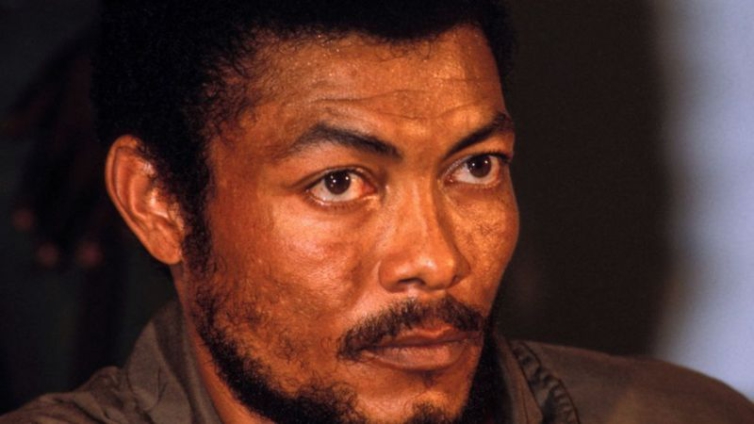
Security analyst, Colonel Festus Aboagye says former President, Jerry John Rawlings deserves a lot of credit for the regional stability being enjoyed in the ECOWAS sub-region.
He said even though the former President may have to share this acclaim with other leaders of the member states of ECOWAS, Rawlings’ contributions to peacekeeping and conflict resolution in the sub-region cannot be understated.
Speaking on JoyNews’ Newsfile Saturday, the security expert said Ghana’s contribution to peacekeeping and conflict management in the sub-region under the leadership of Rawlings had led to the creation of ECOMOG which saw to the temporary ceasefire in Liberia.
“So we start with Liberia where compliments of Charles Taylor, the country descended into a very long civil war from eve of Christmas 1989. At the time you’d know that the PNDC was still in power. Unfortunately, this was at the time when he was under pressure to transition from revolution to democracy.
“Now because of the economic constraints, that I have alluded to, the Ghana Armed forces were not very well endowed and yet he managed together with Nigeria, together with Gambia whose leader Jawara Dawda was the chair of ECOWAS at the time to mobilise what became known as ECOMOG to intervene with or without Charles Taylor’s consent.”
“Of course the pretext was that Ghana was going to evacuate Ghanaian citizens and therefore the grounds was humanitarian, but of course in the absence of a ceasefire or cessation of hostilities or peace agreement, Ghana and ECOMOG ended up undertaking a peace enforcement role. And in spite of many challenges including difficulties with Nigeria, Ghana still stuck with ECOMOG, until his chairmanship of ECOWAS 1994.”
Col. Aboagye stated that Rawlings’ insistence on using negotiations instead of military action to address the conflict in Liberia ultimately led to several Peace Accords which brought some peace to Liberia.
This further paved way for the ECOWAS to craft the revised treaty of 1993 and to establish the protocol relating to the mechanism for conflict prevention, management, resolution and peacekeeping in 1999.
“Now 1994 is very critical, Ghana all along subscribed to the doctrine of engaging with the players in Liberia to find an exit centered on elections. And Nigeria’s approach was to use the military option in order to defeat Charles Taylor on the battlefield.
“It took all those years from August 1990 when ECOMOG went into Liberia until about 1994, 1995 during the chairmanship of Rawlings as ECOWAS chairman for ECOWAS now to realise that the military option was not going to work. So the only option then was Ghana’s belief in the doctrine of engagement.
“So we would recall that about 1994 1995 1996 we had the Accra and Akosombo series of meetings which created the conditions now but of course regional politics come in and Nigeria was not very happy that a small player like Ghana was going to take the credit for ending the conflict in Liberia and so it continued slightly into 1996 when he had left the scene for the Abuja Accord now to cement peace,” he said.
He further added that, “without Ghana I should say Nigeria’s legitimacy which was questioned as a Pariah state might have had implications for the conflict resolution effort within Liberia, so Ghana’s role was pivotal…So a bit of the credit also goes to JJ Rawlings. “
Colonel Festus Aboagye stated that lessons from the war had also helped shape the ECOWAS’ strategy when it came to peacekeeping and maintaining order and stability in the sub-region.
“But at the end of all of this, lessons had been learnt during the conflicts in the Mano River area that laissez faire attitude that was in the 1975 charter where we needed to establish an allied armed forces of the community that we had paid blind glimpse of now encouraged the leadership of ECOWAS to craft even during the conflict, the revised treaty of 1993 and immediately after the conflict in 1999 to establish the protocol relating to the mechanism for conflict prevention, management, resolution and peacekeeping.
“Now this mechanism, since its time till date has been the instrument that ECOWAS has used to troubleshoot conflicts in Cote D’Ivoire for instance, in Gambia, and of course Guinea Bisaau and so on so forth.
“So a lot of the credit about regional stability as we have it in the ECOWAS region today must be credited to Rawlings. Of course, not in isolation but in conjunction with other leaders of the member states of ECOWAS,” he said.
Latest Stories
-
Bishop Asuamah urges hope, peace amid global and local conflicts
3 minutes -
Ahmed Ibrahim climaxes Easter with call for national sacrifice, fervent prayers
5 minutes -
NMC commits to reviving Media Advisory Committees
7 minutes -
Mahama outlines plans to elevate Kwahu Business Forum
18 minutes -
Ghana’s disinflation drive came at significant cost – BoG Governor
27 minutes -
Vice President engages Anlo traditional authorities as Queenmothers push for women’s empowerment
33 minutes -
Ladysmith Black Mambazo’s ‘wise elder’ dies aged 77
53 minutes -
Kanye West’s right to enter UK under review after festival outcry
1 hour -
Trump threatens to take out Iran in ‘one night’ if no deal before deadline
1 hour -
Mahama reaffirms government’s commitment to Savannah Region’s development
2 hours -
Prudential Life settles GH¢100,000 medical bills under its PRUCares Valentine Experience Initiative
7 hours -
Wa West Picnic: Peter Lanchene Toobu champions peace, health and unity in landmark celebration
7 hours -
Dr Mensah Market flooded after downpour in Kumasi
7 hours -
Armed men reportedly storm Adjen Kotoku Onion Market amid tensions
8 hours -
Tecco Mensah writes: Why football fans must look beyond statistics
9 hours