

Audio By Carbonatix
The Minority Leader, Dr. Cassiel Ato Forson, has expressed strong disapproval of the nomination of a dual citizen for the position of Supreme Court judge.
According to Dr. Forson, dual citizens are ineligible to hold key government positions, particularly as judges on the Supreme Court.
President Akufo-Addo has nominated Professor Richard Frimpong Oppong, a dual citizen, alongside Justice Sophia Essah, for the Supreme Court.
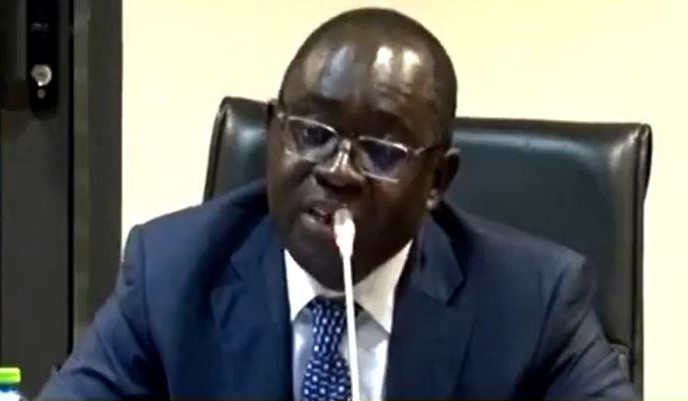
However, during the vetting on Tuesday, August 12, Dr Forson, who serves on the Appointments Committee of Parliament, argued that Prof. Oppong does not qualify to be a Supreme Court judge due to his dual citizenship.
Dr. Forson insisted that Prof. Oppong must renounce his foreign citizenship before his approval can be recommended.
“The Constitution, in Article 156(1), is clear that you would have to take an oath of allegiance, and the same Supreme Court has equated allegiance to nationality,” Dr Forson stated.
“In my view, you do not qualify, and I believe that you would need to renounce your citizenship to be eligible for the role of a Supreme Court judge.”
Adding to the debate, the National Democratic Congress (NDC) Member of Parliament for Ellembelle, Emmanuel Armah-Kofi Buah, argued that it is inconsistent to disqualify the NDC MP for Assin North, Gyakye Quayson, from Parliament even after he had renounced his citizenship.
Background
Prof. Oppong, who holds dual Ghanaian-Canadian citizenship, could become the first dual citizen to sit on Ghana's Supreme Court.
This is possible because the Supreme Court few months back ruled against sections of the Citizenship Act, allowing dual citizens to hold positions such as Chief Justice and Chief Director.
- Read also: Dual citizens eligible for Chief Justice, Chief Director, other positions – Supreme Court rules
The Supreme Court declared certain sections of the Citizenship Act unconstitutional, permitting dual citizens to serve in various high-ranking positions.
The court's decision, delivered by a majority, nullifies the sections that bar dual citizens from roles including Chief Justice, Commissioner of the Value Added Tax Service, and Chief Director of a Ministry.
The ruling effectively amends Article 289(2) of the 1992 Constitution, allowing dual citizens to be appointed to key government positions previously restricted to single citizens.
Latest Stories
-
Ghana must rethink education around relevance, resilience and responsibility — Ibn Chambas
1 minute -
Prince Harry faces defamation lawsuit from charity he co-founded
3 minutes -
South Korea deploys thermal cameras to track escaped zoo wolf
5 minutes -
Calls for royal meeting with Epstein survivors grow ahead of US visit
8 minutes -
Ibn Chambas advocates blend of technology and human values in education
9 minutes -
UMA improves healthcare access in Asutifi North with GH₵700k ‘Kim Taylor Legacy’ Walkway
14 minutes -
Scholarships Authority and Fanaka University offer sponsorship for procurement and supply chain studies
18 minutes -
Bisa Kdei drops new single ‘Go N Look’ featuring Medikal
24 minutes -
Benin facing rising terrorism in north as French military presence faces growing criticism
25 minutes -
UEW Public Lecture Series 2026: Education debate ‘about the soul of Ghana’s future’ — Dr Ibn Chambas
26 minutes -
EU fingerprint and photo travel rules come into force from today
53 minutes -
Anti-LGBTQ+ Bill: Ghanaians demand expedited passage, not dialogue – Ntim Fordjour to Mahama
1 hour -
EU airline industry warns of fuel shortages if Strait of Hormuz stays closed
1 hour -
White House staff told not to place bets on prediction markets
1 hour -
Auctioneers petition Prez Mahama over ‘interference’ in public auctions
1 hour