

Audio By Carbonatix
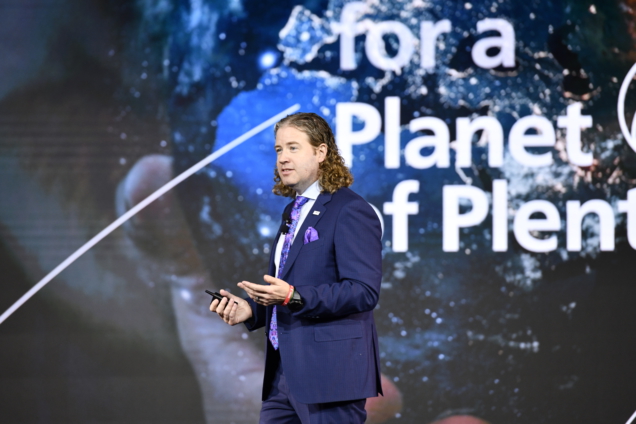
President and CEO of Alltech, Dr Mark Lyons, has highlighted agriculture’s role in saving the planet.
Speaking at the Alltech ONE Conference in Lexington, Kentucky, he said, "the reducing is not enough; we have to do something different.
"Our belief is that agriculture has the greatest potential to positively influence the future of our planet, to provide nutrition for all and to help rural communities thrive and replenish our planet’s resources.”
He observed that governments and companies' reduction and continuous commitments will not get the world where it needs to go.
“…the reductions, the commitments, the governments and companies make, that is not going to get us where we need to go.
“We need to have intentional action to restore our environment. We have to think of ways of lowering environmental impact and at the same time we can provide enough of that nutrition that this growing planet is going to require”, he explained.
According to Dr Lyons, progress and doing something different should involve cultivating economic opportunities through this.
“I think that the negative message of doing less, not being able to have economic, entrepreneurial and even intellectual opportunities… that is not a path forward as we see it.
“We have to think of ways where we can truly capture what is being released (carbon), I think this is going to be the most exciting and the biggest economic opportunity that is going to exist in agriculture for the future”, he added, "How do we create carbon capture in a transformative way".
The ONE Conference is Alltech’s flagship event which continues to be an invaluable industry resource, providing innovative ideas, inspiration and motivation through world-class speakers and unmatched content.
This year's event welcomed nearly 2,000 international delegates to downtown Lexington in the USA, with an additional 5,000 participating virtually after two years of holding the event virtually.
Dr Mark Lyons, who welcomed delegates challenged them to think about what comes next as we look toward the future.
“It’s been almost 1,100 days since we were last together and certainly, we know a tremendous amount has changed — from social turmoil to a global pandemic and beyond,” Lyons said.
“What is this all telling us? What can we step back and think about in terms of how we progress forward?”.
Latest Stories
-
Parliament passes Ghana Investment Promotion Authority (GIPA) Bill
7 minutes -
New airport infrastructure tax – a costly own goal that ground Ghana’s aviation ambitions
19 minutes -
Sachet water price increase: Why Ghana urgently needs a competition law to address price fixing and cartel conduct
25 minutes -
Ex-President Akufo-Addo visits President Mahama in Kwahu during Easter festivities
27 minutes -
There is no imminent fuel shortage – President Mahama assures Ghanaians amid Iran conflict
35 minutes -
Gov’t to expand Accra International Airport with new car park, retail spaces, and airport hotel
35 minutes -
President Mahama optimistic about Ghana’s economic progress at Kwahu Business Forum 2026
46 minutes -
Prof. Kpessa-Whyte writes: Understanding SIGA’s policy of encouraging inter-trading among specified entities
1 hour -
President Mahama calls for emergency Cabinet Meeting over rising fuel prices
1 hour -
Gov’t to construct new concourse at Accra International Airport to ease congestion
1 hour -
Day 3 of Gomoa Easter Carnival bursts with culture, music, and community spirit
1 hour -
Gender Ministry launches National Shock-Responsive Social Protection Strategy to strengthen Ghana’s crisis response
2 hours -
Photos: Zimbabwean President Mnangagwa departs Ghana after state visit
2 hours -
Gov’t procures over 24,000 medical equipment to support free primary healthcare rollout
2 hours -
“President has failed; his fight against galamsey a disgrace” – Kofi Tonto
2 hours