


Audio By Carbonatix
Motorists across Ghana are breathing a sigh of relief as two of the country’s leading oil marketing companies—Goil and Star Oil—announce significant reductions in fuel prices, following the recent appreciation of the Ghanaian cedi against the US dollar.
The price cuts are expected to ease the financial burden on consumers and transport operators who have long called for downward reviews following the cedis strong gains.
Goil rolls back prices across all fuel types
Goil, Ghana’s largest and wholly indigenous oil marketing company, has revised prices downward across its entire fuel range. The new rates are as follows:
- Petrol: now selling at ₵12.52 per litre, down from ₵13.27
- Diesel: reduced to ₵12.98, from ₵13.87
- Premium: slashed to ₵14.34, previously ₵15.27
The move positions Goil as one of the first major players to respond proactively to the improved forex environment.
Star Oil joins price reduction wave
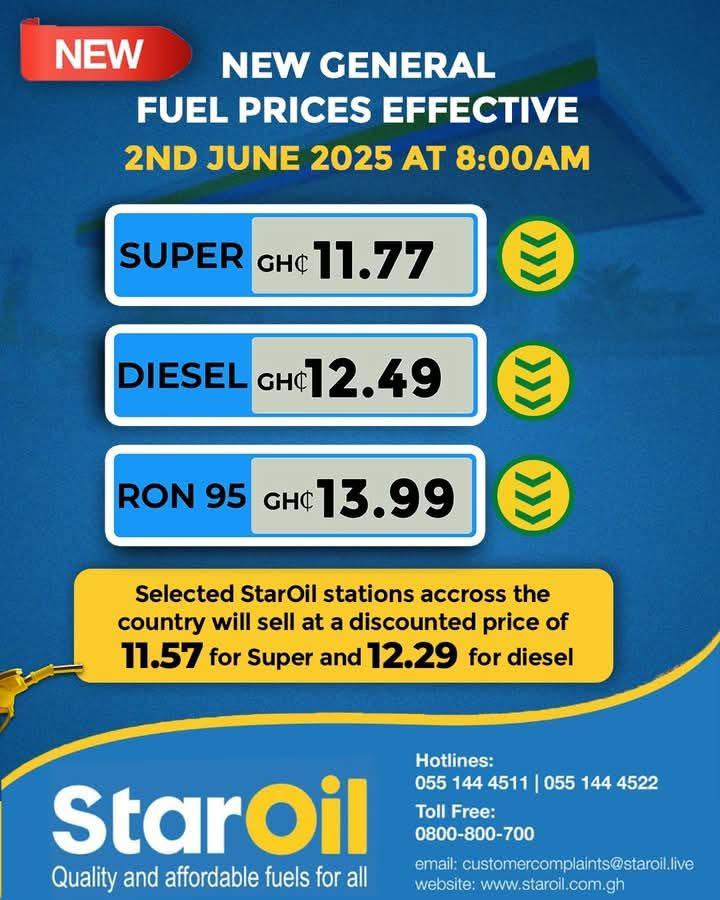
Star Oil has also made notable reductions, though its premium fuel remains unchanged. New prices at Star Oil stations are:
- Petrol: now ₵11.77, down from ₵12.57
- Diesel: now ₵12.49, reduced from ₵13.49
- Premium: holds steady at ₵14.89
This development places Star Oil’s petrol as among the most competitively priced on the market, likely influencing broader pricing trends in the coming days.
Cedi rebound drives change
The reductions come on the back of a strengthening Ghanaian cedi, which has recorded significant gains against the US dollar in recent weeks. As fuel imports are dollar-denominated, the improved exchange rate has provided room for oil marketing companies to lower prices at the pump.
Market watchers say this could signal the start of a broader downward trend in fuel pricing—provided the cedi’s stability is sustained and global crude prices remain relatively subdued.
Relief for consumers, pressure on others
Transport operators and consumers have welcomed the reductions, but are also calling on other oil marketing companies to follow suit to create a level playing field and further drive down transport fares.
Industry insiders suggest that competition and customer pressure may soon push more fuel retailers to adjust their prices accordingly.
Latest Stories
-
Man City suffer as PSG masterclass sets up Champions League win
1 hour -
Customer Service Africa CEO urges business leaders to observe staff and customer interactions
2 hours -
On night of mayhem for Liverpool, Barcola arrives in style
2 hours -
Muzic Mensah finds healing and renewed love in new single ‘WayƐ Late’
2 hours -
FIFA to offer extra £2.6bn for football development
2 hours -
Government backing is no EPA permit – Authority warns GoldBod, ministries
2 hours -
Real Madrid produce stunning late fightback to down Roma
2 hours -
EPA orders immediate halt to unpermitted reclamation and dredging nationwide
2 hours -
Afenyo-Markin’s lawsuit against Sammy Gyamfi takes focus away from development – Kpebu
3 hours -
FWSC urges media to guard against misinformation in proposed IPEC transition
3 hours -
MoMo Fest 2026: Shatta Wale to Rock Accra Stadium on October 17
3 hours -
GTEC’s letter directing public universities to reopen by October 16 is unprofessional – GAUA
3 hours -
Suspect in viral video assaulting wife jailed for 3 months
3 hours -
GAUA insists strike will end only after Fair Wages addresses market premium issue
3 hours -
Kpemka seeks compensation as he sues BOST over alleged unlawful termination
3 hours