

Audio By Carbonatix
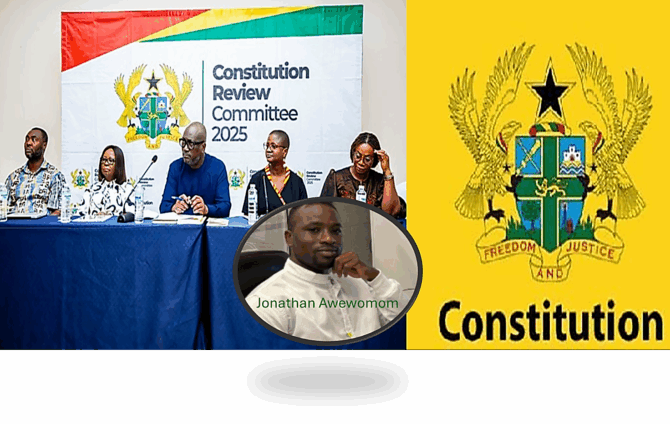
The recommendation by the Constitutional Review Committee to extend Ghana’s presidential term from four to five years has reignited a national debate that strikes at the heart of democratic accountability. The proposal assumes that time, rather than leadership capacity and accountability, is the principal constraint on good governance. For many Ghanaians, that assumption is deeply contestable. The Committee’s justification - that four year is insufficient for governments to design, implement, and consolidate policy - appears logical on the surface. Yet for many Ghanaians, the proposal raises a more unsettling question: is time truly the problem, or is leadership?
This debate cannot be resolved through constitutional theory alone. It must be grounded in Ghana’s political experience, the quality of governance delivered over the years, and the expectations of citizens who live with the consequences of executive power. Before asking whether leaders need more time, the more fundamental question must be asked: how well have Ghanaian presidents used the four years they already have?
Public Reaction: A Nation Speaking from Experience
Citizen responses to the proposal have been intense, emotional, and revealing. Across social and traditional media platforms, many Ghanaians have reacted not with optimism, but with fear - fear informed by lived hardship under previous administrations. Recurrent themes include anxiety about prolonged suffering under poorly performing governments, distrust of political elites, and calls for stronger accountability mechanisms such as votes of no confidence or mid-term removals. Many citizens explicitly argue that if some recent leaders struggled to govern responsibly within four years, extending their tenure would only have prolonged economic pain, arrogance of power, declining standards of living, and policy inertia - especially during second terms. The public mood is not one of democratic impatience; it is one of democratic self-preservation. The dominant sentiment is not that leaders need more time to perform, but that citizens need stronger protection from poor leadership.
The African Context: When Citizens Count Down the Clock
Across West Africa and indeed much of the continent - poor leadership has often made citizens count down the days until a leader’s term expires. In countries such as Togo under Gnassingbé Eyadéma, Uganda under Museveni, Zimbabwe under Mugabe, and Cameroon under Paul Biya, extended tenures became synonymous with stagnation, repression, and institutional decay. In several cases, constitutional tinkering to extend terms directly triggered unrest, coups, or long-term instability. In several cases, citizens openly wished for leaders’ terms to end-not because democracy was inconvenient, but because governance had become unbearable. These experiences offer a sobering lesson: longer terms do not cure weak institutions or poor leadership; they often magnify them.
Even closer to home, countries like Guinea, Côte d’Ivoire, and Burkina Faso have seen how attempts to prolong presidential tenure-without deep accountability erode democratic legitimacy and provoke crisis. Africa’s challenge has rarely been leaders having too little time; it has been leaders having too much time and too little restraint.
Ghana’s Own Record: Performance Within Four Years
Ghana’s democratic advantage has always been its predictable electoral cycle and peaceful transfers of power. Yet a sober review of recent administrations shows a recurring pattern: initial goodwill in first terms, followed by public disillusionment in second terms marked by complaints of arrogance, reduced responsiveness, worsening economic conditions, and weakened accountability.
Ghanaians have often struggled to endure even the constitutionally mandated four years of some presidencies. It is therefore difficult to argue convincingly that Ghana has consistently produced leaders whose governance has been so exceptional that citizens voluntarily wish for longer tenure. While H.E. John Dramani Mahama has shown signs of reflection and renewed rhetoric of reform, it is far too early and too risky to redesign the constitutional clock based on hope rather than evidence. A democracy cannot gamble on occasional “lucky leaders”. The critical question, then, is whether Ghanaian presidents have generally governed so effectively within four years that citizens now desire longer tenure. The evidence suggests otherwise.
Reward Performance, Not Potential
The four-year term already contains its own performance test. A president who governs well is rewarded with a second term. If that performance remains strong, the governing party benefits from continuity through electoral succession. Governance, after all, is continuous-even if leadership changes.
Extending the term length weakens this feedback loop. It delays citizen judgment, prolongs exposure to bad governance, and reduces electoral discipline. In systems where leadership quality is uneven, shorter, renewable mandates are not a weakness; they are a safeguard. In a political environment where institutions are still consolidating, shorter terms with regular electoral review remain a strength, not a flaw.
Global Best Practices: Accountability Over Duration
Globally, many of the world’s most stable democracies including the United States, Germany, and India operate on four- or five-year cycles but pair them with robust accountability mechanisms. In South Africa, which has a five-year term, the constitution allows relatively flexible parliamentary processes to remove a president mid-term, as seen in the resignation of Jacob Zuma. In parliamentary systems, votes of no confidence serve as powerful corrective tools.
If Ghana were ever to consider a longer presidential term, it would be irresponsible to do so without introducing equally strong mechanisms for removal such as a constitutionally triggered vote of no confidence, recall procedures, or mid-term referenda. Without these, a five-year term risks becoming an invitation to abuse rather than an opportunity for impact.
The Central Question Remains
The debate should not begin with how long leaders want to govern, but with how well they govern. Ghana’s democratic instinct has always leaned toward caution, balance, and restraint. Until leadership quality consistently improves and until citizens genuinely wish leaders would stay longer rather than leave sooner.
For now, Ghana’s four-year term remains not a limitation, but a necessary democratic brake in a political environment where power is still too easily personalized and insufficiently checked.
Democracy is not strengthened by extending the patience of the governed; it is strengthened by disciplining those who govern.
The writer, Jonathan Awewomom, is a Research Scientist and Governance Advocate.
Email: jonathankeinzie8a154@gmail.com
Latest Stories
-
Tyson Fury dominates Makhmudov, calls out Joshua next
13 minutes -
I have supported highway authority financially to fix roads in my constituency – A Plus
1 hour -
US, Iran fail to reach peace agreement after marathon talks in Pakistan
2 hours -
ECG kicks off Phase Two of transformer upgrades at Lashibi; brief outages expected
2 hours -
Port crises loom as 11,000 drivers threaten four-day strike
3 hours -
A source of excellence across generations – Vice President Opoku-Agyemang lauds Mfantsipim
4 hours -
(Photos) Mfantsipim School launches historic 150th anniversary
4 hours -
Knights and Ladies of Marshall group backs Catholic Bishops’ stance on anti-LGBTQ+
5 hours -
Bright Simons writes: All the Filla in the Ibrahim Mahama/E&P – Gold Fields Saga
6 hours -
Monetise Idiocy In Ghana
6 hours -
The Ghanaian prophet and the mysterious death of his scottish wife Charmain Speirs
7 hours -
Nearly 400 sentenced in Nigeria for links to militant Islamists
7 hours -
Ghana’s recovery supported by gold strength despite global oil price pressures – Standard Bank Research
7 hours -
Methodist Church hails Mfantsipim@150; calls for “fresh consecration” to excellence
7 hours -
‘Excellence is our inheritance’ – Nana Sam Brew-Butler hails Mfantsipim’s 150-year reign in leadership
8 hours