

Audio By Carbonatix
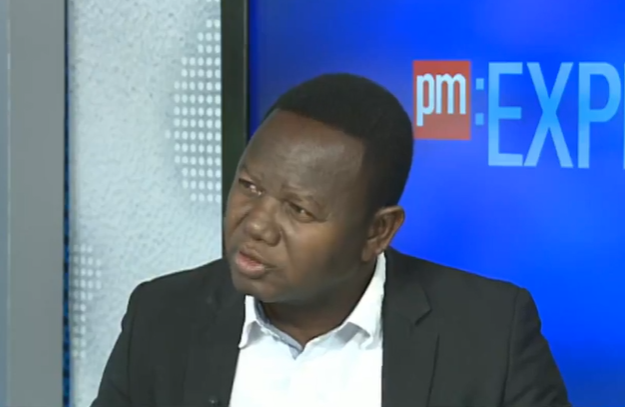
The General Secretary of the General Agricultural Workers Union (GAWU), Edward Kareweh has called for a reassessment of the government’s Planting for Food and Jobs policy.
Speaking on Top Story on Joy FM, he stated that the success of the programme has been exaggerated, thus it is important to rectify the situation.
“If we paint the picture that it has been so successful and that there is an abundance of food and will always deliver an abundance of food all this clouds our minds and gives us a false hope that we are doing well.”
“Its success has been over-exaggerated to the extent that we were told that maize production has been more than doubled in 2020 and rice production was nearly 50% higher, yet between January till July we have a severe shortage of maize and rice in the country,” Mr Kareweh said.
This comes after the government decided to suspend the exportation of food amid concerns that there are shortages of foodstuff in the country. The Deputy Minister for Food and Agriculture, Yaw Frimpong Addo, admitted that there is food shortage but not food crisis.
“Food shortage, yes, but we don’t have food crisis. I’m telling you that during the planting season every year, it has been like this. Just that this year, because of Covid-19 and fertilizer production, everything about fertilizer (things have been intense),” Mr Addo earlier said on JoyNews.
Meanwhile, Mr Kareweh believes the shortage is not caused primarily by the exportation of food as the Ministry claims, but by structural challenges within the agricultural sector.
“For us, that is not the case because, between the same period and 2020, the exportation of maize, rice and soya bean has been declining. So, exportation cannot be the main cause of the shortage.”
“We are told that the planting for food and jobs subsidised fertiliser, their suppliers had refused to supply more fertiliser in 2021, because they were not paid for previous supplies. So the whole explanation that it is because we have over exported and therefore leading to a shortage of food in the country, is not supported by the challenges on the ground,” he added.
Mr Kareweh said that the progress of Planting for Food and Jobs, its restructuring and implementation cannot be left to the Ministry of Agriculture alone if it has to succeed.
He stated that after a reassessment of the programme, there needs to be a national discourse where stakeholders and other interested persons in the agricultural sector would offer ideas and solutions to help move the policy forward.
Latest Stories
-
I have supported highway authority financially to fix roads in my constituency – A Plus
16 minutes -
US, Iran fail to reach peace agreement after marathon talks in Pakistan
40 minutes -
ECG kicks off Phase Two of transformer upgrades at Lashibi; brief outages expected
1 hour -
Port crises loom as 11,000 drivers threaten four-day strike
2 hours -
A source of excellence across generations – Vice President Opoku-Agyemang lauds Mfantsipim
3 hours -
(Photos) Mfantsipim School launches historic 150th anniversary
3 hours -
Knights and Ladies of Marshall group backs Catholic Bishops’ stance on anti-LGBTQ+
4 hours -
Bright Simons writes: All the Filla in the Ibrahim Mahama/E&P – Gold Fields Saga
5 hours -
Monetise Idiocy In Ghana
5 hours -
The Ghanaian prophet and the mysterious death of his scottish wife Charmain Speirs
6 hours -
Nearly 400 sentenced in Nigeria for links to militant Islamists
6 hours -
Ghana’s recovery supported by gold strength despite global oil price pressures – Standard Bank Research
6 hours -
Methodist Church hails Mfantsipim@150; calls for “fresh consecration” to excellence
6 hours -
‘Excellence is our inheritance’ – Nana Sam Brew-Butler hails Mfantsipim’s 150-year reign in leadership
6 hours -
Kwaku Azar writes: A-G vs OSP
7 hours