

Audio By Carbonatix
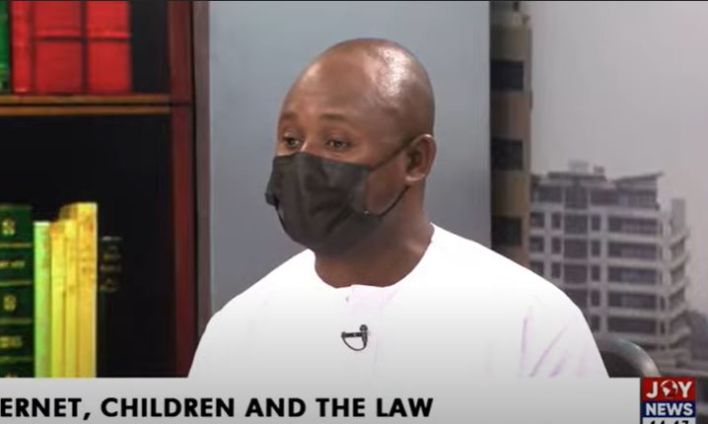
Lead Capacity Building and Awareness Creation Department of the Cybersecurity Authority, Alex Oppong, has warned of the increasing risk of anonymity on the internet in recent times.
Speaking on The Law on Sunday, he urged parents to put in more effort to ensure the safety of their wards when they are surfing through the internet due to the anonymity the internet provides.
“One of the things that all of us will be aware of is the fact that what the internet does provide for everyone in terms of its use is anonymity.
“So someone can be sitting behind the computer, be chatting with a child. The person sitting could be 30 or 40 years but pretend to be a 13-year-old,” he said whiles giving a possible situation.
According to him, those ‘internet stalkers’ engage children to gather information about “what children like, the kind of things that would allow them to continue the conversation that they’ve already started.”
Mr Oppong stated that these stalker behaviours, from the perspective of Cyber Security when investigating crime, show the intent to commit a specific type of crime.
He added that “when the investigation goes through, and it’s found that the person is guilty, there able to face the law to its fullness if possible.”
He cited an instance of gaming. He said: “A lot of gaming communities, children are not aware who they are playing with, and they are also talking to, and probably because the person is an adult, they are good at the game, and they would start with things like I can show you few tricks to get more points for your avatar.”
He stated that “Those conversations would draw the child to the particular member of the gaming community that they fall within”, therefore the need for parents to keep a watchful eye on their children.
Meanwhile, the Cybersecurity Act, 2020 (Act 1038) states that “a person shall not use an online computer service, an internet service, or a local internet bulletin board service or any other electronic device to compile, transmit, publish, reproduce, buy, sell, receive, exchange, or disseminate the name, telephone number, electronic mail address, residence address, picture, physical description, characteristics, or any other identifying information on a child in furtherance of an effort to arrange a meeting with the child for the purpose of engaging in sexual intercourse, sexually explicit conduct, or unlawful sexual activity."
It continues to add that any person who goes against this provision “commits an offence and is liable on summary conviction to a term of imprisonment of not less than five years and not more than 15 years.”
Latest Stories
-
‘At the age of 12, I was teaching people and collecting money from them’ – Forty Under 40 Awards
1 hour -
I broke my virginity at the age of 26 after university – Richard Abbey Jnr.
2 hours -
Sacked for fees, saved by faith: The untold story of Forty Under 40 Awards founder Richard Abbey Jnr
3 hours -
GCB Bank surges GH¢0.45, ETI gains GH¢0.06 as GSE ends week higher
3 hours -
Two teens jailed 55 years for robbery
4 hours -
UDS demands apology for MPhil student wrongly branded as Tamale robber
4 hours -
“We don’t sell fish!” – Tema Shipyard CEO hits back over dead fish discovery
5 hours -
Sam George defends anti-LGBTQ+ Bill as ‘national priority’ amid debate over gov’t focus
5 hours -
Artemis II astronauts safely back on Earth after trip around moon
6 hours -
Sam George unveils massive 1,150-cell site rollout to end network woes
6 hours -
This Saturday on Prime Insight: Fuel levy suspension, LGBTQ+ legislation, and Damang Mine controversy
6 hours -
Struggling Real suffer title blow with Girona draw
7 hours -
Mahama nominates Pamela Graham as Auditor-General
7 hours -
The five big sticking points in US-Iran talks
8 hours -
Melania Trump’s speech propels Epstein crisis back to forefront
9 hours