

Audio By Carbonatix
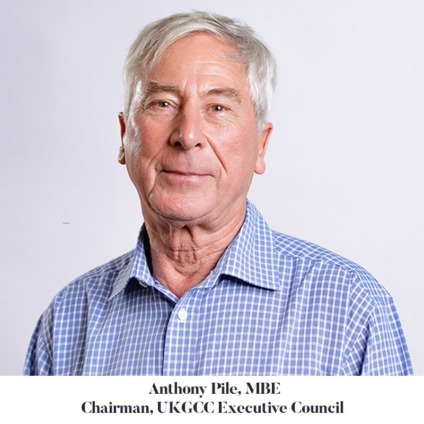
More than half of respondents surveyed by the UK-Ghana Chamber of Commerce (UKGCC) Annual Ghana Business Environment and Competitive Survey 2022 expect the government to assure them of the safety of their investments in Ghana.
With the current economic hardships being faced in the country, this expectation cannot be overemphasised.
The top three expectations of respondents have not changed since 2021 despite the increase in respondent numbers, a signal of its importance.
The top three expectations are Safety and Security of Investment, Low Corruption and Transparency and Effective Regulatory Reform.
Ghana was ranked first in West Africa for Trade & Investment Risk, with a moderate score of 52.3 out of 100 and an improving globally competitive position, ranking in 83rd out of 201 markets globally.
Despite this, the worsening economic situation is a worry to investors who require security of their investment in the country.
In 2021 Ghana was ranked 73rd out of 180 countries in the Corruption Perception Index with a score below the expected average.
Respondents have continually listed corruption as a major challenge the country faces and expect the government to take stringent measures to solve this problem as it could further affect the Foreign Direct Investments inflow into the country.
Again, respondents suggested the regulatory environment had improved with regards to time spent to deal with regulatory requirements. Despite the gains there is still more work to be done by the government to meet business expectations.
The survey was conducted among member companies of the UK–Ghana Chamber of Commerce and other companies.
It was taken by 306 respondents – an increase from the 47 businesses that participated in the prior survey of 2021. Respondents represented 16 industries and ranged from small to large companies.
Unlike the prior survey, majority of respondents were from the western region with 25% being from the Greater Accra region a significant reduction from 91% previously.
Respondents represented 14 out of Ghana’s 16 regions. Respondents from the western region comprised mainly of service-based businesses
More than half of respondents surveyed by the UK-Ghana Chamber of Commerce (UKGCC) Annual Ghana Business Environment and Competitive Survey expect the government to assure them of the safety of their investments in Ghana.
With the current economic hardships being faced in the country, this expectation cannot be overemphasised.
The top three expectations of respondents have not changed since 2021 despite the increase in respondent numbers, a signal of its importance.
The top three expectations are Safety and Security of Investment, Low Corruption and Transparency and Effective Regulatory Reform.
Ghana was ranked first in West Africa for Trade & Investment Risk, with a moderate score of 52.3 out of 100 and an improving globally competitive position, ranking in 83rd out of 201 markets globally.
Despite this, the worsening economic situation is a worry to investors who require security of their investment in the country.
In 2021 Ghana was ranked 73rd out of 180 countries in the Corruption Perception Index with a score below the expected average.
Respondents have continually listed corruption as a major challenge the country faces and expect the government to take stringent measures to solve this problem as it could further affect the Foreign Direct Investments inflow into the country.
Again, respondents suggested the regulatory environment had improved with regards to time spent to deal with regulatory requirements. Despite the gains there is still more work to be done by the government to meet business expectations.
The survey was conducted among member companies of the UK–Ghana Chamber of Commerce and other companies.
It was taken by 306 respondents – an increase from the 47 businesses that participated in the prior survey of 2021. Respondents represented 16 industries and ranged from small to large companies.
Unlike the prior survey, majority of respondents were from the western region with 25% being from the Greater Accra region a significant reduction from 91% previously.
Respondents represented 14 out of Ghana’s 16 regions. Respondents from the western region comprised mainly of service-based businesses
Latest Stories
-
I have supported highway authority financially to fix roads in my constituency – A Plus
8 minutes -
US, Iran fail to reach peace agreement after marathon talks in Pakistan
31 minutes -
ECG kicks off Phase Two of transformer upgrades at Lashibi; brief outages expected
1 hour -
Port crises loom as 11,000 drivers threaten four-day strike
2 hours -
A source of excellence across generations – Vice President Opoku-Agyemang lauds Mfantsipim
3 hours -
(Photos) Mfantsipim School launches historic 150th anniversary
3 hours -
Knights and Ladies of Marshall group backs Catholic Bishops’ stance on anti-LGBTQ+
4 hours -
Bright Simons writes: All the Filla in the Ibrahim Mahama/E&P – Gold Fields Saga
5 hours -
Monetise Idiocy In Ghana
5 hours -
The Ghanaian prophet and the mysterious death of his scottish wife Charmain Speirs
5 hours -
Nearly 400 sentenced in Nigeria for links to militant Islamists
6 hours -
Ghana’s recovery supported by gold strength despite global oil price pressures – Standard Bank Research
6 hours -
Methodist Church hails Mfantsipim@150; calls for “fresh consecration” to excellence
6 hours -
‘Excellence is our inheritance’ – Nana Sam Brew-Butler hails Mfantsipim’s 150-year reign in leadership
6 hours -
Kwaku Azar writes: A-G vs OSP
6 hours