

Audio By Carbonatix
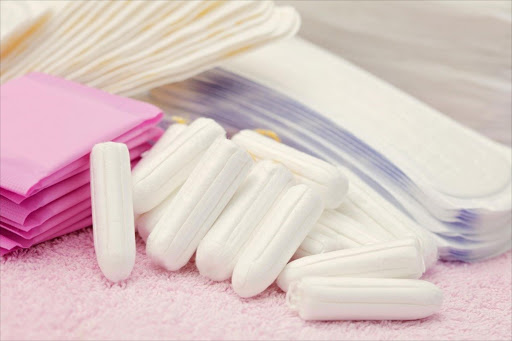
The Public Relations Officer of the National Association of Registered Midwives Ghana, Rosetta Ntriwaah Boakye, has called on the government to take off what she refers to as ‘luxury tax’ on sanitary pads to make them affordable for women and young girls.
According to the midwife, who doubles as a maternal and child health advocate, the high tax imposed on the importation of sanitary pads make their use a preserve of the wealthy.
Ntriwaah Boakye described as unjust and unethical, the government’s appetite for making money from the importation of sanitary pads, hence making the prices go high.

“How do we raise our country when the basis of womanhood which is menstruation has become a burden to our women in these times due to poor menstrual hygiene related to high cost of sanitary pads,” she quizzed.
“Menstruation is a biological necessity; therefore, menstrual products are essential to female health and wellbeing. To consider sanitary pad a 'luxury goods' is not only unjust but also unethical. Somewhere in Africa (Ghana), menstrual products are classified as 'luxury' and are subject to 20% import tax whilst countries like Nigeria, Namibia, Malawi, Rwanda, South Africa etc have duty/tax exemption on sanitary pads.”
She bemoaned how the high cost of sanitary pads make it difficult for rural young girls to keep menstrual hygiene, a situation which pushes them into dangerous sexual activities with men.
“Promoting and encouraging menstrual hygiene among adolescent girls in deprived communities has become very challenging due to economic constraints. The consequences of this have made some adolescent girls vulnerable to menstrual complications whilst others have become victims of transactional sex and teenage pregnancy in their quest to raise money to afford sanitary pad.”
Ntriwaah Boakye emphasised that women grow with social stigma surrounding menstruation, which is enough burden, so the high cost of sanitary pads further worsens their plight.
She made reference to a UNICEF data which says 1.8 billion people menstruate globally every month and sanitary pad, which is the one commonest menstrual product used during this phase of natural reproductive occurrence should only be for menstrual hygiene and not menstrual luxury.
Latest Stories
-
Matriculants urged to pursue excellence as gov’t reaffirms support for Maritime education
55 seconds -
See the areas that will be affected by ECG’s planned maintenance on Monday, April 13, 2026
7 minutes -
GPL 2025/26: Salim Adams double fires Medeama back to summit after Kotoko rout
8 minutes -
Two robbery suspects convicted following violent gold dealer attack in Obuasi
11 minutes -
Supreme Court @150: Fanfare meets reflection as nationwide activities roll out
18 minutes -
Padel for Parkinson’s cycling event promotes awareness at University of Ghana
36 minutes -
GPL 2025/26:Samuel Tetteh brace fires Nations FC past Basake Holy Stars
45 minutes -
Ghana’s oil trade position close to net neutral in near term – Fitch
1 hour -
IMANI Africa President urges greater awareness and support for Parkinson’s Disease patients
1 hour -
T-bills: Government records 29% undersubscription; interest rates continue to surge
1 hour -
Perceptions of Judicial partisanship ‘unfortunate’ – Justice Adjei-Frimpong urges greater public engagement to build trust
1 hour -
Ghana to honour Christina Hammock Koch for historic Artemis II mission
2 hours -
Supreme Court appointments require more than 15 years’ experience – Justice Adjei-Frimpong
3 hours -
Fire destroys 3-bedroom house at Bogyawe
3 hours -
Why the Supreme Court is a “policy court” – Justice Richard Adjei-Frimpong breaks it down
3 hours