


Audio By Carbonatix
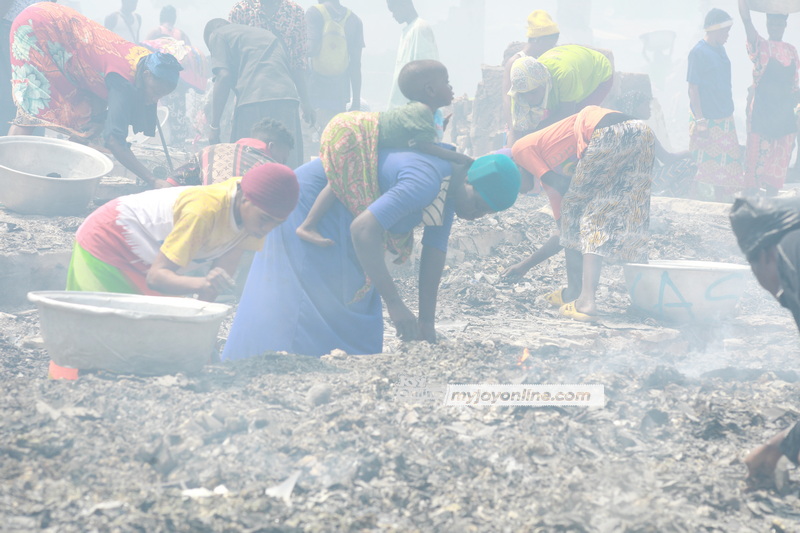
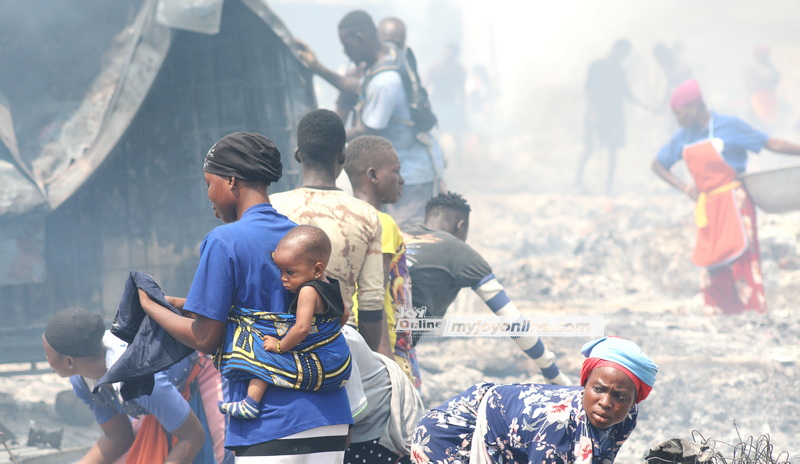
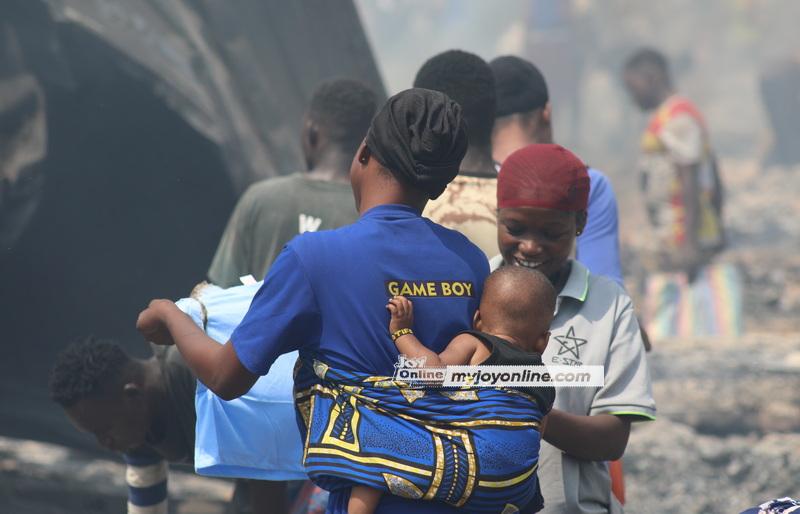
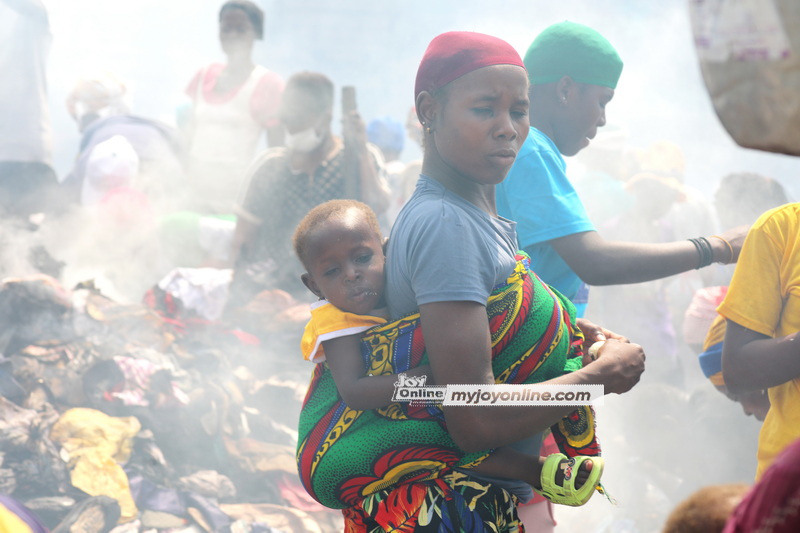
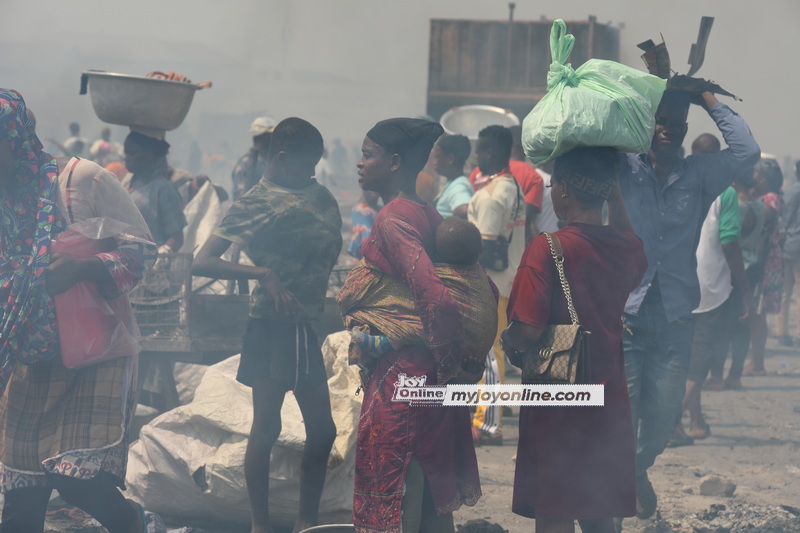
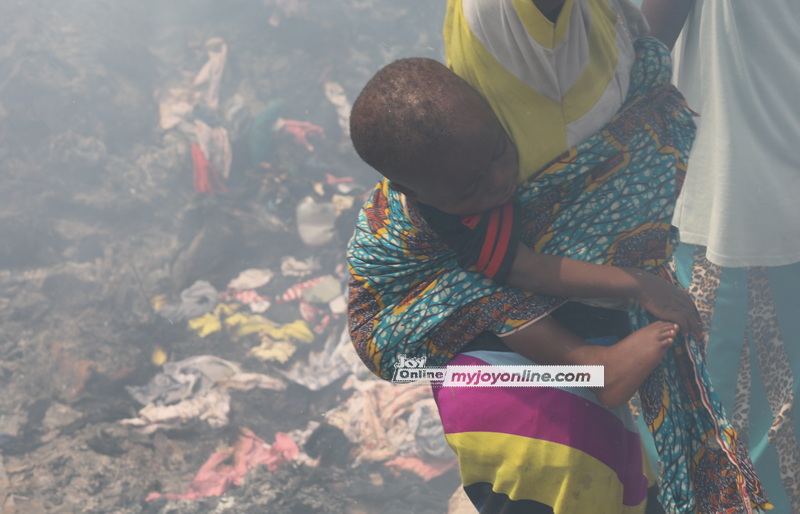
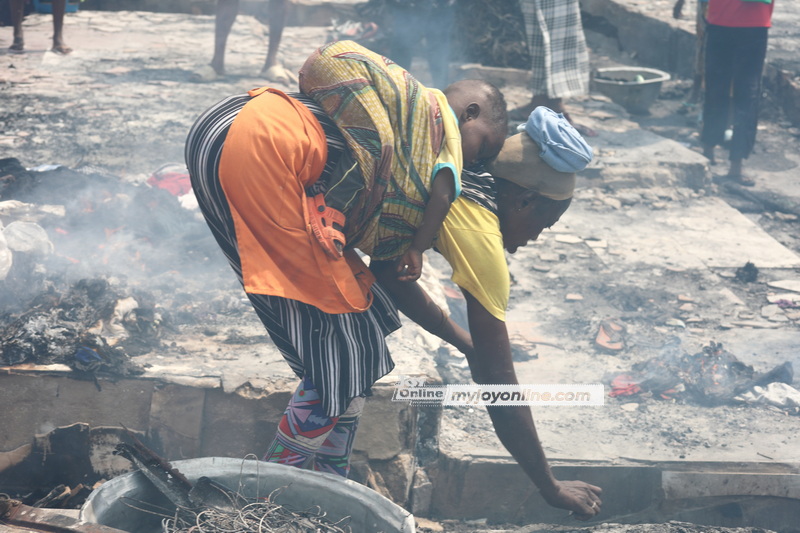
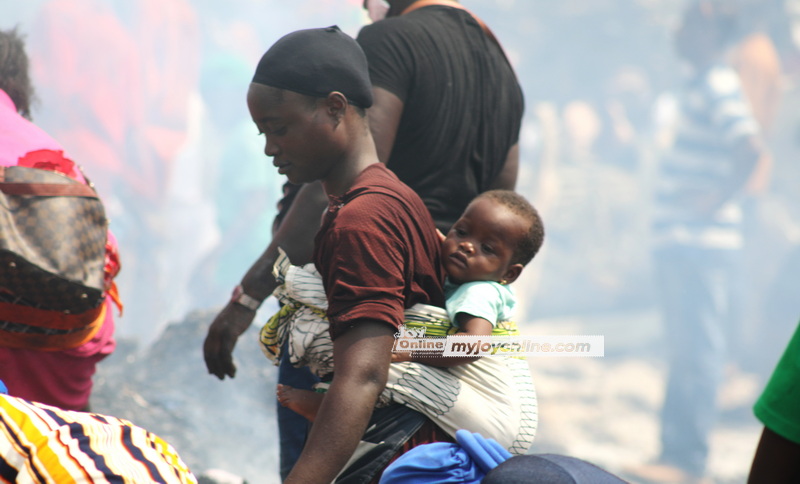
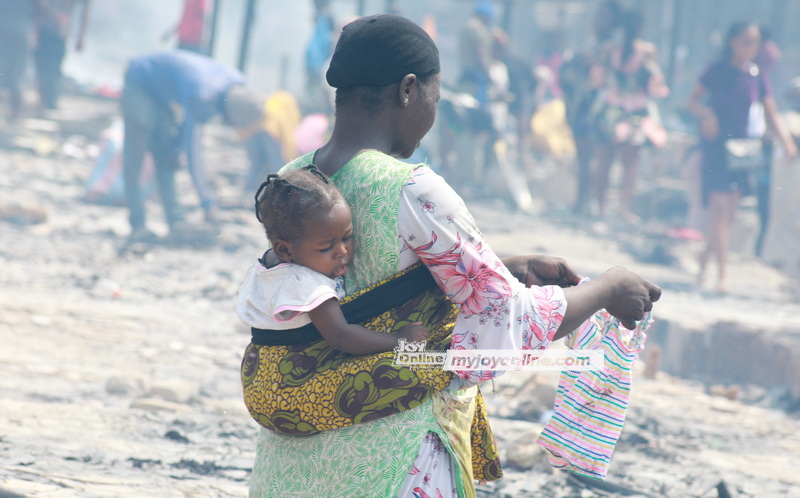
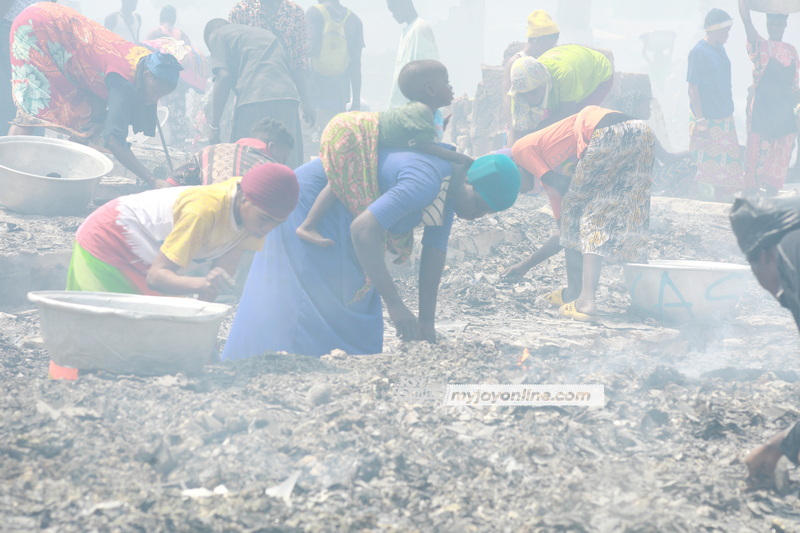
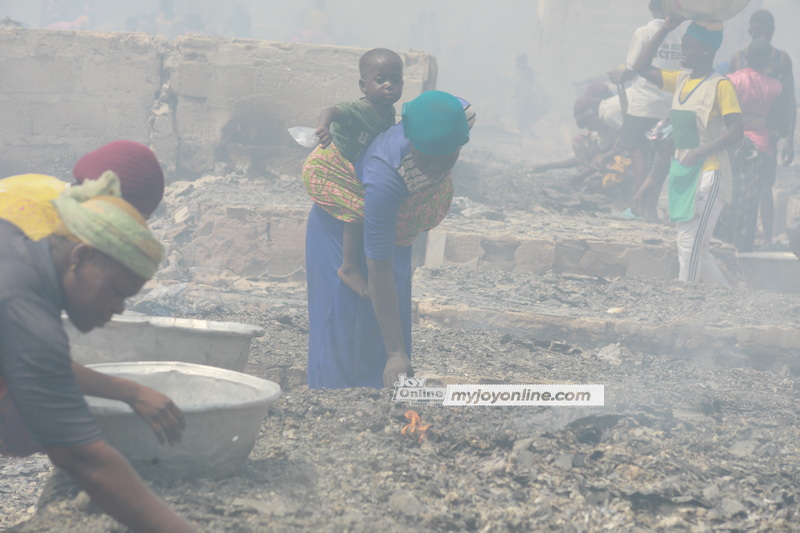
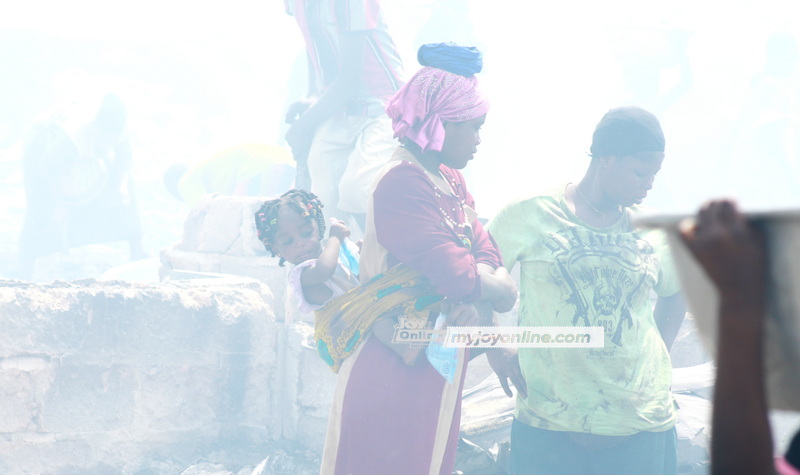
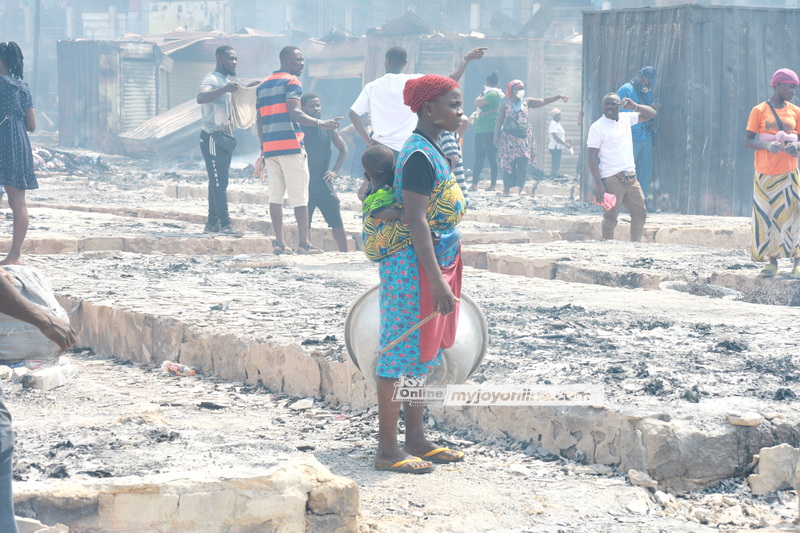
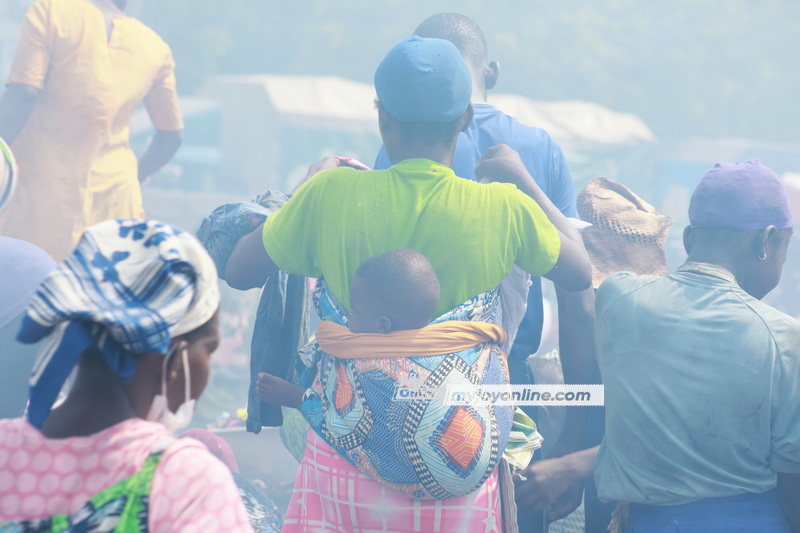
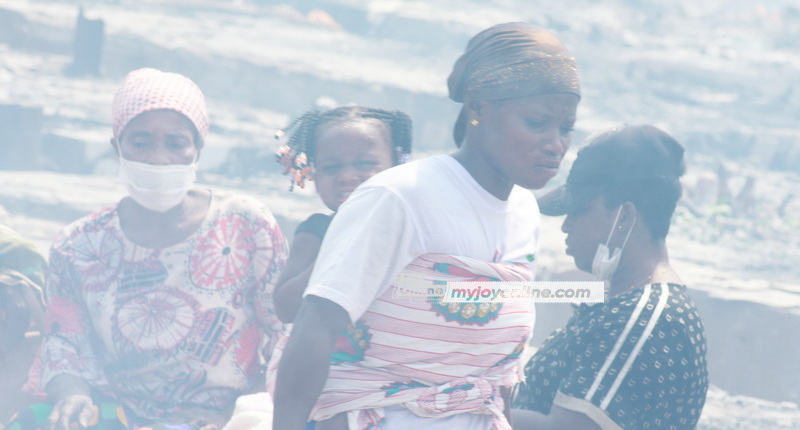
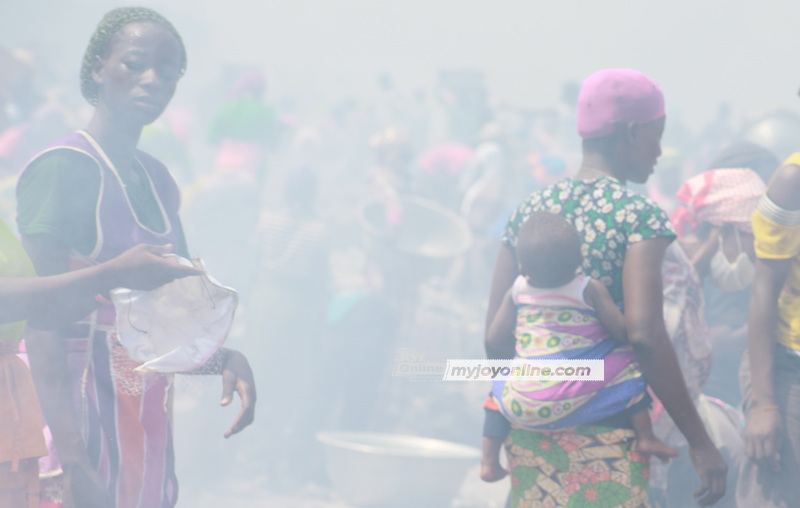
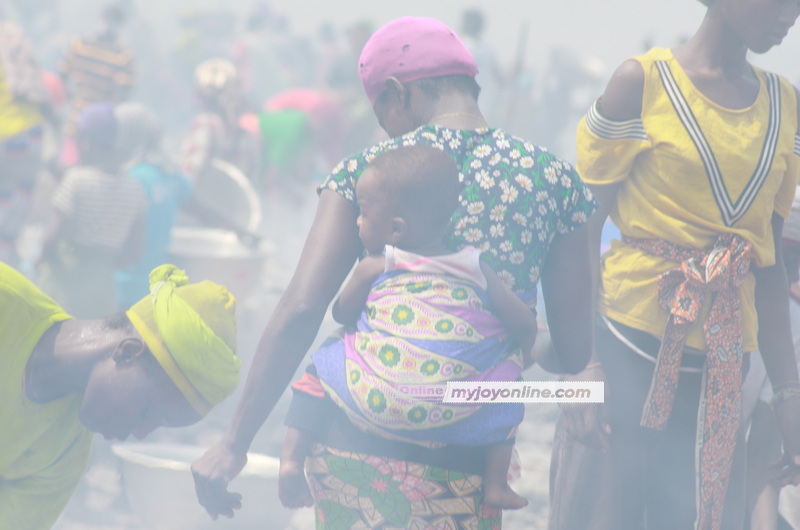
Scavenging mothers who defied the choking smoke that emanated from the Kantamanto devastating fire outbreak in the early hours of Thursday, January 2, appeared to care very little about the toxic smoke their children inhaled, as they braced the extreme health risks themselves, in the name of survival.
The immediate aftermath of Kantamanto’s worst fire disaster saw many people ignore the offensive toxic smoke to pick metal scraps to sell to nearby scrap dealers.
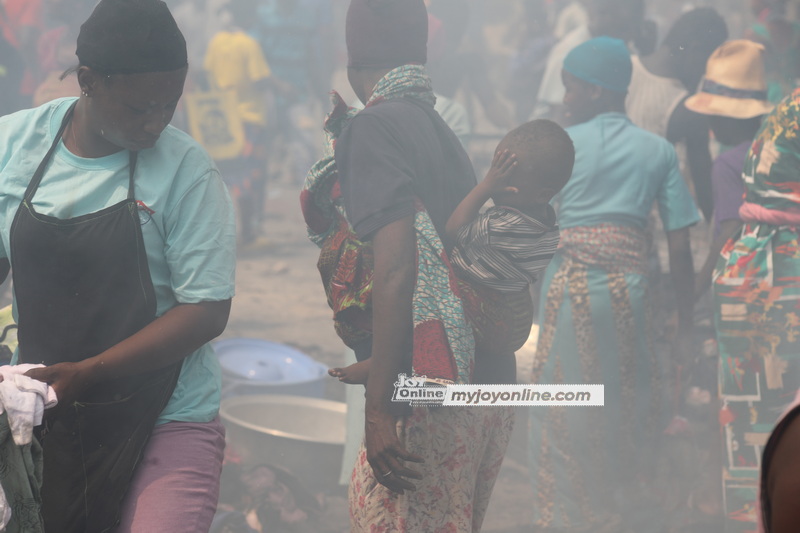
Some of the children coughed continually while others, strapped to the backs of their busy mothers, rubbed their agitated eyes in protest.
That attitude was condemned by some onlookers who argued that the mothers should have left the children, including babies, in safer environments.
Experts point to the fact that wildfire smoke is comprised of a mixture of gaseous pollutants (e.g., carbon monoxide), hazardous air pollutants (HAPs) (e.g., polycyclic aromatic hydrocarbons [PAHs]), water vapour, and particle pollution. Particle pollution represents a main component of wildfire smoke and the principal public health threat.
“Particle pollution” (also referred to as particles, particulate matter, or PM) is a general term for a mixture of solid and liquid droplets suspended in the air.
There are many sources of particle pollution; the most common is combustion-related activities, such as wildfires.
Particles can be made up of different components, including acids (e.g., sulfuric acid), inorganic compounds (e.g., ammonium sulfate, ammonium nitrate, and sodium chloride), organic chemicals, soot, metals, soil or dust particles, and biological materials (e.g., pollen and mold spores).
During a wildfire or other combustion-related activities, concentrations of particles can substantially increase in the air to the point that particle pollution is visible to the naked eye.
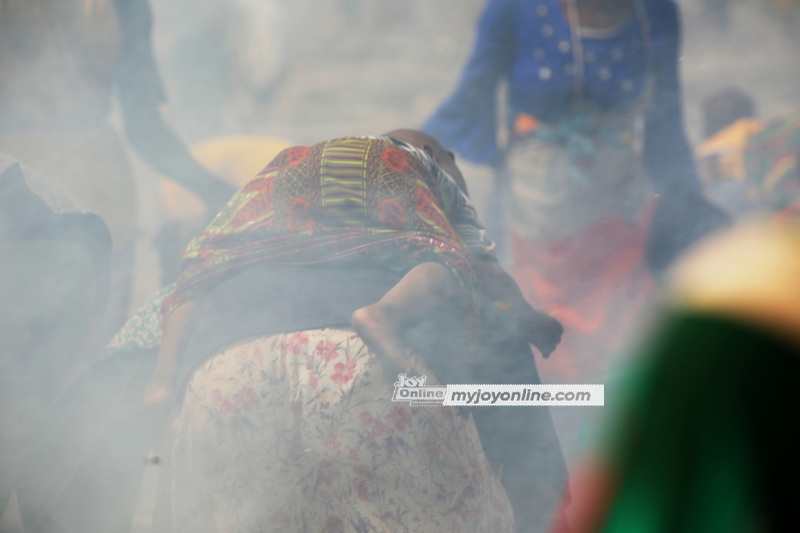
Smoke can irritate the eyes and airways, causing coughing, a scratchy throat, irritated sinuses, headaches, stinging eyes or a runny nose. If you have heart or lung disease, smoke might make your symptoms worse.
The fire which started around 1 a.m., destroyed stalls and goods worth millions of cedis. Devastated traders recounted their losses, with many calling on the government for urgent support.



Latest Stories
-
Let OSP defend itself in Supreme Court case — Prof Prempeh
8 minutes -
Emmanuel Kweenu Haizel aka Simpa Panyin
9 minutes -
Police foil planned highway robbery in Ashanti Region, one suspect shot dead
16 minutes -
Sunyani Technical University dismisses 3 students over examination malpractice
1 hour -
NPRA prosecutes 11 employers, recovers GH¢27m in 2025
1 hour -
NAIMOS cracks down on illegal mining activities along River Tano
1 hour -
2026 World Cup: Officials selected are the world’s very best – FIFA defends referees list
1 hour -
NAIMOS taskforce embarks on major anti-galamsey operations at GREL plantation and along Ankobra River
1 hour -
Akufo-Addo arrives in Cotonou to lead ECOWAS mission to observe Benin presidential election
2 hours -
AMA, Mexican Embassy renew commitment to strengthen bilateral cooperation, deepen sister-city ties
2 hours -
Bolt pushes for expanded support for women-owned enterprises
2 hours -
Hubtel hosts leaders of the UK Department for Business and Trade
2 hours -
Today’s Front pages : Friday, April 10, 2026
3 hours -
‘We don’t have time’ – Fianoo calls for Schäfer to lead Black Stars temporarily
3 hours -
CAF will not favour any country – President Motsepe
3 hours