

Audio By Carbonatix
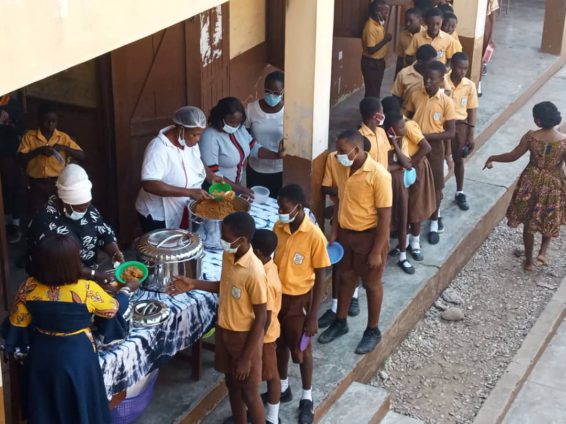
A Medical Sociologist and Public Health Expert, Rev. Prof. Yaa Adobea Owusu, has said that the proposed amount of increment for meals provided under the School Feeding Programme is not enough to offer nutritious meals to the pupils.
Speaking on Upfront on JoyNews, she stated that one of the initial goals of the programme was to provide nutritious meals for the school children, adding that if they could not afford it at home, the school would be a place to eat well.
Prof Owusu noted that with the current economic crisis, GH¢1.20 is not enough for caterers to prepare nutritious meals.
“I think that we need to very much appreciate the jump the government has made from 97 pesewas to GHS1.20. That will be a huge jump especially also taking into cognizance our current situation. But when you look at the realities of how things sell in the market and the fact that these caterers also have to earn a living - they would be employing people - that money is still not enough to give nutritious food to the children.”
“I don’t think that given the present situation whether in rural or urban areas, that money although very much appreciated is able to deliver nutritious food for a child,” Prof Owusu added.
This comes after the government announced an increment of cost per meal, per child from 98 pesewas to ¢1.20.
The Minister for Gender and Social Protection, Lariba Zuweira Abudu, who announced this, said they are in talks with the Ministry of Finance to see how best the amount can be reviewed.
But the caterers have vehemently rejected the proposed increment noting that it is woefully inadequate to feed the children.
Speaking on Adom FM’s morning show, Dwaso Nsem on Tuesday, President of the School Feeding Caterers’ Association, Charlotte Asante, explained that the caterers are struggling to feed the pupils with good meals due to the hikes in the prices of food.
Meanwhile, Prof Owusu believes that the use of mostly imported products, which goes against one of the initial goals of the programme, has contributed to some of the challenges the programme is facing.
The public health expert indicated that, at the launch of the programme, 80% of the products used were expected to be sourced locally or within the communities.
“But, in the literature we just reviewed, right now we have less than 20% of the food that goes into school feeding coming from our local products. We see a lot of imports which doesn't help us, and it is far more expensive.”
She urged the government to review the programme and look into providing caterers with more locally produced goods. This, she said, would not only help in reducing cost, but also benefit farmers and other producers in the country.
Latest Stories
-
Gender Ministry celebrates Christina Koch, reaffirms commitment to empowering girls
9 minutes -
Live stream: Newsfile digs into E&P’s takeover of Damang Mines, OSP powers and Anti-LGBTQ Bill
18 minutes -
Moody’s maintains Ghana’s rating at Caa1, revises outlook to positive
54 minutes -
Zambia elevates tourism education to national priority as President Hichilema backs continental summit
2 hours -
Activa promotes credit insurance to boost SME export growth
2 hours -
ILTM Africa 2026 opens doors to inbound and outbound luxury travel in Cape Town
2 hours -
“BP Soul Travel and Tours scored the highest marks” – Sports Minister Kofi Adams endorses agency for World Cup travel
2 hours -
‘At the age of 12, I was teaching people and collecting money from them’ – Forty Under 40 Awards
3 hours -
I broke my virginity at the age of 26 after university – Richard Abbey Jnr.
4 hours -
Sacked for fees, saved by faith: The untold story of Forty Under 40 Awards founder Richard Abbey Jnr
5 hours -
GCB Bank surges GH¢0.45, ETI gains GH¢0.06 as GSE ends week higher
5 hours -
Two teens jailed 55 years for robbery
6 hours -
UDS demands apology for MPhil student wrongly branded as Tamale robber
6 hours -
“We don’t sell fish!” – Tema Shipyard CEO hits back over dead fish discovery
7 hours -
Sam George defends anti-LGBTQ+ Bill as ‘national priority’ amid debate over gov’t focus
7 hours