

Audio By Carbonatix
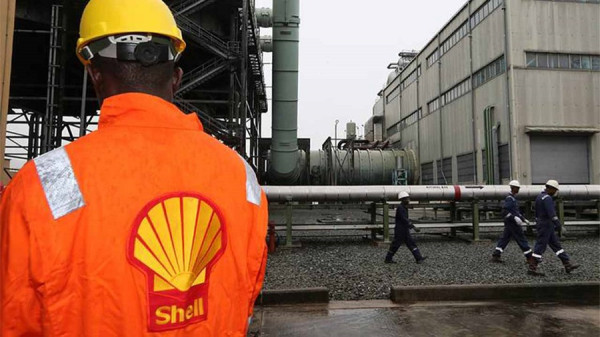
Nigeria's decision this week to block Shell's $2.4 billion sale of its onshore assets has sent a negative signal to investors the country urgently needs to strengthen its all-important oil sector, analysts said.
President Bola Tinubu has been seeking with some success to woo foreign investment as Africa's most populous country grapples with a fiscal crisis.
But this week the upstream regulator surprised many in the industry by declining to approve Shell's $2.4 billion deal with the Renaissance consortium, dominated by local firms.
It did not give reasons for its decision and Shell has yet to comment. The company has ties that stretch back more than half a century and is one of the biggest investors in Nigeria's oil, which is the backbone of its economy and biggest foreign currency earner.
A similar deal by Exxon Mobil to sell onshore assets to Seplat Energy was approved this week, but only after a wait of more than two and half years.
Clementine Wallop, director for sub-Saharan Africa at political risk consultancy Horizon Engage said the difficulty of getting regulatory approval clashed with the president's quest to win outside investment.
"On the one hand, you have a government that says we're open for business. We want to improve the ease of doing business. We want to engage with the world's largest energy investors, and on the other hand, there have been these long delays to the approvals," Wallop said.
"The delays have been an impediment to the success of the Tinubu regime's big investment push. It has had an effect outside the energy industry as well."
DOWNWARD TREND
As Nigeria's economy has failed to recover from the shock of the pandemic and its impact on oil demand, total foreign investment inflows fell to $3.9 billion last year from $5.3 billion in 2022, data from the National Bureau of Statistics showed. That continued a downward trend that started five years ago when investors pumped in $24 billion.
The oil assets Shell is selling are either producing below capacity or not producing at all, but would be boosted by investment.
The government says boosting oil production - which remains below 1.35 million barrels of oil per day (bpd) against a target of 2 million bpd - would help to ease dollar shortages.
The lack of foreign currency and plunge in the value of the naira has led multinational companies beyond oil, including Procter & Gamble, GSK Plc and Bayer AG, to either leave Nigeria or appoint third parties to distribute their products.
MTN, Africa's biggest telecoms operator, and soap maker PZ Cussons, meanwhile, have attributed losses to Nigeria's currency crisis.
To get the much-needed investment, swifter regulatory approval would help, analysts say, although they also cite other issues, including power shortages and corruption that could be more complicated to address.
"I believe that the country needs to do more to attract investments in the (oil and gas) sector. One of such is improving the speed at which regulatory approvals are granted," Ayodele Oni, energy lawyer and partner at Lagos-based Bloomfield Law Practice said.
Some investors, however, are encouraged.
Kola Karim, CEO of power and energy group Shoreline Energy International, which has operations in Nigeria, said the assets bought by Seplat were "low hanging fruit" which could quickly be turned around to boost production.
He also said executive orders, including one last month that raised to $10 million the amount oil firms can spend without going to tender, would help cut back timelines for projects.
"For the first time in a long time, there's a big alignment from government and the oil companies," Kola said.
Latest Stories
-
Berekum Chelsea edge Aduana FC in Bono derby to boost survival hopes
4 hours -
‘They can’t control the team’ – Ernest Thompson doubts local coaches for Black Stars role
5 hours -
Ghana-born midfielder Seidu realises ‘dream’ with Atlético Madrid debut
5 hours -
GPL 2025/26: Bubakari strikes late to hand All Blacks vital win over Dreams FC
5 hours -
Fatal crash on Kintampo–Tamale highway claims four lives
5 hours -
2025–26 FA Cup Semifinal Draw: Chelsea, Man City Learn Wembley Opponents
6 hours -
GPL 25/26: Gold Stars back on top after beating Nations FC
6 hours -
GPL 2025/26: Heart of Lions roar back with victory over Vision FC in Kpando
7 hours -
Solomon Agbasi: Hearts keeper in stable condition after concussion
7 hours -
GPL 2025/26: Late Salim Adams penalty earns Medeama draw at Bechem
7 hours -
Hearts pip Young Apostles 1-0 to end 5-game winless run
7 hours -
Boakye Agyarko marks Easter Sunday with a call for Godly leadership ahead of nationwide campaign tour
8 hours -
Pepsi withdraws as UK festival sponsor after Kanye West backlash
8 hours -
Pope Leo calls for global leaders to choose peace in his first Easter Mass
9 hours -
Kpando MP highlights progress on road projects
9 hours