

Audio By Carbonatix
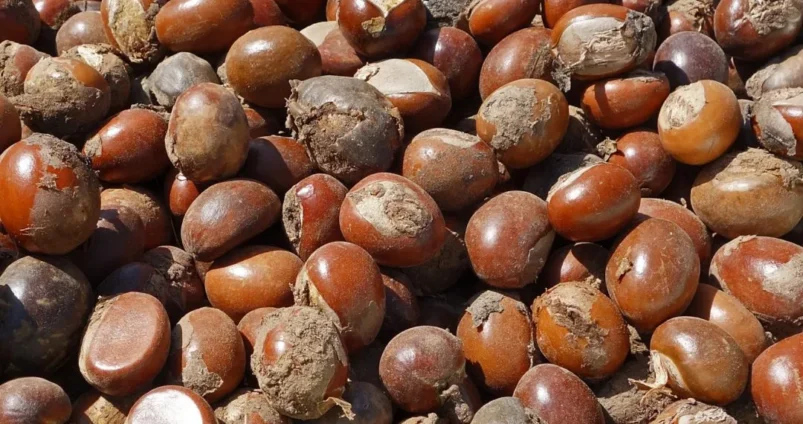
Nigeria extended a ban on shea nut exports by a year, reinforcing a drive to curb raw commodity shipments and boost local value addition.
The extension aims to “deepen processing capacity within Nigeria, enhance livelihoods in shea-producing communities, and promote the growth of Nigerian exports anchored on value-added products,” President Bola Tinubu said in a statement Thursday.
Nigeria is trying to shift the shea nut industry from exporting mostly raw produce to processing more high-value products like shea butter and its derivatives, which can fetch prices as much as 20 times higher, according to the presidency.
The initiative has been blunted by a lack of processing infrastructure, a large informal trade and enforcement challenges.
Prices of the nuts slumped by a third after Nigeria in August joined other producers in West Africa by announcing a moratorium on shipments. They traded at about 850 naira (63 US cents) a kilogram at the end of the harvest season in December, according to Lagos-based commodities exchange AFEX.
The production of shea butter in Nigeria is dominated by smallholders and women in rural villages in central Nigeria, where a growing number of attacks by extremists groups are devastating local communities.
Intermediaries who move products from smallholders to markets have also left the trade after the ban came into effect, resulting in lost contracts, the National Shea Products Association of Nigeria told a local newspaper.
Slow-growing shea trees are indigenous to west and central Africa, with Nigeria producing about 500,000 tons of the fruit annually and accounting for 40% of global supply that’s valued at $6.5 billion, according to the government.
Burkina Faso, Ghana, Mali, Ivory Coast and Togo — all of which restrict exports to promote domestic processing — are the other main producers.
Shea butter can be used as a substitute for cocoa butter and US regulators have granted approval for it to be added to baked goods and moisturizers.
Two leading global producers of plant-based oils — Dutch company Bunge Loders Croklaan BV, a unit of St. Louis-based Bunge Global SA, and Sweden’s AAK AB — manufacture the butter in West Africa, with the former operating a processing plant in Ghana since 2019.
Tinubu also approved the adoption of an export framework by the Nigerian Commodity Exchange and the withdrawal of all waivers allowing the direct shipment of raw shea nuts. Any excess supply of raw nuts will be exported exclusively through the NCX framework, he said.
Latest Stories
-
Ghana explores centre of excellence for hearing, communication and cochlear implant care
1 hour -
Schizophrenia-related disorders lead mental health cases recorded in Ghana
2 hours -
Dutch authorities enlist Ghana in hunt for fugitive drug lord Bolle Jos
2 hours -
Ghana housing finance conference adopts communiqué to improve affordable housing access
7 hours -
Special Initiatives Minister urges Wa Technical Institute to enrol more girls as EU-backed solar training lab opens
7 hours -
In the matter of my first year at the Bar
7 hours -
ActionAid Ghana calls for an end to child marriage, greater investment in girls’ rights
7 hours -
Newsfile to tackle World Cup visa scandal, beach demolitions, education strikes, BRICS bid
8 hours -
UK-Ghana Trade & Investment Summit: Trade Resource Centre to help businesses maximise UK-Ghana trade opportunities
8 hours -
Embassy of Denmark celebrates World Maritime Day
8 hours -
Linking LEAP to productive inclusion could cut extreme poverty by 2030 – UNICEF
9 hours -
Trade Ministry backs use of creative arts to rehabilitate prison inmates
9 hours -
Negotiations with government to continue despite strike suspension – GNAT
9 hours -
‘Ghana cannot afford to waste public resources; every cedi has a job’ – Ato Forson
9 hours -
Ghana expects economic boost as World Assemblies of God Congress brings 10,000 delegates to Accra
9 hours