

Audio By Carbonatix
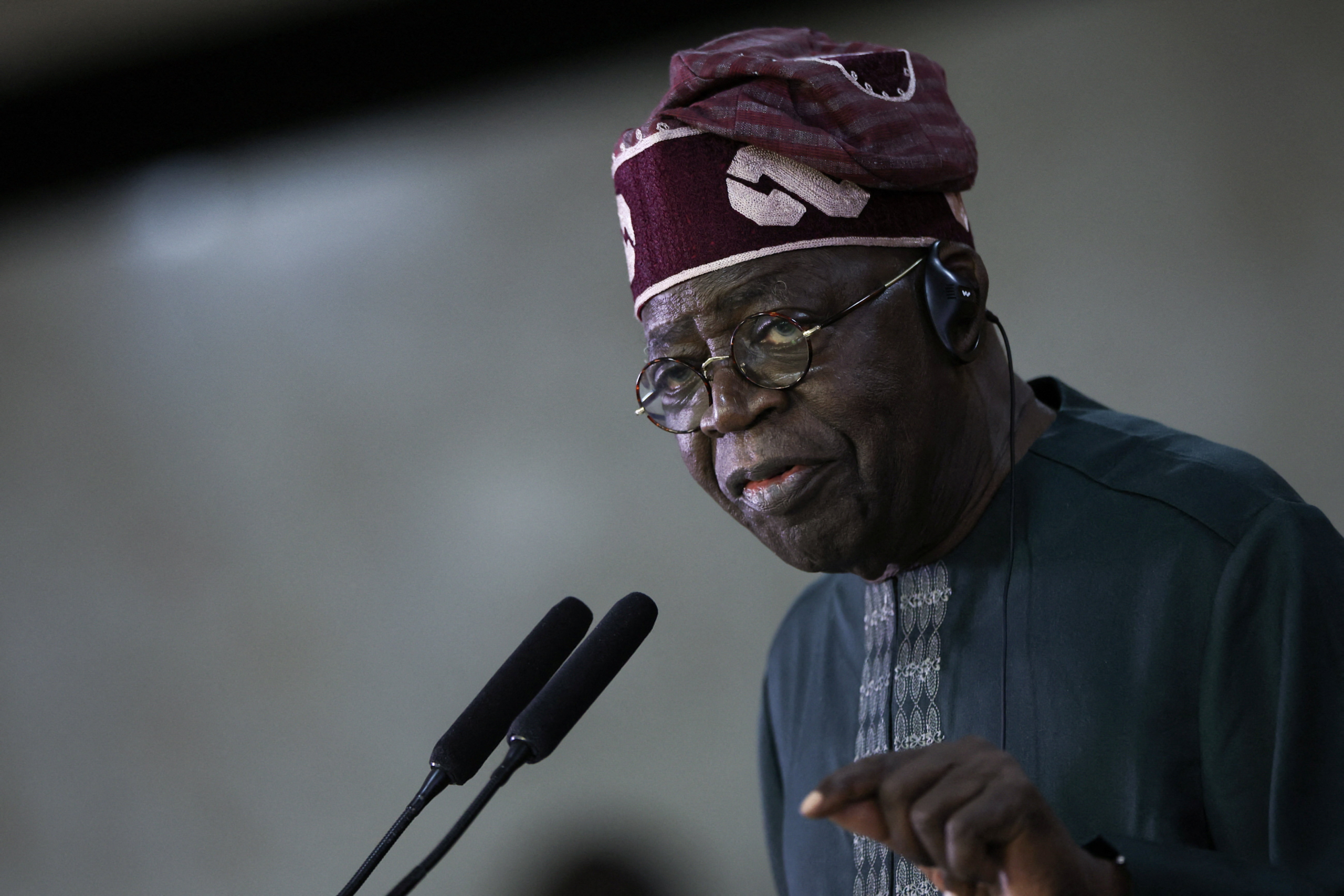
Nigeria will spend about $11.6 billion servicing its debt in 2026, nearly half of its projected government revenue, President Bola Tinubu said, as he called for an overhaul of a global financial system he said penalises African borrowers.
Debt-servicing costs are crowding out spending on infrastructure, healthcare and education, he said, despite a government tax overhaul aimed at boosting revenues in Africa's most populous country.
Nigeria spent $5.15 billion servicing its debt in 2025, data from the Debt Management Office showed.
In a speech at the Africa Forward Summit in Nairobi on Tuesday, Tinubu said high borrowing costs and limited access to long-term finance were diverting resources away from industry, skills and infrastructure, in what he called a structural disadvantage for African economies.
The summit, co-hosted by Kenya and France, drew leaders from more than 30 countries.
"Every single dollar that leaves our treasury to pay punitive interest rates is a dollar that did not go into our steel sector, our textile mills, our agro-processing plants, or our digital industries," he said, adding it also meant fewer trained engineers and less affordable power for factories.
Now in his third year in office and aiming for re-election in January 2027, Tinubu has rolled out Nigeria's biggest reforms in decades, scrapping costly fuel and energy subsidies, devaluing the currency, and overhauling the tax system in a bid to stabilise an economy hit by inflation, foreign exchange shortages, and external shocks.
He said the "painful, homegrown" reforms had stabilised macroeconomic indicators and lifted investor sentiment.
But he added that the gains were being eroded by a global financial system that treats African sovereigns as persistently high-risk borrowers, driving up interest costs.
Analysts led by the Nigerian Economic Summit Group said this week that debt servicing remains a key vulnerability for the country.
Tinubu called for reforms, including cheaper financing and deeper economic integration that prioritise Africa's growth and prosperity.
He also urged curbs on illicit financial flows and greater support for industrialisation, saying Africa still accounts for less than 2% of global manufacturing.
"Nigeria is not asking for charity," he said. "We're demanding a financial system that intentionally enables Africa to industrialise, to process its own minerals, refine its own crude oil, manufacture its own pharmaceuticals, and compete fairly in global markets."
Latest Stories
-
Power restoration fault suspected in Kumasi Central Market fire
4 hours -
The 7-foot giant of Ngleshie Amanfro: Seven-foot Ghanaian Ephraim Saawa dreams of joining the national basketball team
5 hours -
Government promises support for Kumasi Central Market fire victims
5 hours -
Vibes The Movie: Big Ghun’s Ghanaian film earns five nominations at 2026 REFFA
6 hours -
MamaCare CEO warns unresolved conflicts among health workers could undermine maternal and neonatal care
6 hours -
Health professionals urged to translate medical knowledge into practice to save mothers
6 hours -
Conflicts among care providers linked to maternal, neonatal deaths – Expert
8 hours -
GIS marks 10th TIME conference, champions improved teaching practices
8 hours -
BRICS Or Balance? What Ghana’s bid really means
8 hours -
GPRTU wants full TRAFFITECH-GH implementation to start in 2027
9 hours -
How 10-mile walks for basic education birthed a 50-year legal career for Justice Korbieh
9 hours -
Mahama announces plans to import electric wheelchairs for PWDs
9 hours -
KGL U17 Colts 2026: Western beat Prempeh Elite Academy to set up final final with Greater Accra Region
9 hours -
Late Solanke strike salvages 10-man Spurs draw at Man United
9 hours -
Gender Ministry to monitor welfare of Nana Akua Addo’s children amid domestic violence case
9 hours