

Audio By Carbonatix
The immediate past president of the Canoe and Fishing Gear Owners Association of Ghana, Nana Kweigyah, says the current July framework for Ghana’s closed fishing season is failing and risks deepening the country’s fisheries crisis.
The measure, which was introduced as a major intervention to restore declining fish stocks and protect marine ecosystems, is facing growing criticism from coastal fishing communities, with
Speaking as part of an ongoing report examining the ecological and economic impacts of the policy under the Earth Journalism Network’s “Save Our Seas” Project, Nana Kweigyah said there is no evidence that the annual one-month July closure has led to measurable recovery in Ghana’s fish stocks.
“From our perspective as canoe and gear owners, there are no measurable changes in fish catches or stock recovery under the current July framework,” he said.
Citing findings from the Sankofa Project Report, he said “90% of surveyed fisherfolk observed a continuous decline in fish landings over the last decade,” adding that “the current one-month July closure has not reversed this trajectory.”

The closed season policy was designed to allow fish populations time to reproduce and replenish depleted marine resources. It also forms part of broader global conservation goals tied to the Convention on Biological Diversity’s 30×30 target, which seeks to protect 30% of marine ecosystems by 2030.
But Nana Kweigyah said confidence in the policy has sharply declined among artisanal fishers because communities are not seeing improvements in fish availability.
“Perceptions have not changed because fish availability has not improved,” he stated.
“Community confidence in the policy has waned significantly due to poor state communication and a lack of tangible results.”
According to him, the Sankofa Project data shows that only 26% of artisanal fishers believe the current July timeline is effective at rebuilding marine resources.
He said fishermen across coastal communities have also not observed any meaningful changes in the size, quantity, or variety of fish caught since the policy began.
“While closed seasons are scientifically proven to aid replenishment, poor execution has made this iteration counterproductive,” he explained.
He argued that the timing of the closure is creating what he described as a destructive “race-to-fish” effect, in which fishers intensify their harvesting activities immediately before and after the July ban.
“It induces a destructive ‘race-to-fish’ dynamic where fishers aggressively over-exploit the waters immediately before and after July,” he said.
Beyond environmental concerns, Nana Kweigyah warned that the policy is worsening hardship across coastal economies heavily dependent on fishing for survival.
“The short-term economic losses heavily outweigh any perceived long-term benefits,” he stressed.
He said the annual closure results in “a total income cessation across the entire value chain,” affecting livelihoods, local businesses, child school attendance, and general community welfare.
“The Sankofa Project Report notes that 70% of fishers rely on this sector as their exclusive livelihood, leaving them with no economic cushion,” he added.
Nana Kweigyah is now calling for an urgent restructuring of the policy, beginning with shifting the closed season from July to May or June to align with indigenous fishing knowledge and traditional ecological cycles.
“The government should integrate indigenous knowledge by shifting the closure to May/June, aligning with traditional, historically observed natural cycles,” he said.
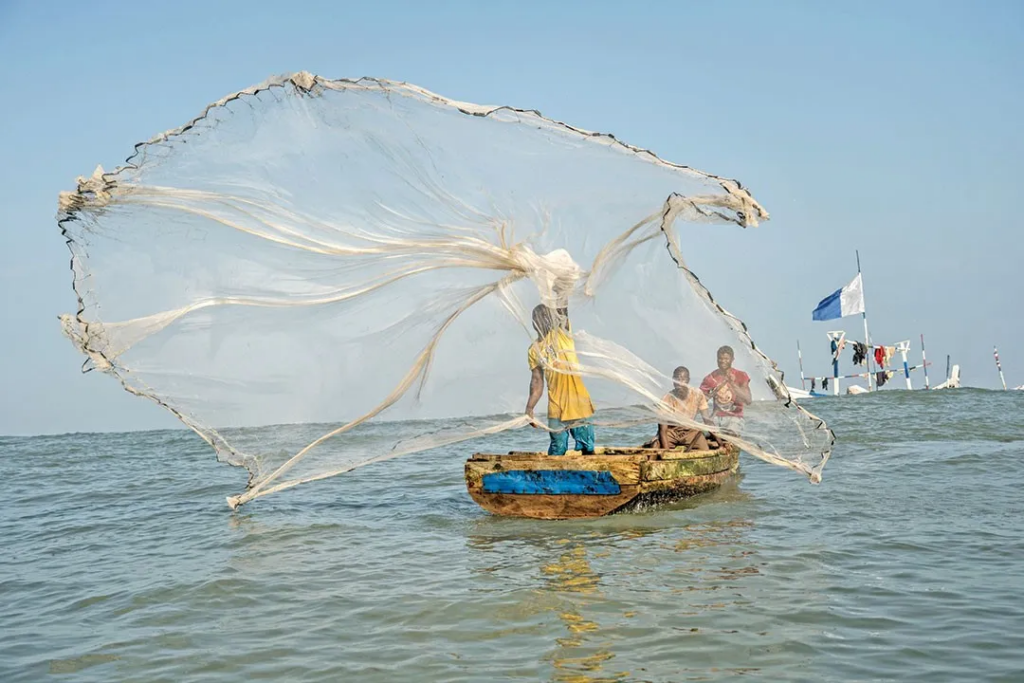
He also called for social protection support for vulnerable fishing communities, stricter enforcement against illegal industrial trawlers, and the creation of protected spawning zones to safeguard critical marine habitats.
The findings raise fresh questions about whether Ghana’s closed fishing season is truly restoring marine ecosystems or merely shifting the burden onto already vulnerable coastal communities whose survival depends on the sea.
Latest Stories
-
GAEC must retain nuclear scientists for Ghana’s nuclear ambitions – Minister
25 minutes -
Man reportedly mistaken for game and shot by hunter dead in forest
27 minutes -
19-year-old mason jailed 15 years for defiling seven-year-old pupil
31 minutes -
Ghana’s banking sector assets rise 20.47% to GH¢500.2bn – BoG Governor
36 minutes -
22 injured as Sprinter bus overturns at Sege after tyre burst
37 minutes -
UN housing expert urges Ghana to strengthen Rent Control Department amid housing affordability concerns
45 minutes -
Delta-BCI partnership reaches 166,000 people with breast cancer education
55 minutes -
Power restoration fault suspected in Kumasi Central Market fire
6 hours -
The 7-foot giant of Ngleshie Amanfro: Seven-foot Ghanaian Ephraim Saawa dreams of joining the national basketball team
7 hours -
Government promises support for Kumasi Central Market fire victims
7 hours -
Vibes The Movie: Big Ghun’s Ghanaian film earns five nominations at 2026 REFFA
7 hours -
‘I’m a fulfilled man’—Justice Korbieh on missing out on Supreme Court despite two nominations
8 hours -
MamaCare CEO warns unresolved conflicts among health workers could undermine maternal and neonatal care
8 hours -
Health professionals urged to translate medical knowledge into practice to save mothers
8 hours -
Retired judge Justice Francis Korbieh charges 1,568 new lawyers to uphold integrity
9 hours