

Audio By Carbonatix
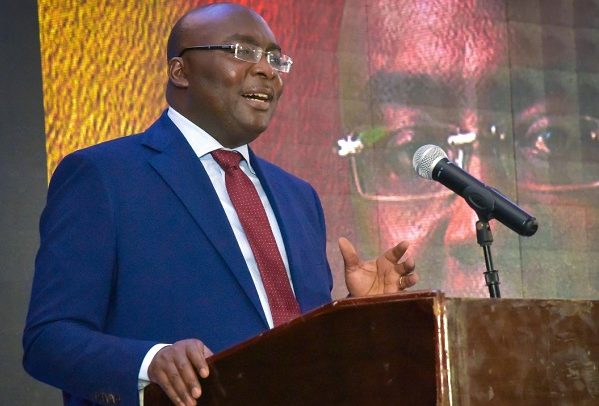
Vice President, Dr. Mahamudu Bawumia, says setting up a bank without capital which was pervasive few years ago is criminal.
According to him, some of the banks whose licenses were revoked operated without capital, putting the banking system at a dangerous risk.
“We needed capital to protect depositors. So if you set up a bank without capital, it means you are setting up to defraud because it will collapse,” he mentioned in an exclusive interview with Philip Osei Bonsu of Asempa FM
“There is no protection for depositors, so there was fraud taking place as I will say it because we set up a bank without capital which is what we were seeing happening, and then there was a problem and the governance under supervision also was weak”.
Defending the action of the Central Bank in cleaning the financial sector, the Vice President said “for a supervisor of the banks, you [BoG] want the bank to do well. If they [banks] do well, you sleep well. If they don’t do well you can’t sleep.”
“They were giving them liquidity support to help them [banks], major amount of liquidity support [bailout funds] but instead of some of them using the liquidity support to protect their depositors, they were using liquidity support to go and set up other banks, and to go and buy properties. It was terrible so they [shareholders and directors] ended up putting the banks in a position which was terrible.”
In this regard, Dr. Bawumia said “they [BoG] had to essentially reabsorb other banks and so on. And so you had such situation happening.”
He pointed out that “the NDC itself under John Mahama recognised there was a problem in the banking system. Banks were set up fraudulently, I mean fraudulently without capital.”
“I tell you, what frighten me was the situation we got to…that it looks like…if the Central Bank do not move, the whole banking system will crush, the whole system because it only takes a couple of banks to fail in a banking system for you to have a run on all the banks because there is no confidence”, the Economist and Banker said.
“Today if you hear that one bank has failed, tomorrow another person will also go and withdraw his or her money; then you have loss of confidence in the banking system.”
He once again commended the Bank of Ghana (BoG) for its swift action that saved the banking system from near collapse, describing the banking regulator as doing its best in that regard.
“I don’t see what the Central Bank under those circumstances could have done, I just don’t see it. They did their best they could do. We took GHS21 billion from the ex chequer [tax] to protect the depositors”.
Sovereign Bank, Capital Bank, UT Bank, The Royal Bank and Beige Bank were some of the banks whose licenses were revoked by the Bank of Ghana.
Latest Stories
-
GhIG pushes for legislation to regulate geoscientists’ activities
26 seconds -
Mfantsipim @150: Ace Anan Ankomah leads project to preserve school’s musical heritage
4 minutes -
Gov’t launches rCOMSDEP in Ahanta West, Mpohor Fiase to promote responsible community mining
6 minutes -
AI is forcing professionals to rethink how they deliver value – Hubtel CEO
9 minutes -
Daily Insight for CEOs: Strengthening the CEO’s Leadership Legacy
10 minutes -
Jimmy Aglah’s ‘When the River Testified’ approved by NaCCA as Supplementary Reader
19 minutes -
Hubtel willing to contribute to Ghana’s proposed AI fund – CEO
23 minutes -
Nkrumah family pays tribute to Gamal, says he died after prolonged illness
32 minutes -
Police arrest eight suspects in anti-narcotics operation at Okaishie Drug Lane
43 minutes -
Former Krowor chairman pledges grassroots empowerment in NDC regional chairmanship bid
46 minutes -
GES recommends reposting of Obuasi SHTS headmaster after August 2026 campus riot
48 minutes -
Rocky Dawuni celebrates King Ayisoba for taking traditional music global
1 hour -
Ghana targets $5bn in annual economic gains from AI – Sam George
1 hour -
From childhood dreams to future careers: Ecobank’s Big Pitch seeks to promote early savings and investment
1 hour -
Public office demands make party work difficult for NDC appointees – Mahdi Gibril
1 hour