

Audio By Carbonatix
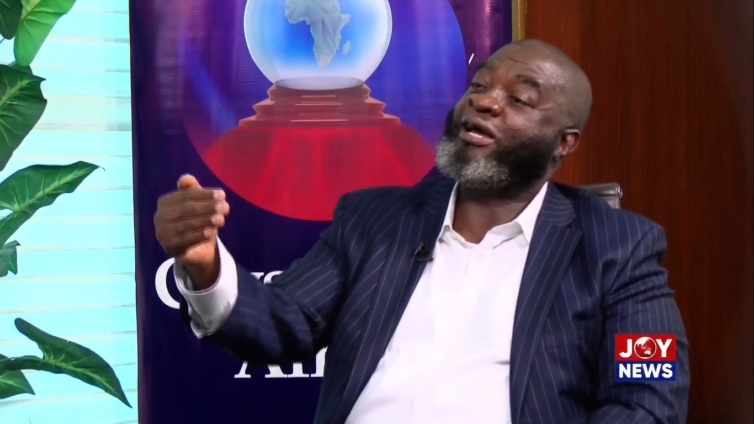
A Business Strategist, David Ofosu-Dorte, has raised critical questions about the importance of some government institutions.
During an interview on JoyNews' PM Express, he indicated that some institutions since their creation have not only failed to fulfill their intended purposes, but have also become a huge burden on the public purse.
Citing the Youth Employment Agency (YEA), Mr Ofosu-Dorte suggested that the funds allocated to the agency could be better utilised to incentivise private businesses that actively contribute to job creation.
"Why do we need YEA [Youth Employment Agency]? Why can't we use the budget of YEA to incentivise the ordinary businesses that employ people?" he asked.
He emphasised that while the Ministry of Employment could play a role in policy making, the creation of additional agencies like YEA might not be necessary.
The Senior Partner AB & David also argued that government's involvement in business is not inherently problematic but emphasised the importance of managing such entities efficiently.
He criticised the tendency to create institutions that end up burdening both public and private finances.
"If a government had used YEA money to create a factory and sold half of it to private business, that factory must be run as a factory. We should not make politicians CEOs or appoint them to the Board. Instead, we tend to create institutions that become burdens on the public purse," he stated.
Mr Ofosu-Dorte also questioned the need for the Right to Information (RTI) Commission, arguing that it adds an unnecessary layer of bureaucracy and expense to the process of making information available to the public.
He suggested that if the government aims for transparency, it should release information without the need for an additional Commission.
"Why can't the government simply release the information, why do we need a Commission before we release the information? We don't need it,"he asserted.
Mr Ofosu-Dorte cautioned against support for the creation of government agencies without considering their long-term impact on public expenditure.
He emphasised that such institutions, if not managed effectively, contribute to increased government spending, ultimately affecting taxpayers.
Latest Stories
-
Kwaku Azar writes: A-G vs OSP
19 minutes -
Mfantsipim–Adisadel rivalry built excellence, not division – Sam Jonah
44 minutes -
Vice President launches Mfantsipim’s 150 years of shaping Ghana’s greatest mind
1 hour -
I assure Otumfuo, Mahama will join him to commission KNUST Teaching Hospital by end of this year – Haruna Iddrisu
2 hours -
Barcelona dominate derby to extend La Liga lead
2 hours -
Gov’t to roll out free special education for persons with disabilities from July 1 – Education Minister
2 hours -
Importers and Exporters Association declares full support for Publican AI port system
2 hours -
“We used it to test our officiating officials’ readiness” – Bawah Fuseini after CAA Athletics event
3 hours -
Volleyball emerges as Ghana’s fastest rising sport
3 hours -
National Sports Fund needs strong leadership from the top – Administrator David Wuaku
3 hours -
JoySports Exclusive: Steve McLaren in talks with GFA after expressing interest in Black Stars job
3 hours -
Fire guts auto parts warehouse at Bubuashie, one fire officer injured
3 hours -
I owe my victory to coach Ofori Asare – Allotey after winning WBA Africa Gold Super Flyweight belt
3 hours -
Church of Pentecost supports over 2,000 BECE candidates in Obuasi with career guidance seminar
5 hours -
Brandon Asante and Coventry all but promoted to Premier League despite Sheffield Wednesday draw
5 hours