

Audio By Carbonatix
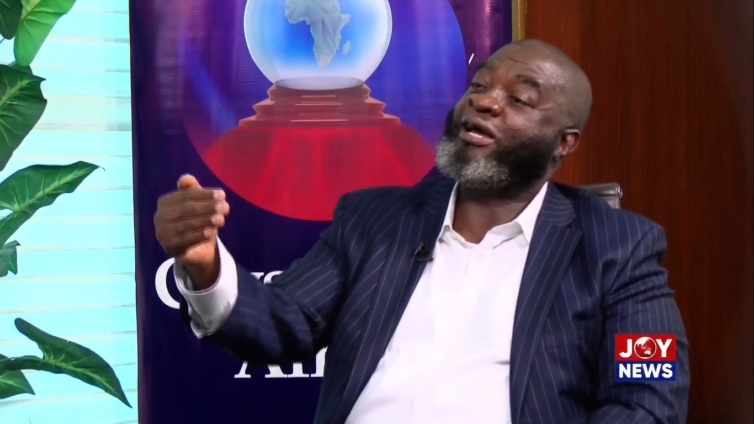
A Business Strategist, David Ofosu-Dorte, has raised critical questions about the importance of some government institutions.
During an interview on JoyNews' PM Express, he indicated that some institutions since their creation have not only failed to fulfill their intended purposes, but have also become a huge burden on the public purse.
Citing the Youth Employment Agency (YEA), Mr Ofosu-Dorte suggested that the funds allocated to the agency could be better utilised to incentivise private businesses that actively contribute to job creation.
"Why do we need YEA [Youth Employment Agency]? Why can't we use the budget of YEA to incentivise the ordinary businesses that employ people?" he asked.
He emphasised that while the Ministry of Employment could play a role in policy making, the creation of additional agencies like YEA might not be necessary.
The Senior Partner AB & David also argued that government's involvement in business is not inherently problematic but emphasised the importance of managing such entities efficiently.
He criticised the tendency to create institutions that end up burdening both public and private finances.
"If a government had used YEA money to create a factory and sold half of it to private business, that factory must be run as a factory. We should not make politicians CEOs or appoint them to the Board. Instead, we tend to create institutions that become burdens on the public purse," he stated.
Mr Ofosu-Dorte also questioned the need for the Right to Information (RTI) Commission, arguing that it adds an unnecessary layer of bureaucracy and expense to the process of making information available to the public.
He suggested that if the government aims for transparency, it should release information without the need for an additional Commission.
"Why can't the government simply release the information, why do we need a Commission before we release the information? We don't need it,"he asserted.
Mr Ofosu-Dorte cautioned against support for the creation of government agencies without considering their long-term impact on public expenditure.
He emphasised that such institutions, if not managed effectively, contribute to increased government spending, ultimately affecting taxpayers.
Latest Stories
-
2026 Amputee World Cup: We want to make the continent proud – Black Challenge coach
1 minute -
International Day of the Girl: Central Region Education Directorate calls for action to tackle child marriage, teenage pregnancy
7 minutes -
The Eyes of Ghana: iShowSpeed joins Obamas as producers of Chris Hesse documentary
18 minutes -
FirstBank Ghana pledges action on customer feedback at service week forum
49 minutes -
Sahara Group urges journalists to look beyond fuel prices in energy reporting
58 minutes -
Today’s front pages: Friday, October 16, 2026
1 hour -
Ashanti Region: ECG urges customer cooperation with franchise officers
1 hour -
Ghana’s research fund faces a test of turning funding promises into scientific breakthroughs
1 hour -
Dîner en Blanc Accra returns on December 28 for second edition
1 hour -
20% digital tax: Government hiding behind technicalities to cheat Ghanaians – Dr Boako
2 hours -
David Selassie Anthony declares bid for NDC Deputy National Organiser
3 hours -
Amin Adam proposes 13 measures to strengthen Ghana’s debt transparency and market confidence
3 hours -
Mahama announces $2bn annual investment to accelerate industrialisation
3 hours -
Amin Adam urges monthly disclosure of Sinking Fund as Ghana prepares for DDEP repayments
3 hours -
Stronger banks will fuel business growth and jobs – ADB MD
4 hours