


Audio By Carbonatix
Record-breaking heat means ice cubes now cost more than bread and milk in parts of Mali.
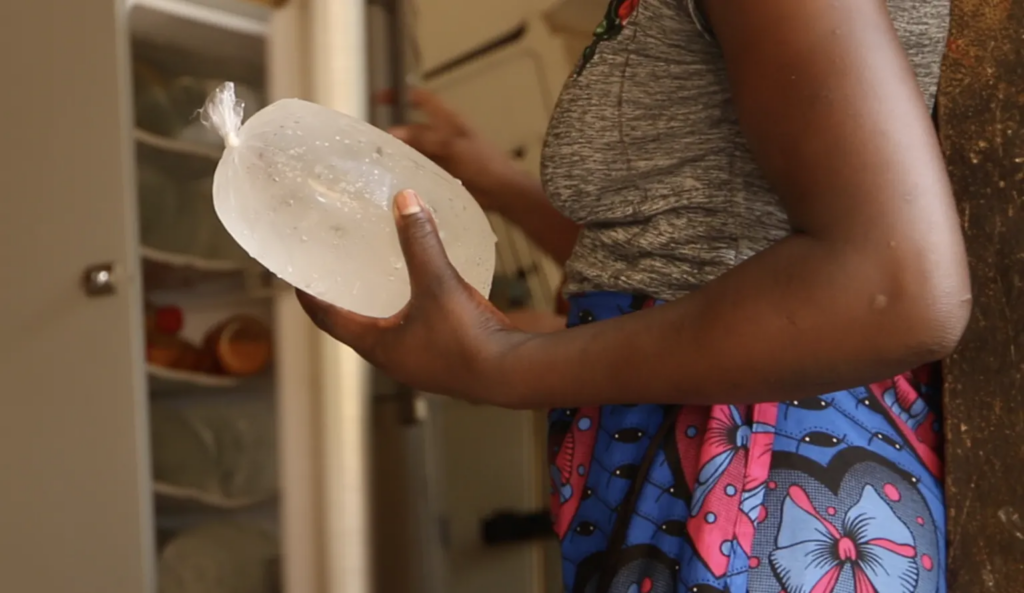
"I've come to buy ice because it's very hot now," says 15-year-old Fatouma Yattara as she visits her local vendor in the capital, Bamako.
With no working fridge due to prolonged power cuts, she resorts to using ice cubes to preserve food and keep cool during a heatwave which has seen temperatures soar to 48C.
It works to an extent, but price hikes are making life even harder.
"In some places it's 100 francs CFA ($0.20; £0.16)" for a small bag, she says, "even 300, 500 - it's too expensive."

This makes ice more expensive than bread - a standard baguette normally costs about 250 CFA.
It is an even bigger struggle for Nana Konaté Traoré, who is now forced to cook every day instead of a few times a week.
"We often go a whole day without power," she says, "so, the food goes bad, and you have to throw it away".
The problems began almost a year ago, with Mali's state power company failing to match growing demand after accumulating hundreds of millions of dollars in debt in recent years. Many Malians do not have back-up generators as it is expensive to refuel them.
No electricity means no fans at night, forcing many to sleep outside. And it is affecting people's health.
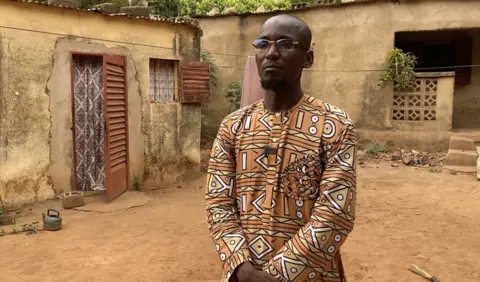
"We really suffer," says Soumaïla Maïga, a young man from the Yirimadio district on the outskirts of Bamako.
"At night it can reach 46C - it's unbearable because I suffer from dizziness. I have to pour water on myself to cope."
Since March, temperatures have soared above 48C in parts of Mali, killing more than 100 people. Most vulnerable are the elderly and the very young.
"We were seeing about 15 hospitalisations a day," says Prof Yacouba Toloba, who works at the university hospital in Bamako.
"Many patients are dehydrated - the main symptoms are coughs and bronchial congestion. Some also have respiratory distress," he tells the BBC.
Schools in some areas have closed as a precaution, and people in the Muslim-majority nation were advised not to fast during the Ramadan period which ended recently.
"We need to plan more for these situations, which will perhaps come back. This time it took us by surprise," adds Prof Toloba.
The deadly heatwave is also affecting neighbouring countries such as Senegal, Guinea, Burkina Faso, Nigeria, Niger and Chad.
Human-induced climate change is to blame for these extreme highs, according to scientists at World Weather Attribution (WWA).
"Extreme 5-day maximum heat as rare as the observed event over Mali/Burkina Faso would have been 1.5C cooler and 1.4C cooler over the larger Sahel region if humans had not warmed the planet by burning fossil fuels," their latest report says.
With temperatures expected to remain above 40C in Bamako over the next few weeks, people are trying to adapt to their new normal.
As sun sets in the capital, Ms Konaté Traoré takes several large mats outside to her yard and lays them down.
"We have to be outside all the time because of the heat. When it's hot I get sick," she says.
"It's not easy at all."
Latest Stories
-
GAEC must retain nuclear scientists for Ghana’s nuclear ambitions – Minister
23 minutes -
Man reportedly mistaken for game and shot by hunter dead in forest
25 minutes -
19-year-old mason jailed 15 years for defiling seven-year-old pupil
30 minutes -
Ghana’s banking sector assets rise 20.47% to GH¢500.2bn – BoG Governor
34 minutes -
22 injured as Sprinter bus overturns at Sege after tyre burst
36 minutes -
UN housing expert urges Ghana to strengthen Rent Control Department amid housing affordability concerns
44 minutes -
Delta-BCI partnership reaches 166,000 people with breast cancer education
53 minutes -
Power restoration fault suspected in Kumasi Central Market fire
6 hours -
The 7-foot giant of Ngleshie Amanfro: Seven-foot Ghanaian Ephraim Saawa dreams of joining the national basketball team
7 hours -
Government promises support for Kumasi Central Market fire victims
7 hours -
Vibes The Movie: Big Ghun’s Ghanaian film earns five nominations at 2026 REFFA
7 hours -
‘I’m a fulfilled man’—Justice Korbieh on missing out on Supreme Court despite two nominations
7 hours -
MamaCare CEO warns unresolved conflicts among health workers could undermine maternal and neonatal care
8 hours -
Health professionals urged to translate medical knowledge into practice to save mothers
8 hours -
Retired judge Justice Francis Korbieh charges 1,568 new lawyers to uphold integrity
9 hours