

Audio By Carbonatix
South Africa has entered uncharted waters following deep divisions in the coalition government over the national budget that has finally been tabled after a month-long delay.
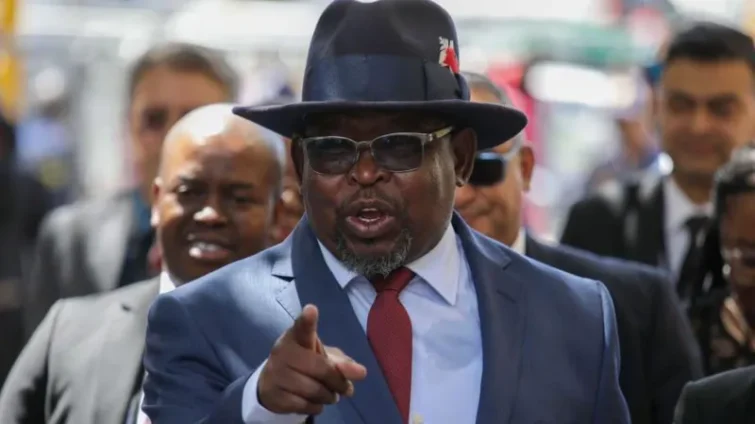
This is the view of analysts after Finance Minister Enoch Godongwana's budget drew a backlash from various quarters, includingkey partners in the coalition government rejecting his proposals for a second time.
The African National Congress (ANC) formed a government of national unity (GNU) with nine other parties after losing its parliamentary majority in elections last year.
And, without the support of its biggest coalition partner, the Democratic Alliance (DA), it will fail to pass the budget unless it rethinks its contentious policies or gets the backing of the biggest opposition parties.
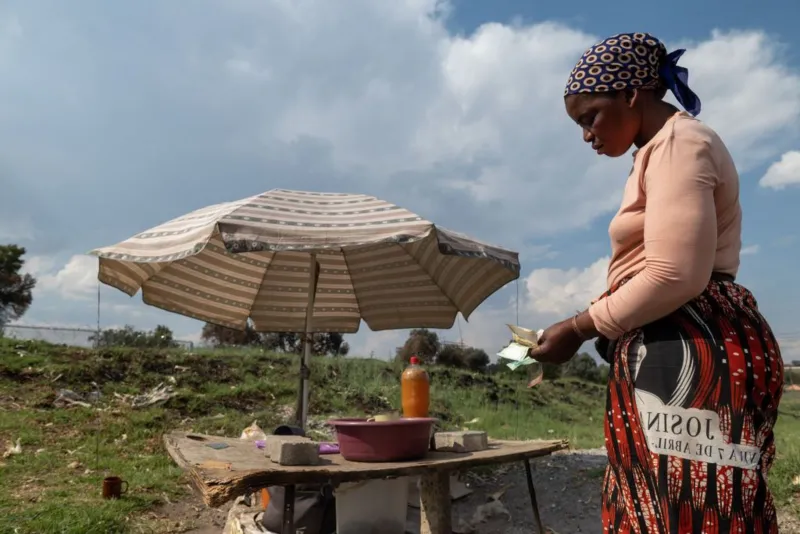
Godongwana was forced to postpone his budget presentation last month after fierce resistance to his plan to raise value-added-tax (VAT), which would have seen the prices of goods go up at a time when South Africans are hard-hit by the cost-of-living crisis.
This delay sent shockwaves through South Africa at the time, as it was the first time this had happened since the end of white-minority rule in 1994.
Following a series of meetings between the parties in government, Godongwana returned on Wednesday to present what he called a "bold and pragmatic" budget.
In his revised budget, the minister tried to appease his GNU partners by announcing a reduced VAT increase, to be implemented over a two-year period.
Godongwana had initially proposed increasing VAT from15% to 17%, but has now suggested raising it to 16% in two stages.
The minister says that increasing taxes is necessary to tackle "persistent spending pressures in health, education, transport and security".
"They [other parties] have to make a choice - do we close schools, hospitals or clinics? They have to make that choice. Do we fire people? That is the choice we have to make and that is not a good choice to make," Godongwana said.
The minister added that he had opted to target VAT rather than personal and corporate taxes, as the latter two would generate less revenue while "potentially harming investment, job creation and economic growth".
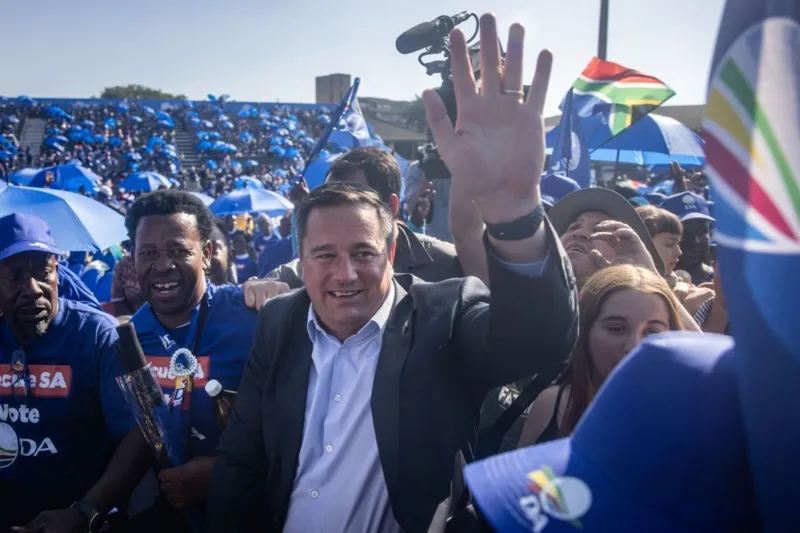
Godongwana's revised budget has the support of his party, the ANC, but has failed to appease the DA, which said it would not "support any increase in taxes, unless those increases were temporary and the ANC agreed to a series of major reforms" that would grow the economy, reduce waste and create jobs within the next three years.
The impasse has tarnished President Cyril Ramaphosa's much-vaunted reputation as a deal-maker, with only one of his coalition partners - the small Patriotic Alliance (PA) - supporting the budget.
The latest tussle highlights deepening divisions in the fragile coalition government, as the two biggest parties have locked horns over key issues since its formation.
This includes a controversial land law, which allows for private property to be seized by the government in certain cases, without any compensation offered to owners.
The DA is challenging the law in court, arguing that it is unconstitutional and threatens property rights in South Africa.
The two biggest opposition parties - former President Jacob Zuma's Umkhonto weSizwe (MK) and Julius Malema's Economic Freedom Fighters (EFF) - have also rejected the budget, saying the proposed tax hikes would hit the poor the hardest.
This leaves the ANC in a difficult situation, at it needs the support of at least one of the three other biggest parties to pass the budget.
An analyst at South Africa's Wits University, Thokozile Madonko, says the deadlock over the budget has left South Africa in "uncharted waters".
She tells the BBC that the role of parliament will now be "absolutely critical" as it either accepted, changed or rejected the budget.
And while in the past the ANC could always push through its policies, this is no longer the case.
This will force it to strike a deal with other parties or risk seeing the budget being voted down - something that could result in the collapse of the coalition government.
Ms Madonko criticised Godongwana's decision to take the "laziest option" by proposing an increase in VAT, which will affect the entire population, rather than targeting the richest section of the population by introducing a "wealth tax" on them.
Another expert, Adrian Saville, said the budget was a "folly" as the minister repeated many old promises to promote economic growth and create jobs in a country where unemployment is standing at more than 30%.
"Those are words. Give us the numbers [and] tell us what you intend to do so that when we meet again in a year's time, we know whether you've been successful or if you've fallen short," he tells the BBC.
Godongwana has long been seen as a steady pair of hands, commanding the respect of both the business sector and the trade union movement.
But his credibility has taken a knock following the crisis over the budget. He now faces the challenge of salvaging his reputation by steering the budget through parliament - or people would increasingly question his suitability for the post.
Latest Stories
-
Woman found dead in boyfriend’s room at Somanya
20 minutes -
Woman feared dead after being swept away in Nima drain amid heavy rain
32 minutes -
Court grants GH¢10k bail to trader who posed as soldier at 37 Military Hospital
42 minutes -
Tano North MP secures funding to reconstruct decades-old Yamfo Market
51 minutes -
Haruna Iddrisu discharged after road traffic accident
1 hour -
Kenyans drop flowers for Valentine’s bouquets of cash. Not everyone is impressed
1 hour -
Human trafficking and cyber fraud syndicate busted at Pokuase
1 hour -
Photos: First Lady attends African First Ladies for Development meeting in Ethiopia
2 hours -
2026 U20 WWCQ: Black Princesses beat South Africa to make final round
2 hours -
World Para Athletics: UAE Ambassador applauds Ghana for medal-winning feat
3 hours -
Photos: Ghana’s path to AU Chairmanship begins with Vice Chair election
3 hours -
Chinese business leader Xu Ningquan champions lawful investment and deeper Ghana–China trade ties
3 hours -
President Mahama elected AU First Vice Chair as Burundi takes over leadership
4 hours -
Police work to restore calm and clear road after fatal tanker crash on Suhum–Nsawam Highway
4 hours -
Four burnt, several injured in Nsawam-Accra tanker explosion
5 hours