

Audio By Carbonatix
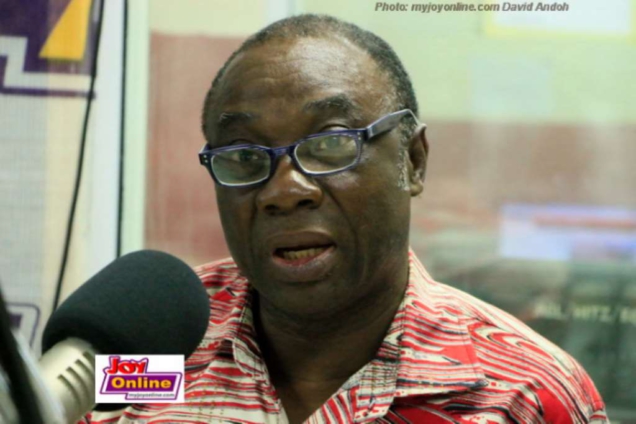
The Ranking Member of Parliament’s Employment, Social Welfare, and State Enterprises Committee, Dr. Kwabena Donkor, has voiced strong criticism of the Supreme Court’s recent dismissal of an application by Speaker of Parliament Alban Bagbin.
The application sought to overturn a previous ruling by the Court that prevented Bagbin from enforcing his declaration of four parliamentary seats vacant, but the Court upheld its initial stance, effectively maintaining the current occupancy of these seats.
In an interview with Citi FM on Wednesday, October 30, Dr. Donkor alleged that the Supreme Court’s ruling was influenced more by political motivations than by legal reasoning.
He expressed concern that the Court’s decision was swayed by political considerations, which he believes undermines judicial independence and impartiality.
He argued that the court’s approach has serious implications for the objectivity of Ghana’s legal system in critical democratic matters.
Dr. Donkor took issue with Chief Justice Gertrude Torkornoo’s justification that upholding the occupancy of the seats was necessary to prevent the affected constituencies from temporarily losing representation.
He found this reasoning inconsistent, pointing to the ongoing case of the people of Santrokofi, Akpafu, Likpe, and Lolobi (SALL), who have lacked representation in Parliament since the 2020 elections due to administrative issues and boundary challenges, yet have seen no intervention.
According to Dr. Donkor, the Court’s emphasis on preserving representation for the four disputed seats starkly contrasts with its stance on the disenfranchised SALL communities.
He argued that this selective application of the principle of representation suggests a bias in favour of certain constituents while neglecting the rights of others, casting doubt on the judiciary's impartiality in maintaining fair representation across the nation.
Dr. Donkor questioned the Supreme Court's dedication to upholding democratic fairness, especially for Ghanaians without a parliamentary voice.
He stressed that judicial decisions must prioritise equitable representation, warning that selective rulings could erode public confidence in the judiciary’s role in safeguarding democratic principles.
“The decision is not a legal one but a political one. I have also stated that this particular Supreme Court is more political than legal. If you listened to the argument of the Chief Justice in her ruling, that thousands of Ghanaians will not have representation if the ruling of the Speaker is not stayed, it is the most flawed reasoning I have heard in Ghana’s political economy."
“It is flawed because Parliament, per its calendar, will be rising in two weeks from today. And also, the people of SALL have been without representation and they are not Ghanaians.”
Latest Stories
-
A source of excellence across generations – Vice President Opoku-Agyemang lauds Mfantsipim
48 minutes -
(Photos) Mfantsipim School launches historic 150th anniversary
1 hour -
Knights and Ladies of Marshall group backs Catholic Bishops’ stance on anti-LGBTQ+
2 hours -
Bright Simons writes: All the Filla in the Ibrahim Mahama/E&P – Gold Fields Saga
3 hours -
Monetise Idiocy In Ghana
3 hours -
The Ghanaian prophet and the mysterious death of his scottish wife Charmain Speirs
3 hours -
Nearly 400 sentenced in Nigeria for links to militant Islamists
4 hours -
Ghana’s recovery supported by gold strength despite global oil price pressures – Standard Bank Research
4 hours -
Methodist Church hails Mfantsipim@150; calls for “fresh consecration” to excellence
4 hours -
‘Excellence is our inheritance’ – Nana Sam Brew-Butler hails Mfantsipim’s 150-year reign in leadership
4 hours -
Kwaku Azar writes: A-G vs OSP
4 hours -
Mfantsipim–Adisadel rivalry built excellence, not division – Sam Jonah
5 hours -
Vice President launches Mfantsipim’s 150 years of shaping Ghana’s greatest mind
5 hours -
I assure Otumfuo, Mahama will join him to commission KNUST Teaching Hospital by end of this year – Haruna Iddrisu
6 hours -
Barcelona dominate derby to extend La Liga lead
6 hours