


Audio By Carbonatix
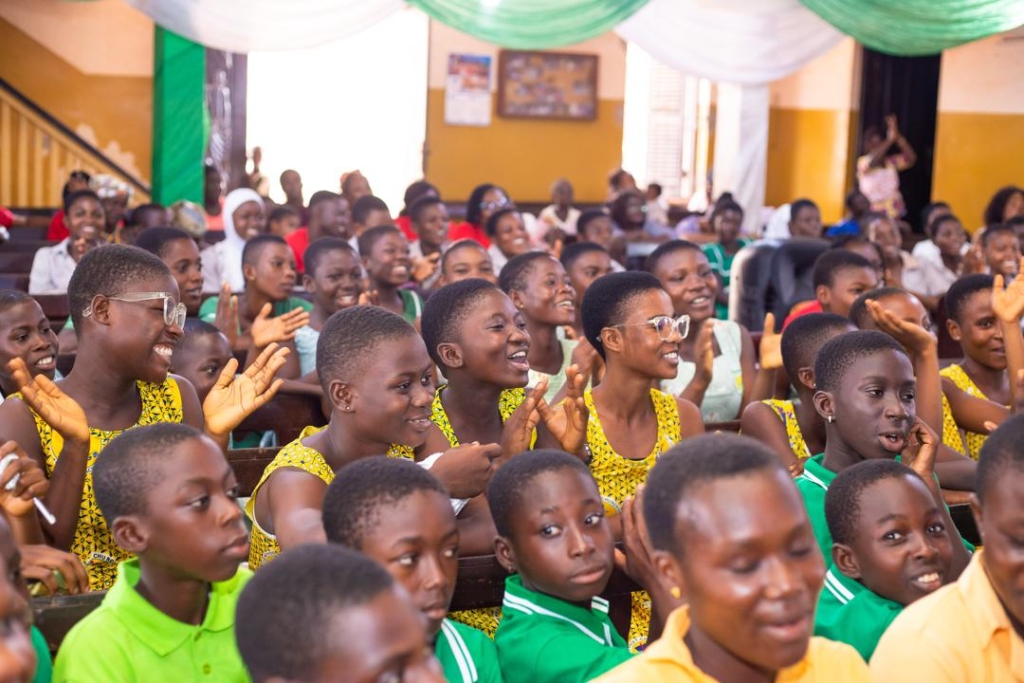
Yinson Ghana, in collaboration with the Ahanta West Municipal Directorate of Education in the Western Region, recently held its second annual training on period poverty.
This initiative aims to address critical issues affecting countless women and girls during menstruation.
Over 500 students from 81 schools within the municipality participated, each receiving two packs of sanitary pads, an improvement of last year’s one girl one pad initiative.
The programme covered essential topics such as menstrual hygiene practices and management, different types of sanitary pads and their proper use, and maintaining good personal hygiene during menstruation.
Additionally, it focused on the importance of breaking taboos surrounding menstruation.
Combating Period Poverty
The training is part of Yinson Ghana's broader mission to tackle the challenges associated with menstruation and combat period poverty head-on, empowering young women to stay focused on their education.
Edward Mensah, Corporate Social Responsibility Coordinator of Yinson Ghana, highlighted the global nature of period poverty, noting, "Women often face discrimination and ill-treatment due to this natural biological process."
In communities with extreme poverty and entrenched cultural beliefs, the lack of access to essential products such as sanitary pads exacerbates gender inequality and adversely affects women's well-being.
"We can break down barriers, empower our girls, and create a more equitable future. Let us be committed and continue to champion the rights and dignity of every woman and girl in our community," Mensah urged.
A Call to Action
George Effah, the Ahanta West Municipal Director of Education, emphasised the theme for this year, "Together for a Period Friendly Ghana," as a call to action.
"Menstrual hygiene is not just a matter of health; it is a matter of dignity and human rights. Too often, schoolgirls face stigmatisation, discrimination, and barriers to education simply because of menstruation. This must change, and it begins with us," Mr Effah stated.
Effah also highlighted the broader health impact of menstrual hygiene.
"When girls and women have access to safe and affordable sanitary materials to manage their menstruation, they decrease their risk of infection. This can have cascading effects on overall sexual and reproductive health, including reducing teen pregnancy and improving maternal outcomes."

Educational Impact
Stakeholders were called upon to support policies that promote menstrual health education in schools, ensure access to affordable menstrual products, and dismantle the stigma surrounding menstruation.
"Together, we can build a Ghana where every girl and woman can thrive, regardless of their menstrual status," Mr Effah added, expressing gratitude to Yinson Ghana for their generosity and thoughtfulness.
Breaking the Silence
Madam Irene Dela Amedekah emphasised that menstrual hygiene management is not just a health issue but also a matter of dignity, equality, and human rights.
"We must break the silence and stigma surrounding menstruation. It’s time to ensure that every woman and girl has access to safer and hygienic menstrual products, proper sanitation facilities, and comprehensive education about menstrual health,"she said.
Lack of information about menstruation leads to unhygienic and unhealthy practices, creating misconceptions and negative attitudes.
"By addressing menstrual health hygiene comprehensively, we can empower women and girls to manage their periods with dignity, stay healthy, and fulfill their potential. Let us work together to create a world where menstruation is no longer a barrier to equality and dignity,"Madam Amedekah concluded.
Practical Guidance
Representatives from the Ghana Health Service, Mrs Evelyn Mensah and Madam Portia Assan, provided practical guidance to the students about observing proper hygiene during menstruation.
This included changing sanitary pads every four hours and washing hands to prevent bacterial infections.
Yinson Ghana's initiative is a powerful example of how collective efforts can significantly improve menstrual health and education, fostering a more equitable and supportive environment for all.
The students took on the role of storytellers, using engaging educational dramas to demystify menstruation and dispel myths and taboos.
Their performances ignited laughter and understanding, creating a safe space for open dialogue and breaking down barriers around period poverty.
Latest Stories
-
Anthony Joshua declines showdown with Tyson Fury but admits they ‘probably’ clash next
8 minutes -
Tyson Fury dominates Makhmudov, calls out Joshua next
27 minutes -
I have supported highway authority financially to fix roads in my constituency – A Plus
2 hours -
US, Iran fail to reach peace agreement after marathon talks in Pakistan
2 hours -
ECG kicks off Phase Two of transformer upgrades at Lashibi; brief outages expected
3 hours -
Port crises loom as 11,000 drivers threaten four-day strike
3 hours -
A source of excellence across generations – Vice President Opoku-Agyemang lauds Mfantsipim
4 hours -
(Photos) Mfantsipim School launches historic 150th anniversary
5 hours -
Knights and Ladies of Marshall group backs Catholic Bishops’ stance on anti-LGBTQ+
6 hours -
Bright Simons writes: All the Filla in the Ibrahim Mahama/E&P – Gold Fields Saga
6 hours -
Monetise Idiocy In Ghana
6 hours -
The Ghanaian prophet and the mysterious death of his scottish wife Charmain Speirs
7 hours -
Nearly 400 sentenced in Nigeria for links to militant Islamists
7 hours -
Ghana’s recovery supported by gold strength despite global oil price pressures – Standard Bank Research
7 hours -
Methodist Church hails Mfantsipim@150; calls for “fresh consecration” to excellence
8 hours