

Audio By Carbonatix
Tanzania's president has announced an outbreak of Marburg virus, an Ebola-like virus, just a week after her health minister denied that there were any cases in the country.
President Samia Suluhu Hassan said at a press conference on Monday that health authorities had confirmed one case of Marburg in the north-western region of Kagera.
"We are confident that we will overcome this challenge once again," Samia said, referring to a previous outbreak in Tanzania two years ago.
On 14 January, the World Health Organization (WHO) reported a suspected Marburg outbreak in the country, having recorded nine suspected cases and eight deaths over five days in Kagera.
But Tanzania's Health Minister Jenista Mhagama said in a statement that after samples had been analysed, all suspected cases were found negative for Marburg.
At Monday's press briefing, which was held jointly with the WHO, President Samia said her government had stepped up its efforts and that a rapid response team had been dispatched to follow up on all suspected cases.
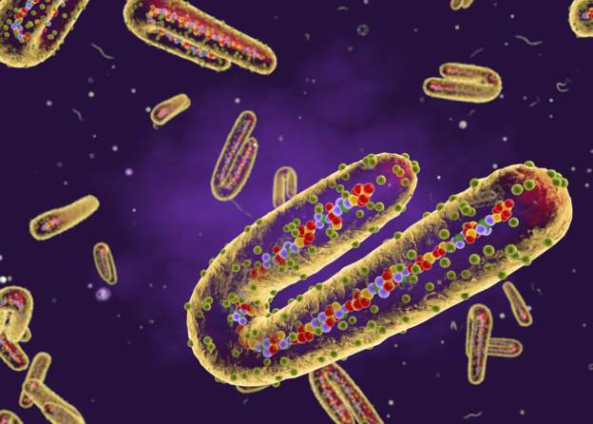
Marburg is highly infectious, with symptoms including fever, muscle pains, diarrhoea, vomiting and, in some cases, death through extreme blood loss.
On average, the virus kills half of the people it infects, according to the WHO.
Tanzania says that along with the one confirmed case, authorities took samples from 24 other people suspected of having Marburg. These all tested negative.
Meanwhile, the cause of the eight deaths reported by the WHO has yet to be revealed.
Tanzania experienced its first Marburg outbreak in March 2023 in the Bukoba district. It killed six people and lasted for nearly two months.
WHO Director General Dr Tedros Adhanom Ghebreyesus said the global risk from Tanzania's current outbreak was "low".
"Even though there is no approved treatment or vaccines, outbreaks can be stopped quickly," he said. "WHO advises against restrictions. Now is the time for collaboration."
On Thursday, Africa CDC, the African Union's public health agency, said more than 300 contacts had been identified for further testing. Health workers make up 56 of these contacts, while 16 on the list are known to have had direct contact with those suspected to have had Marburg.
The International Health Regulations (IHR) of 2005 require countries to report public health events and emergencies that could cross borders. Kagera is a transit hub with many people travelling to and from the Democratic Republic of the Congo, Uganda, Burundi and Rwanda.
In December, neighbouring Rwanda declared that an outbreak in the country, which had infected 66 people and killed 15, was over.
The Marburg virus is transmitted to humans from fruit bats and then through contact with the bodily fluids of infected individuals.
There are no specific treatments or a vaccine for the virus, although trials are underway.
Latest Stories
-
Prudential Life settles GH¢100,000 medical bills under its PRUCares Valentine Experience Initiative
4 hours -
Wa West Picnic: Peter Lanchene Toobu champions peace, health and unity in landmark celebration
5 hours -
Dr Mensah Market flooded after downpour in Kumasi
5 hours -
Armed men reportedly storm Adjen Kotoku Onion Market amid tensions
6 hours -
Tecco Mensah writes: Why football fans must look beyond statistics
6 hours -
Police recover stolen Honda CR-V in Kumasi within 48 hours
7 hours -
Apetorku Gbodzi 2026 Festival opens in Dagbamete with development focus
7 hours -
President Mahama arrives in Lyon to co-chair One Health Summit
7 hours -
Beverly View Plus Hotel draws crowds amid coastal Easter rush in Volta
7 hours -
Maiden Zongo Festival held in Wa amid calls to tackle drug abuse among the youth
8 hours -
FDA warns of fake HIV test kits on Ghanaian market
8 hours -
Africa urged to build resilient health systems as donor support tightens
8 hours -
Easter gesture: Ablakwa settles medical bills for 85 North Tongu constituents
10 hours -
Africa must harness its population strength—Titus-Glover
10 hours -
Visa-free access doesn’t mean unlimited stay – Lom Ahlijah
10 hours