


Audio By Carbonatix
Ghana's fifth FIFA World Cup campaign begins against Panama in Toronto, with many Black Stars supporters viewing the CONCACAF side as the most realistic opportunity for three points in a group that also includes England and Croatia.
However, that assessment may underestimate the challenge posed by Thomas Christiansen's side.
Ghana's preparations for the tournament have already been far from ideal. The dismissal of Otto Addo and subsequent appointment of Carlos Queiroz just two months before the World Cup has left little time for the Portuguese coach to fully implement his ideas. Queiroz's only match in charge so far ended in a 1-1 draw against Wales in June, leaving plenty of questions unanswered ahead of the team's opening fixture.
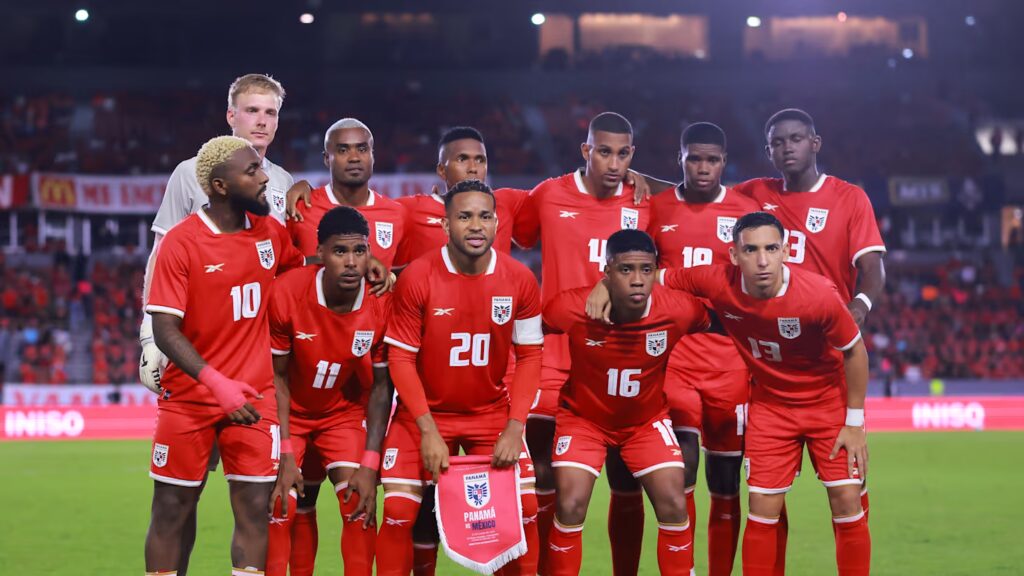
While Panama may not possess the star power of England or Croatia, they arrive at the tournament as one of the most tactically coherent teams in the competition.
A Team That Loves the Ball
Panama are a possession-oriented side. During the World Cup qualifying campaign, they averaged 61.9 percent possession - the highest of any team in the CONCACAF region. They followed that up with an even more impressive 66.3 percent average possession at the 2025 Gold Cup.
Operating primarily in a fluid 3-4-3 system that can quickly transform into a 5-4-1 without the ball, Christiansen's team seeks to dominate possession through short passing combinations before exploiting space with direct vertical passes to their wide men.
Wing-backs Amir Murillo and Jorge Gutiérrez are particularly dangerous in this regard. Both players possess the pace and timing to attack spaces behind defensive lines, making them key weapons in Panama's attacking structure.
To counter that threat, Ghana may need athletic and mobile midfielders capable of covering large spaces and matching Panama's intensity.
A Case for Fresh Legs in Midfield?
One of the biggest selection dilemmas facing Queiroz could involve Thomas Partey.
The experienced midfielder remains one of Ghana's most accomplished players, but his recent performances against Austria, Germany and Wales have raised concerns about his current physical condition. Against Wales, Partey struggled for rhythm and was withdrawn at halftime after a difficult first-half display.
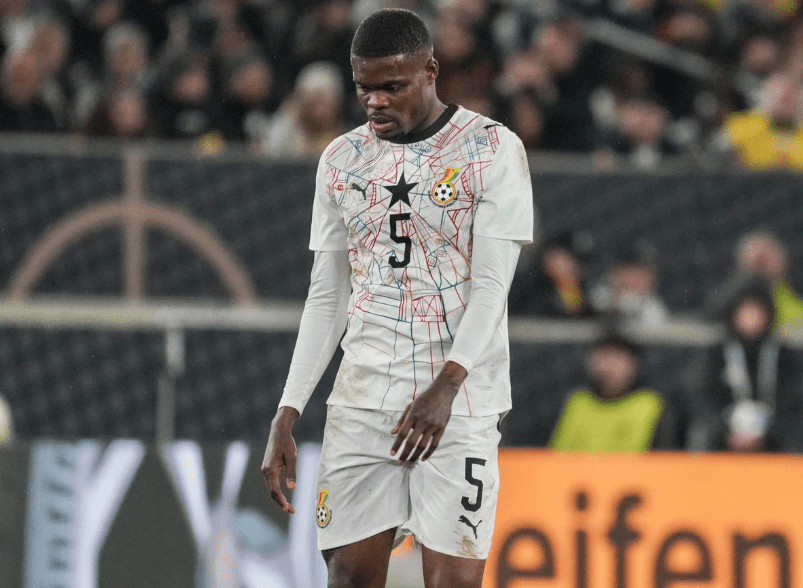
A lack of regular club football appears to have affected his sharpness, mobility and match fitness — all qualities Ghana will require against a Panama side likely to dominate significant portions of possession.
In contrast, Caleb Yirenkyi has shown encouraging signs whenever given opportunities. His athleticism, ability to recover possession and composure under pressure could provide Ghana with greater balance in midfield. While he may not replicate Partey's experience, he arguably offers attributes better suited to the specific demands of this contest.
Pressing: Panama's Other Major Weapon
Possession is only one aspect of Panama's game.
The Central Americans are also among the most aggressive pressing teams in the region. During qualifying, they recorded a Passes Per Defensive Action (PPDA) of just 9.4 — the lowest figure among CONCACAF nations.
In simple terms, Panama do not allow opponents much time on the ball.
Their 82 high turnovers forced during qualifying highlight how effectively they win possession in advanced areas. That should concern Ghana, whose recent performances against Japan, Austria and Germany exposed recurring issues when attempting to play through an organized high press.
As a result, Queiroz may need to prioritize technical security over reputation when selecting his starting lineup.
Selection Decisions That Could Matter
Lawrence Ati-Zigi appears better suited to the demands of this game than Benjamin Asare.
While Asare was instrumental during Ghana's qualification campaign, his distribution remains an area of concern. His mistake against Mexico, which led directly to a goal, highlighted the risks associated with building from the back under pressure.
Ati-Zigi's superior ball-playing ability could prove crucial against Panama's aggressive press.
Similarly, Kojo Oppong Peprah may have a stronger case to partner Jerome Opoku in central defence. His composure in possession and ability to progress the ball through pressure arguably make him a more suitable option than Derrick Lucasson or Jonas Adjetey for this particular matchup.
Underrating Panama Could Be Costly
Panama arrive at the World Cup ranked 34th in the world and have lost only twice this year — against Brazil and regional powerhouse Mexico.
They are organized, tactically disciplined and physically demanding opponents.
Ghana, meanwhile, have won only one of their previous four opening World Cup matches, a 1-0 victory over Serbia in 2010.
If the Black Stars are to improve that record, they may need to rethink the common perception that Panama represent the easiest fixture in the group. On current evidence, Christiansen's side could prove every bit as challenging as Ghana's more celebrated opponents.
The opening game may ultimately define Ghana's World Cup campaign, and getting the tactical details right could make the difference between progression and an early exit.
Latest Stories
-
Court fines miner for breaking into gold buying shop
6 minutes -
Tarkwa court jails labourer for three years over GH¢123,000 theft
1 hour -
GAEC must retain nuclear scientists for Ghana’s nuclear ambitions – Minister
2 hours -
Man reportedly mistaken for game and shot by hunter dead in forest
2 hours -
19-year-old mason jailed 15 years for defiling seven-year-old pupil
2 hours -
Ghana’s banking sector assets rise 20.47% to GH¢500.2bn – BoG Governor
2 hours -
22 injured as Sprinter bus overturns at Sege after tyre burst
2 hours -
UN housing expert urges Ghana to strengthen Rent Control Department amid housing affordability concerns
2 hours -
Delta-BCI partnership reaches 166,000 people with breast cancer education
2 hours -
Power restoration fault suspected in Kumasi Central Market fire
7 hours -
The 7-foot giant of Ngleshie Amanfro: Seven-foot Ghanaian Ephraim Saawa dreams of joining the national basketball team
8 hours -
Government promises support for Kumasi Central Market fire victims
8 hours -
Vibes The Movie: Big Ghun’s Ghanaian film earns five nominations at 2026 REFFA
8 hours -
‘I’m a fulfilled man’—Justice Korbieh on missing out on Supreme Court despite two nominations
9 hours -
MamaCare CEO warns unresolved conflicts among health workers could undermine maternal and neonatal care
9 hours