

Audio By Carbonatix
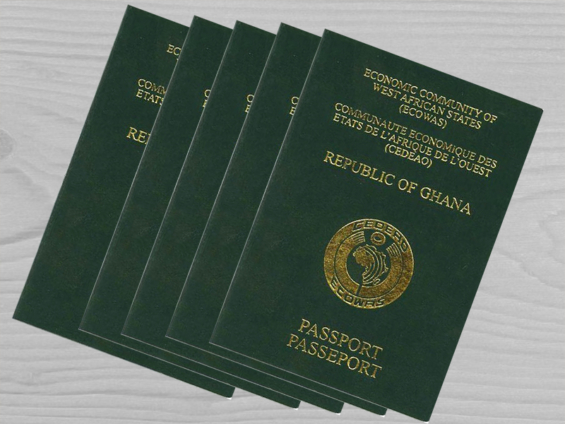
The recent issuance of diplomatic passports by the Government of Ghana to five distinguished citizens Wode Maya, Rocky Dawuni, Anita Erskine, Ibrahim Mahama, and Dentaa Amoateng MBE has ignited a necessary public conversation on the purpose and privilege of this esteemed document.
These individuals have made significant contributions to Ghana’s cultural, social, and economic landscape, thus earning recognition on both national and international platforms.
Wode Maya, a prominent YouTuber, has played a vital role in showcasing Ghana’s beauty and heritage to a global audience.
Rocky Dawuni, an acclaimed musician, has used his platform to promote African music and culture. Anita Erskine, a respected media personality, has been a voice for social issues, while Ibrahim Mahama is known for his impact in the arts.
Dentaa Amoateng MBE has also made strides in promoting Ghanaian culture abroad.
However, the ensuing discourse, particularly media personality Nana Aba Anamoah’s call for the extension of this honour to other celebrities, reveals a fundamental misunderstanding of the diplomatic passport’s function.
A diplomatic passport is intended as a tool of statecraft, used exclusively for official governmental affairs and to facilitate the work of diplomats and government officials.
It grants holders certain privileges, such as immunity from certain legal processes, which underscores its serious, formal nature.
The issuance of such documents typically aims to support and enhance a country’s diplomatic relations and to foster goodwill with other nations.
This situation points to a troubling trend: the potential commodification of a key instrument of foreign policy, transforming it from a tool of statecraft into a status symbol for the elite and famous.
As discussions surrounding this issue proliferate, it becomes crucial to clarify and emphasize the original intent of diplomatic passports. If society begins to view these documents merely as rewards for celebrity status or public recognition, it risks undermining the very purpose they serve.
The diplomatic passport should not be conflated with fame or recognition, as doing so could dilute its significance and jeopardize the careful balance needed in international relations.
Moreover, the elevation of celebrity figures through such prestigious means could create a division between those who have access to these resources and those who do not, potentially fostering resentment among the general populace.
A society that prioritizes the status of celebrities over the needs and qualifications of those actively engaged in diplomatic efforts may inadvertently overlook the expertise and diplomatic acumen required to navigate international spheres effectively.
The Legal Framework and Its Ambiguities
The authority for the issuance of diplomatic passports in Ghana is derived from Section 6 of Ghana’s Passports and Travel Certificate Act, 1967 (Act 1953).
This legislative framework grants significant powers to the Minister for Foreign Affairs, who is empowered to issue diplomatic passports to a specifically defined group of individuals.
This group includes ministers of state, members of parliament, government and consular officials, their immediate family members, and a particular category identified as “prominent citizens.” It is crucial to highlight that within this last category, the Minister holds substantial discretionary power to determine who qualifies for such a passport.
The issuance of a diplomatic passport is not a trivial matter; it carries with it a weight of responsibility and significance far beyond that of a standard travel document. A diplomatic passport is more than just a passport with a distinctive red cover; it serves as a formal instrument that indicates the bearer is travelling under the auspices of the state for official business.
This distinction is important as it represents the acknowledgment of the sovereignty and authority of the issuing nation on the international stage. The legitimacy of this recognition is reinforced under international law, particularly the guidelines set forth in the 1961 Vienna Convention on Diplomatic Relations, which outlines the rights and responsibilities of diplomatic missions worldwide.
Moreover, the privileges and immunities that accompany the possession of a diplomatic passport come with specific conditions and limitations. These privileges include exemptions from certain immigration procedures and customs duties, which are granted under particular circumstances deemed essential for the effective performance of diplomatic duties.
It is essential to understand that these benefits are not personal or individual entitlements; rather, they are functional necessities afforded by the host state. The intention behind these immunities is to facilitate the unimpeded performance of a diplomat’s responsibilities, allowing them to operate without the interference of coercion or undue delays.
Scholars and experts in the field, such as Eileen Denza, have pointed out that these immunities are properties of the sending state and are not merely privileges that accrue to the individual diplomat.
Thus, the frequent misconceptions surrounding diplomatic privileges, such as the notion that holders of diplomatic passports are entirely exempt from airport security screening, are significant exaggerations.
While it is indeed true that diplomats may benefit from expedited processing through designated channels at international airports, they remain subject to and must adhere to the basic security protocols enforced by the host nation.
This reality highlights the delicate balance between privilege and responsibility inherent in diplomatic relations and emphasizes the ongoing need for compliance with international norms and local regulations, even for those holding diplomatic passports.
Function Over Fame: The Purpose of the Diplomatic Passport
The critical question, therefore, is not merely whether a celebrity or a famous person holds a status of being prominent in the public eye, but rather, whether their travels and activities are so inherently linked to Ghana’s strategic national interests that it justifies the granting of the functional privileges associated with a diplomatic passport.
This consideration necessitates an examination of whether these individuals are undertaking specific, state sanctioned missions that require their representation to be seen as official. Moreover, it raises the inquiry into whether the immunities afforded by such passports are indeed necessary for the successful execution of their assigned tasks.
Alternatively, one must consider if the passport is being awarded merely as a form of recognition for past achievements or as a generalized endorsement of their personal brand, independent of any actual service or state requirement. When diplomatic passports are issued as accolades, essentially a token of appreciation or honor, they run the risk of being commodified and treated as just another status symbol.
Such a scenario transforms the public discourse, shifting the focus away from the intended purpose of the document and instead creating a landscape rife with debates over which personalities are deemed “worthy” of this privilege.
This is starkly illustrated in Nana Aba Anamoah’s conversation surrounding figures like Wiyaala, Akrobeto, and Nana Ama McBrown, where the issuance of diplomatic passports becomes less about their service to the state and more a recognition of their celebrity status.
This reductionist framing ultimately diminishes the gravitas and significance surrounding diplomatic passports, reducing them to mere trophies in a cultural popularity contest.
The implications of this precedent are potentially perilous: it cultivates an environment where national recognition is construed as being synonymous with the acquisition of diplomatic privileges.
This perspective could propel individuals to seek such passports for misguided reasons such as the ease of travel they afford and the elevated perceived status, rather than as a commitment to serve and advance the interests of the state itself.
It raises vital concerns about the criteria and intentions behind the allocation of such significant statecraft tool, urging a reassessment of the values that inform such decisions.
A Call for Principled Issuance
To safeguard the integrity of Ghana’s diplomatic instruments, it is crucial that the process of issuing passports to non-state actors adheres to a framework of clear and transparent criteria that aligns with the fundamental functions of a passport.
This instrument, which serves as a key means of identification and a vehicle for international travel, must be restricted to those who meet specific criteria that justify their need to represent the state abroad.
The existing “prominent citizen” clause necessitates a careful reconsideration of its interpretation. It should not simply denote a “famous citizen,” as fame does not inherently qualify an individual for official representation. Instead, it ought to be understood as referring to “a citizen whose specific, state defined role requires them to act as an official representative of the state internationally.”
For example, consider a scenario in which a renowned artist is invited to officially represent Ghana at a UNESCO cultural heritage negotiation. In this context, their artistic skills and prominence serve a diplomatic function that aligns with the interests of the state, thus justifying the issuance of a passport. Similarly, a leading entrepreneur participating in a state sponsored trade delegation carries a direct mandate from the government that warrants their international presence and engagement on behalf of Ghana.
In both instances, the critical component is the established connection to a current and official mandate that necessitates the individual’s travel abroad. The passport, therefore, becomes not just a means of personal identification, but a tool for advancing national interests and enhancing Ghana’s diplomatic relations on the global stage. By maintaining such rigorous standards, Ghana can ensure that its diplomatic instruments remain credible and that passport issuance reflects a genuine representation of the state’s values and objectives.
The government must resist the temptation to use diplomatic passports as tools for public relations or patronage. This practice not only undermines the integrity of the diplomatic institution but also risks the erosion of trust in international relations. As argued by J. Craig Barker , the abuse of diplomatic privileges can lead to a devaluation of the institution, which was originally designed to facilitate communication and cooperation between nations. When diplomatic privileges are misused for personal gain, it can cause friction in international relations, as other countries may view such actions as disrespectful or as a dilution of the seriousness of diplomatic status.
Moreover, the indiscriminate conferral of diplomatic passports to individuals who do not have a genuine need for their privileges could lead to an overburdened system where the significance of these documents is lost. It is essential that the honour bestowed upon these citizens be expressed through other forms of state recognition awards, which can appropriately celebrate their contributions without compromising the functions of diplomatic credentials.
This approach not only preserves the sanctity of the diplomatic passport but also ensures that it remains a functional tool for those who genuinely require it to perform their diplomatic duties effectively. In doing so, the government would uphold the principles of integrity, respect, and professionalism that are vital in the realm of international relations.
Conclusion: Reclaiming the Instrument’s Purpose
To sum up, the diplomatic passport serves as an indispensable instrument within the sphere of international relations, embodying practical functions rather than merely acting as a status symbol.
The privileges associated with diplomatic passports do not belong to the individual as personal entitlements; instead, they represent state owned immunities granted specifically to facilitate an individual’s official duties as a representative of their nation.
This understanding is crucial in the current climate, where public discourse around the issuance of diplomatic passports has become increasingly prominent.
The Ministry of Foreign Affairs is presented with a timely opportunity to elucidate its policies regarding the issuance of these important documents.
It is essential for the ministry to reinforce the principled rationale underlying the process of granting diplomatic passports, emphasizing that they should not be conferred as a reward for previous contributions or as gestures of goodwill to those who may have attained fame or notoriety in other spheres. Rather, these passports ought to be viewed as instruments designed for clear, prospective service to the state.
The fundamental purpose of diplomatic passports is to expedite and facilitate the work of Ghana’s representatives abroad, ensuring they can perform their functions effectively and without undue hindrance.
However, if the issuance of diplomatic passports begins to serve as a means of elevating the social standing of celebrities or public figures, it risks undermining the very significance attributed to these documents. Such a shift in purpose would not only commodify what should be a symbol of national sovereignty but also may lead to the dilution of their power and authority when they are genuinely required in diplomatic contexts.
Therefore, it is imperative that the government maintains a clear distinction between the essence of diplomatic passports and the allure of celebrity status.
By doing so, it preserves the integrity of these documents and affirms their importance in upholding the nation’s interests on the global stage. Ultimately, the goal should be to ensure that diplomatic passports remain recognized as essential tools for conducting official government business rather than mere symbols of prestige for the famous and elite.
By:
ERIC AKUAMOAH-BOATENG, RESEARCHER.
Latest Stories
-
Trump declares victory after rescue but threats to US operation in Iran still loom
57 minutes -
US Secret Service investigates reports of gunfire near White House
1 hour -
Current account stability to mitigate pressure on cedi; currency to end year at GH¢11.40 to a dollar
1 hour -
Oil back above $110 after expletive-laden Trump threat to Iran
1 hour -
T-bills auction: Government records 32% undersubscription; interest rates rise again
1 hour -
Economy to remain relatively insulated from fallout of US–Iran conflict – Fitch Solutions
1 hour -
[Watch Live] Shatta Wale, Kofi Kinaata, and others ignite the grand finale of Gomoa Easter Carnival
4 hours -
DR Congo to receive ‘third-country’ deportees from the US under new deal
4 hours -
Four injured in robbery attack on Elshadai Enterprise at Akatsi
4 hours -
Two remanded for alleged attack, robbery at jewellery shop
5 hours -
Royals attend Windsor Easter Sunday service
5 hours -
Trump issues expletive-laden threat to Iran over Hormuz Strait blockage
5 hours -
Berekum Chelsea edge Aduana FC in Bono derby to boost survival hopes
7 hours -
‘They can’t control the team’ – Ernest Thompson doubts local coaches for Black Stars role
8 hours -
Ghana-born midfielder Seidu realises ‘dream’ with Atlético Madrid debut
8 hours