

Audio By Carbonatix
The rains no longer come as they used to. The land — once green and full of life — is turning brown. And the shea trees, the pride and lifeline of northern Ghana’s women, now stand lifeless.
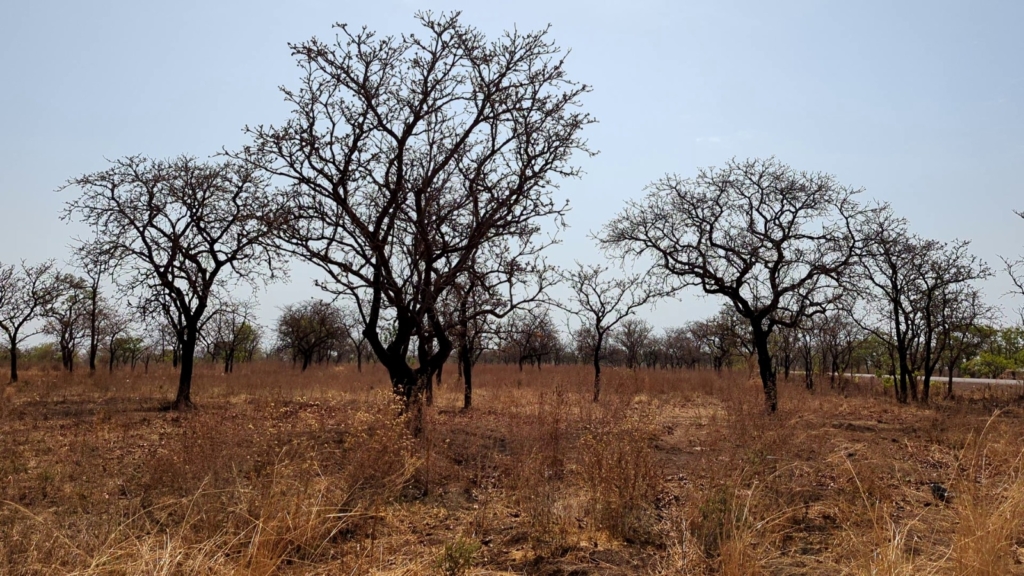
For generations, these trees fed families, paid school fees, and kept young girls in their communities. But today, they tell a story of loss, migration, and survival.
From the Fields to the Streets
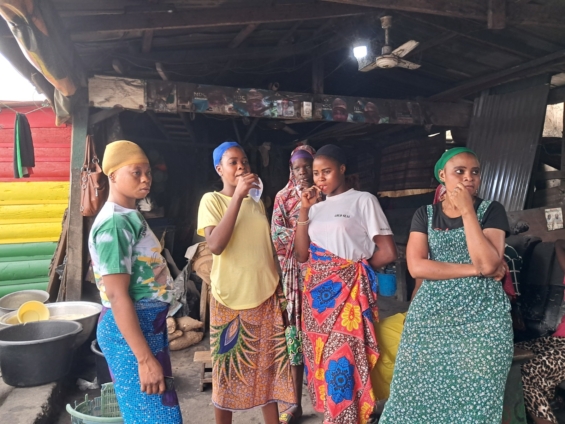
In the busy streets and markets of Kumasi, hundreds of women weave through cars and traders, balancing heavy loads on their heads.
Among them is Maryam Hadi, once a shea nut collector from the north.
“Sincerely, when I started picking shea nuts, it was profitable, because I could get like GH₵1000 or GH₵500 a month. But now it's no longer there. I was using it for a business, but the business collapsed, so I had to come here as a kayayoo.”
Maryam is now one of thousands of women working as “Kayayei” — female head porters who carry goods for customers in Ghana’s southern cities.
“It was beneficial back home than what I'm doing here now,” she added quietly.
The work is exhausting and pays very little. Many of the women live in overcrowded slums, face harassment, and struggle to afford food. Yet, they stay — because back home, the land no longer sustains them.
A 2022 study by researcher Georgina Ansong found that many girls from northern Ghana migrate to southern cities to work as head porters, known locally as kayayei. Out of 168 girls surveyed, 17 were between nine and 12 years old, while 32 were aged 13 to 15.

More than 70% were between 16 and 19 years old. Most of them spend three to five years in the south doing menial jobs before returning home with small savings to support their families.
The Science Behind the Loss
Experts say the dying shea trees are a symptom of a deeper crisis.
Head of the Forest and Climate Change Division at the CSIR–Forestry Research Institute of Ghana, Dr Reginald Tang Guuroh, says the trees are struggling to survive under changing weather patterns.
“Increased temperature and reduced rainfall, which is drought, are definitely going to have a stress on the plants, and that affects various physiological properties of the tree, in terms of its growth, in terms of its fruiting patterns.”
He explained that extreme heat and frequent wildfires make it even harder for the trees to recover.
“These lead to increased buildup of dried biomass, and when you have that, you end up having more risk of wildfires. The fires affect the trees and bring an added layer of stress for growth and productivity.”
Dr Guuroh warned that if Ghana fails to protect the shea trees, the economic and social consequences could worsen.
“If we do not pay attention and improve on the shea value chain, we can expect more serious economic challenges — and that could lead to more migration than we are currently seeing.”
Stories of Struggle
Another migrant from Karaga, Maryam Issaku, left her husband and children behind in search of survival.
“You can carry a load that may be too heavy, leading to neck and body pains. However, sometimes you may be fortunate and have a normal weight load,” she said.
Sulemana Maryam, from Galyei, echoes her pain. “If the shea nuts were there, we wouldn't have come here and be suffering like this. It’s difficult here, but shea nuts are profitable. However, they're no longer available like they used to be.”
Three Maryams. Three different towns. One shared fate — of family separation, endless toil, and fading dreams.
A Kayayei leader, Shamsiya Issah, says her only wish is for the trees — and her community — to live again.
“If God is the number one king, and I pray he accepts our prayers, so that the North will be productive as it used to be… so that we won't have to come to this unhygienic place and be suffering, and our dignity will be restored.”
Abdul Rauf Umar, who has lived in Kumasi since 1999, has watched this crisis unfold for over two decades.
“Some of the young girls carry loads too heavy for their bodies, and even when they return, the money is not enough to buy food. Some get robbed or cheated. We often have to give them some money to buy food. We plead with the authorities to find a solution so these children will stop coming here for Kayayei.”
Women’s Gold at Risk
The shea tree is often called “women’s gold.” Its nuts are used to produce shea butter, a key ingredient in cooking oil, soap, skin creams, and even international brands of chocolate and cosmetics.
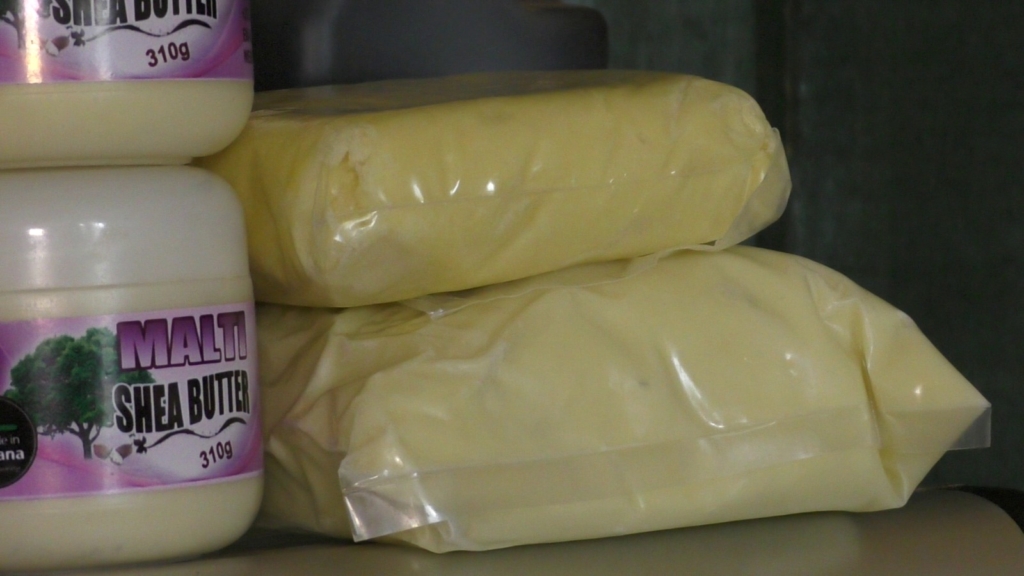
In Ghana, the shea industry supports nearly one million rural women, most of them small-scale nut collectors and processors. At the peak of the season, Mariam and others could make at least GH₵100 per day. They earned even more when they gathered the shea nuts for a week and processed them.
The shea tree grows wild across Ghana’s northern savannah, covering over 77,000 square kilometres — yet it now faces an uncertain future.
The Global Shea Alliance reports that about 16 million women in 21 African nations, ranging from Senegal to South Sudan, rely on the shea tree for their sustenance.
Recent studies suggest that the global market for shea butter is currently valued at about US$2.75 billion, with forecasts predicting an increase to $5.58 billion by the year 2033.
Losing these trees would mean losing one of the most important female-driven economies in the region.
A Glimmer of Hope in the North
In Tamale, a Non-Governmental Organisation is working to restore hope across the five regions of Northern Ghana. The Savannah Women Integrated Development Agency (SWIDA-G) is not only protecting shea trees but also helping women and young girls learn new skills such as financial literacy, business development, and market linkages.
They also support training in handicrafts like weaving and catering, provide agribusiness opportunities, and help women find alternative livelihoods.
Executive Director of SWIDA-G, Hajia Alima Sagito Saeed, says the problem has reached alarming levels.
“We have been in communities where you can hardly count 10–15 young girls — they're gone. People were relying on shea nuts for their income, but they are not available now. Among the push factors is the lack of economic opportunities for women.”
She says shea is like cocoa for the women of the north, and losing it means losing over a million livelihoods.
“If we lose it, we lose a million livelihoods.”
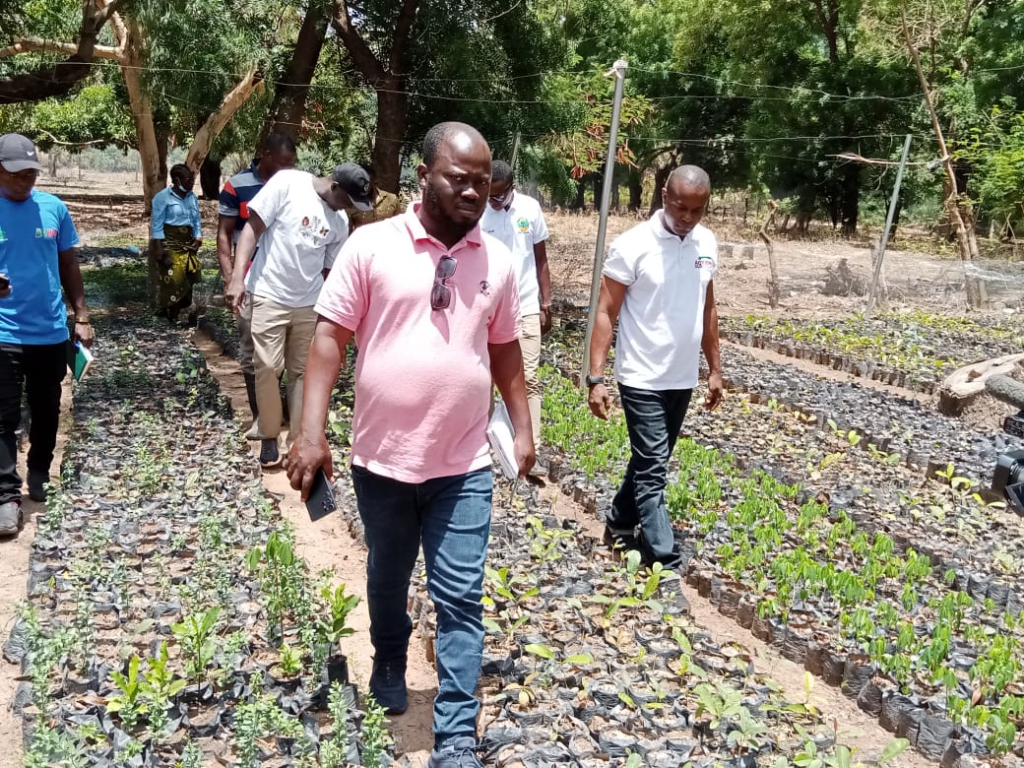
The Global Shea Alliance — working under the Ghana Shea Landscape Emission Reductions Project (GSLERP) has begun a concerted effort to restore the shea-tree landscape. The strategy combines active parkland management to protect existing trees, with massive tree-planting campaigns to regenerate degraded areas.

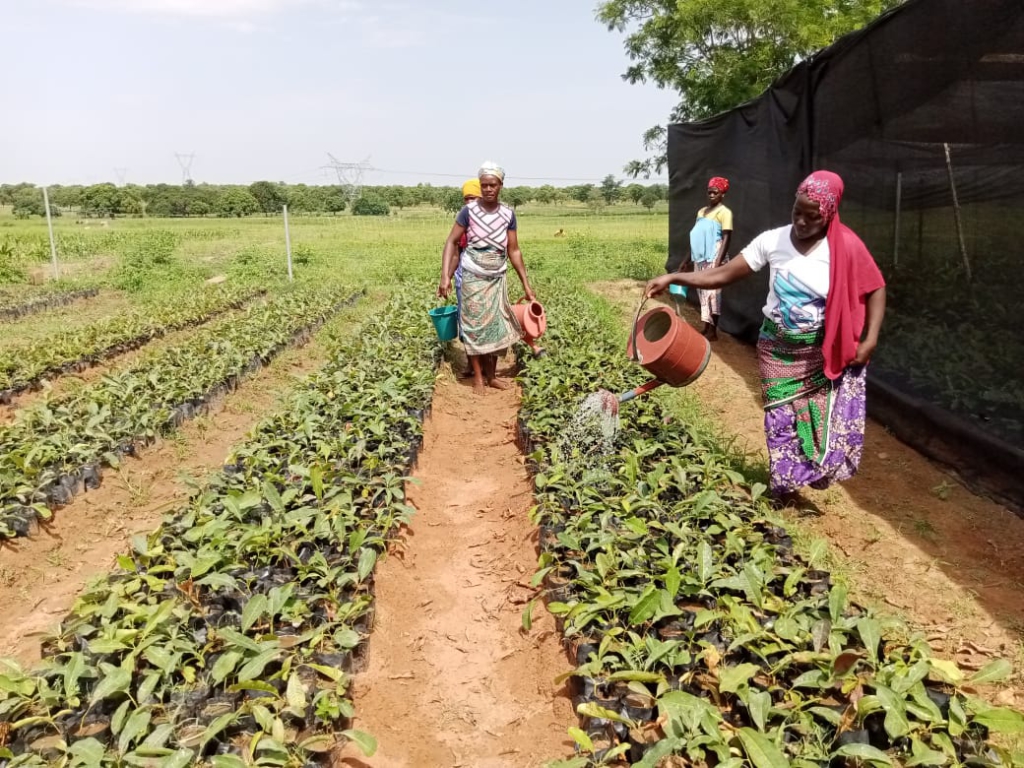
Under GSLERP, GSA establishes nurseries, raises shea seedlings, and once viable, grafts and transplants them back into the landscape. Each year, the programme nurtures and transplants approximately 1.5 million seedlings.
About half of the seedlings germinate, and 75 % of those survive until they are ready to be grafted and transplanted. This underlines a long-term commitment to not just conserve what remains, but to rebuild what has been lost.
At the helm is Aaron Adu, Managing Director of Global Shea Alliance, who says this dual approach, protection of existing shea groves plus large-scale replanting, offers a pathway for revival of the shea economy and the livelihoods of thousands of women who depend on it.
“Every year, we raise about 1.5 million shea seedlings under GSLERP. About 50% of them germinate, and about 75 per cent of those survive long enough to be grafted and transplanted.
These numbers represent our commitment to rebuilding the shea parkland tree by tree, and securing the livelihoods of the women who depend on it.”
Since 2022, Mr Adu says, 1.1 million shea seedlings have already been transplanted, and there are about 1.2 million seedlings spread across 65 nurseries in the five regions of the north ready to be transplanted in 2026. The intervention also aims to reduce their maturity period from 25 years to three to five years to restore 100,000 hectares of degraded parklands.
As part of the project, over 700 women are being employed, while 24,200 men and women will be trained in business development and shea parkland management.
The 7-year project is co-funded by the Green Climate Fund, the Government of Ghana (GoG) and the Global Shea Alliance (GSA) private sector. It is being implemented by the Forestry Commission, the Global Shea Alliance and the United Nations Development Programme (UNDP) as the accredited entity.
Can Policy Save the Shea Tree?
Executive Director of Dream Village, Clement Matorwmasen, believes the solution lies in better policies and stronger enforcement.
“What needs to be done specifically will be policy changes. Some of these policies already exist, but enforcing them is the problem. Can we go back to the drawing board and work with local communities?”
Zainab Abubakar, a psychologist and founder of ROMP Foundation, a Kumasi-based organization that provides support and empowerment to young girls and women, says the Ministry of Gender, Children, and Social Protection must play a critical role in supporting these girls.
"All of this weighs heavily on the Ministry of Gender, Children, and Social Protection. They need to take action, conduct more research, and provide support for these children. They must know the number of children, teenagers, and young women in the local communities in the southern part who have become porters just to earn a living. They need to support them and liaise with other agencies."
Ghana’s National Climate Change Policy already recognises migration as one of the biggest human security threats. It calls for reforestation, green jobs, and education for girls to build resilience.
Yet the most direct and relevant framework is the Ghana National Migration Policy 2016, which identifies climate change and environmental degradation as major drivers of internal migration, especially from Northern Ghana. The policy seeks to reduce forced migration by improving rural livelihoods, creating jobs, and protecting vulnerable groups, including women and children, but for any woman like Mariam, those plans remain distant words.
“Protection of the shea trees, we need to look at it holistically… we need awareness creation,” Dr Guuroh said. “It might interest us to know that the Shea trees are classified as part of vulnerable species.”
Globally, the crisis is recognised as well — the shea tree is officially classified as a vulnerable species on the International Union for Conservation of Nature (IUCN) Red List, meaning its survival is under genuine threat if current trends continue.
The United Nations warns that by 2050, climate change could displace over 200 million people worldwide. Women and girls will be hardest hit, as their livelihoods often depend directly on the land.
Resilience in the Face of Crisis
The shea tree may no longer provide as it once did — but the women of northern Ghana, like their trees, remain rooted in resilience.
“I’m in pain that I'm a woman,” Shamsiya said softly. “We are risking our lives here. It is nothing; it is because the shea trees are longer fruiting in the North… So we pray that it will be available so that we gain back our pride and dignity.”
From Kumasi to the parched fields of the north, the story of Ghana’s climate migration is a call for action, justice, and hope.
This is a JoyNews-CDKN-University of Ghana C3SS project with funding from CLARE R4I Opportunities Fund.
Latest Stories
-
HIV rate in Wenchi the third highest in Bono Region
5 minutes -
First Lady Lordina Mahama enstooled Nkosuohemaa of Akroso Asukawkaw
6 minutes -
Ex-NaCCA boss Dr Prince Armah authors book to improve Mathematics teaching and understanding in JHS
16 minutes -
Africa could become a safe haven for refugees if Middle East conflict escalates — Dr Mireku
29 minutes -
Bridget Bonnie & Friends mark 6th blood drive with maternal blood bank initiative at 37 Military Hospital
39 minutes -
Old Tafo Municipal Assembly holds mass clean-up ahead of 69th Independence day
44 minutes -
Saudi Aramco shuts Ras Tanura refinery after drone strike, source says
55 minutes -
Opposition criticism on Ghana’s progress is politically motivated— Wonder Madilo
1 hour -
Association of customs house agents Ghana holds 5th AGM on 24-hour economy
1 hour -
Confront cocoa crisis head-on with structural reforms – Vicky Bright urges gov’t
1 hour -
Ghana has pivoted from crisis to stability, but sustainability is key – Vicky Bright on SONA 2026
1 hour -
GPL 2025/26: Antwi delivers as Dreams edge Aduana to boost survival push
1 hour -
Black Queens to continue Pink Ladies Cup participation
2 hours -
Mergers and acquisitions are surging amidst market exuberance on the exit trail
2 hours -
Bekwai court jails 30-Year-old for 25 years over mining site robbery
2 hours