

Audio By Carbonatix
Men’s hairstyles in Ghana have long represented more than just fashion, they reflect culture, identity, and personal expression.
From the clean-shaven looks of decades past to today’s bold and unconventional styles, male grooming trends continue to evolve. But what exactly influences these choices?
Across the country, an increasing number of Ghanaian men are exploring diverse hairstyles. While some stick with classic low cuts, others embrace dyed hair, braids, or dreadlocks—whether long or short. In the 1960s, afros were the look of the day.
These eventually gave way to the Jheri curl, popularised by American R&B stars. Then came the high-top fade, a style that involves completely shaving the sides of the head while leaving a prominent section of hair in the middle.
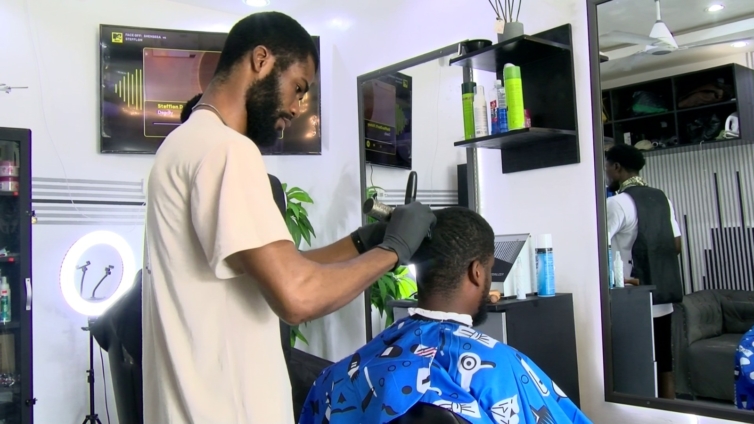
Prosper Hagan, a hairstylist with over a decade of experience, offers insight into why once-controversial styles like braids and dreadlocks are now widely embraced.
“Braids and dreadlocks were some of the hairstyles that used to be frowned upon. Some people didn’t keep them neat, so they were seen as unacceptable. But things have changed. Now, they’re accepted and even trending,” he explained.

Beyond reflecting one’s fashion sense, hairstyles also signal the spirit of a society and the identity of a generation. Selorm Mensah, was influenced by his barber to try something new.
“It’s a style that’s in vogue. You see a lot of young lads doing it. My barber does it dapper, that’s why I prefer this hairstyle,” Selorm says.
Social media has also transformed the grooming landscape. Mark Gates, a barber, notes that social media now drive hair trends more than ever.

“Social media has a huge influence on barbering today. Most clients now come in with pictures they’ve found online, photos of celebrities, icons, or mentors they want to look like. In the past, we used to put posters in the barber shop for clients to choose from. Now, they just Google what they want,” he shared.
Perhaps one of the most personal and expressive ways for men to present themselves is through their hair.
As trends change, so too do perceptions, and many are becoming more intentional about how they present their image to the world.
Latest Stories
-
Barker-Vormawor urges clearer rules and predictable framework for public-sector appointments
12 minutes -
US-Israel-Iran war could affect Ghana’s gold and oil exports – Barker-Wormawor
18 minutes -
Gov’t open to reviewing dismissals if affected workers were employed before December 7 – Kwakye Ofosu
19 minutes -
NDC has spent more than any other gov’t in this fiscal year – Dr. Kabiru Mahama
44 minutes -
US-Israel-Iran war: Walewale MP critiques Trump’s approach to foreign policy, calls for diplomacy
1 hour -
Gov’t rushing back to bond market despite spending concerns – Walewale MP
1 hour -
Domestic borrowing resumption will not lead to reckless spending – Kwakye Ofosu
2 hours -
Behind the Lens with Queen Liz explores evolving religious beliefs and questions of spiritual supremacy
2 hours -
IMANI-Africa questions credibility of UNIFIL contingent after attack on Ghanaian peacekeepers
2 hours -
Dialogue is the best path forward – Kwakye Ofosu on attack on Ghanaian UN peacekeepers
2 hours -
Preparing African children for the AI future – Why robotics is no longer optional in African schools
2 hours -
Gov’t defends scaled-down Independence Day celebration, cites cost and safety concerns
3 hours -
Peacekeepers attack: ‘No country should attack non-combatants with impunity’ – Kwakye Ofosu
3 hours -
Government condemns attack on Ghanaian peacekeepers in Lebanon, calls for UN investigation
3 hours -
Playback: Newsfile discussed mass dismissals saga, bikes for MPs, Iran war and bond market
4 hours