

Audio By Carbonatix
The Mastercard Foundation and IDH and The Sustainable Trade Initiative, have announced the launch of an innovative partnership, dubbed Grains for Growth, to transform Ghana’s grains market.
The Program aims to develop inclusive, and economically viable grain-supply chains that will offer employment and entrepreneurship opportunities, contribute to better incomes, and improve the livelihoods of farmers, especially women and youth.
Over the next three and a half years, the Grains for Growth program will partner with a dozen small and medium-sized enterprises (SMEs) in Northern Ghana, high-profile off-takers, and other supply chain actors, to create 103,000 work opportunities across the maize, rice, millet, fonio, and sorghum supply chains with the majority of these, targeting young Ghanaian women and men.
The program will also support the inclusion of 20,000 smallholder farmers through optimised sourcing and service delivery structures, whilst aiming to significantly increase incomes for participating farmers.
Grain Production in Ghana
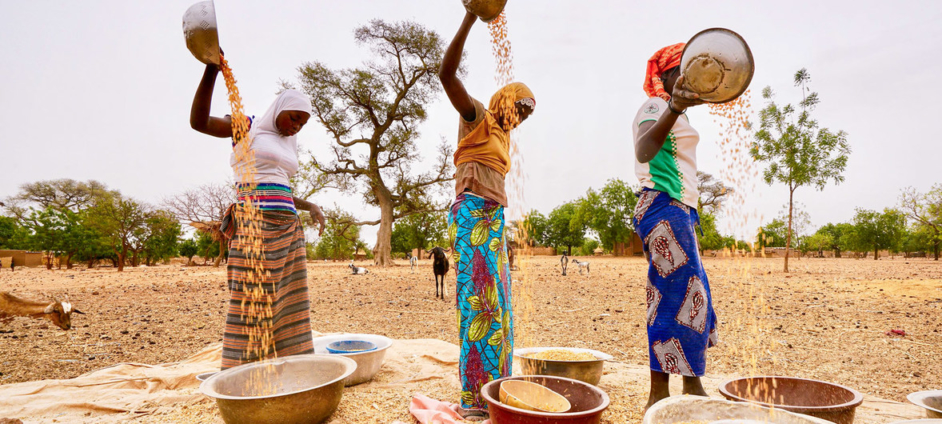
Grain production in the northern part of Ghana is largely characterised by informal supply chains, where actors have limited access to affordable financing solutions, mechanised services, and quality agro-inputs.
These constraints negatively affect the quality and volumes of grain production and the ability of SMEs in the value chain, to attract and maintain premium-paying buyers resulting in limited commercial investments.
With increasing local demand for grains in Ghana, a rising import dependency, and local raw-material sourcing interests, there is a significant opportunity for the grains sector to facilitate economic growth and create social impact through job creation and improving the livelihoods of smallholder farmers.
Speaking at the launch of the program, Director for Inclusive Business Development at IDH, Kebba Colley, said, “We have witnessed the transformation of local SMEs, and their farmers, into competitive businesses that meet global standards, attract competitive prices for their products, and create sustainable jobs, particularly for women and youth. IDH is delighted to extend our work to the grains sector. We look
forward to learning and improving the grains sector through this partnership with the Mastercard Foundation.”
Grains grown sustainably
The Grains for Growth program is part of IDH’s Grown Sustainably in Africa (GSA) program. Under this program, IDH works with multinationals, including Nestlé, Unilever, Dutch State Mines/Africa Improved Foods, and Dangote, throughout Africa to incorporate smallholder farmers and SMEs into their supply chains through close capacity building, business development support, and facilitating market linkages.
The program also aligns with the Mastercard Foundation’s Young Africa Works strategy in Ghana, which focuses on deepening efforts in the agriculture and agriculture adjacent sector, to unlock work opportunities for young Ghanaian women and men.
Ghana Country Head at the Mastercard Foundation, Rosy Fynn said, “The grains value chain holds enormous potential to unlock growth, improve the livelihoods of value chain operators, and catalyse work opportunities for young Ghanaian women and men.
"By building the capacity of value chain actors, providing ready access to markets through off-taker arrangements, and access to affordable financial services, we are collectively enabling smallholder farmers and SMEs to scale up and to lead the transformation of the sector to become a major contributor to Ghana’s economic growth.”
To build the commercial viability of value chain operators, the program will also enable SMEs to improve their operational capacity, meet the quality and procurement standards of multinationals, and to optimise their smallholder farmer sourcing and service delivery structures.
Nestlé Central and West Africa, one of the first off-takers in the program will leverage their technical expertise and establish backward integration systems to help build capacity of SMEs in the value chain.
Olivier Marchand, Head of Nestle’s Agricultural Services commented “This program will not only impact livelihood and improve local sourcing of grains but will leverage on the successful work already done by Nestlé to incorporate regenerative agriculture practices, build our farm ecosystem and reduce our environmental footprint”.
Nestlé is committed to sourcing 20% of its produce from regenerative agriculture farms by 2025, 50% by 2030, and 100% beyond 2050.
Latest Stories
-
Power restoration fault suspected in Kumasi Central Market fire
5 hours -
The 7-foot giant of Ngleshie Amanfro: Seven-foot Ghanaian Ephraim Saawa dreams of joining the national basketball team
5 hours -
Government promises support for Kumasi Central Market fire victims
5 hours -
Vibes The Movie: Big Ghun’s Ghanaian film earns five nominations at 2026 REFFA
6 hours -
MamaCare CEO warns unresolved conflicts among health workers could undermine maternal and neonatal care
6 hours -
Health professionals urged to translate medical knowledge into practice to save mothers
6 hours -
Retired judge Justice Francis Korbieh charges 1,568 new lawyers to uphold integrity
8 hours -
Conflicts among care providers linked to maternal, neonatal deaths – Expert
8 hours -
GIS marks 10th TIME conference, champions improved teaching practices
8 hours -
BRICS Or Balance? What Ghana’s bid really means
9 hours -
GPRTU wants full TRAFFITECH-GH implementation to start in 2027
9 hours -
How 10-mile walks for basic education birthed a 50-year legal career for Justice Korbieh
9 hours -
Mahama announces plans to import electric wheelchairs for PWDs
9 hours -
KGL U17 Colts 2026: Western beat Prempeh Elite Academy to set up final final with Greater Accra Region
9 hours -
Late Solanke strike salvages 10-man Spurs draw at Man United
9 hours