

Audio By Carbonatix
As Ghana prepares for another pivotal election, the call for peace and transparency in the electoral process has never been more crucial. Elections are the cornerstone of democracy, but their credibility and fairness often determine the stability of nations.
In Ghana, where religious and traditional leaders command significant moral authority, their inclusion as election observers could be a transformative step toward fostering peaceful elections.
Elections can be polarising, often breeding tension and conflict. It is in this regard that the involvement of religious and traditional leaders, as trusted custodians of peace, unity, and cultural heritage, in national elections monitoring becomes crucial. Involving religious and traditional leaders as neutral observers can: help build public confidence in the process. Most importantly, their voice of reason can calm political tensions and potential violence.
Their influence transcends political affiliations, making them vital agents of reconciliation and advocacy. Churches, mosques, and traditional councils serve as platforms for guidance and conflict resolution, positioning these leaders to play a critical role in promoting electoral integrity.
Proactively, religious and traditional leaders can, and should lead public education campaigns on the importance of peaceful elections. Through sermons, durbars, and community meetings, they can emphasize unity, the value of democracy, and the need to avoid violence. Media platforms, including radio, television, and social media, can amplify these messages.
To specially equip religious and traditional leaders for election observation, capacity-building workshops should be organized for them. These sessions would boost their knowledge on the electoral laws, the role of observers, and how to report incidents. Collaboration with the Electoral Commission (EC) and civil society organizations (CSOs) will provide the necessary resources and tools for effective election monitoring.
Religious and traditional leaders can be deployed to polling stations across the country, particularly in areas prone to electoral conflicts. Mixed teams of religious and traditional observers will ensure neutrality and inclusivity, while logistical support will enable their mobility and communication.
As community mediators, these leaders can quickly address disputes at polling stations, preventing escalation. And by working closely with security agencies, they can report and resolve incidents effectively. Using modern communication tools, the leaders can relay real-time updates to a central monitoring center. Their observations can contribute to evaluation reports and identify areas for improvement in future elections.
In a whole, the inclusion of religious and traditional leaders in the electoral process is expected to: build public trust in the electoral process, reduce the risk of violence and disputes, ensure greater transparency and accountability, strengthen community cohesion by promoting collective responsibility.
To institutionalise this approach, the nation can establish formal roles for religious and traditional leaders in election observation. Continuous training and engagement will create a pool of skilled observers for future elections. Beyond the elections, these leaders can also play a pivotal role in post-election reconciliation and national healing.
As we approach the 2024 general elections, we must remember that peace and democracy are shared responsibilities. By engaging religious and traditional leaders as observers, Ghana can set a precedent for peaceful elections, not just for Africa but the world as whole.
The idea for the inclusion of religious and traditional leaders in election monitoring is not simply about observing an election. It is about safeguarding Ghana’s democratic legacy and ensuring that the will of the people is respected. Let us all work together, as citizens, leaders, and stakeholders to let this happen.
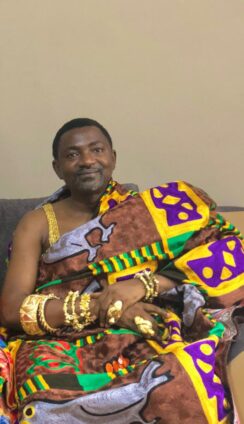
The writer is the Chief of Asante Asaman (Asante Asamanhene) and an Elder of The Church of Pentecost (Dep. Director of Pentecost Men’s Ministry)
Latest Stories
-
A source of excellence across generations – Vice President Opoku-Agyemang lauds Mfantsipim
1 hour -
(Photos) Mfantsipim School launches historic 150th anniversary
1 hour -
Knights and Ladies of Marshall group backs Catholic Bishops’ stance on anti-LGBTQ+
2 hours -
Bright Simons writes: All the Filla in the Ibrahim Mahama/E&P – Gold Fields Saga
3 hours -
Monetise Idiocy In Ghana
3 hours -
The Ghanaian prophet and the mysterious death of his scottish wife Charmain Speirs
4 hours -
Nearly 400 sentenced in Nigeria for links to militant Islamists
4 hours -
Ghana’s recovery supported by gold strength despite global oil price pressures – Standard Bank Research
4 hours -
Methodist Church hails Mfantsipim@150; calls for “fresh consecration” to excellence
4 hours -
‘Excellence is our inheritance’ – Nana Sam Brew-Butler hails Mfantsipim’s 150-year reign in leadership
5 hours -
Kwaku Azar writes: A-G vs OSP
5 hours -
Mfantsipim–Adisadel rivalry built excellence, not division – Sam Jonah
5 hours -
Vice President launches Mfantsipim’s 150 years of shaping Ghana’s greatest mind
5 hours -
I assure Otumfuo, Mahama will join him to commission KNUST Teaching Hospital by end of this year – Haruna Iddrisu
6 hours -
Barcelona dominate derby to extend La Liga lead
6 hours