

Audio By Carbonatix
All second-cycle institutions across the country have started using a new curriculum developed by the Ministry of Education and its partners.
However, there are growing concerns among stakeholders about the implementation of the curriculum, with questions being raised regarding its credibility and sustainability.
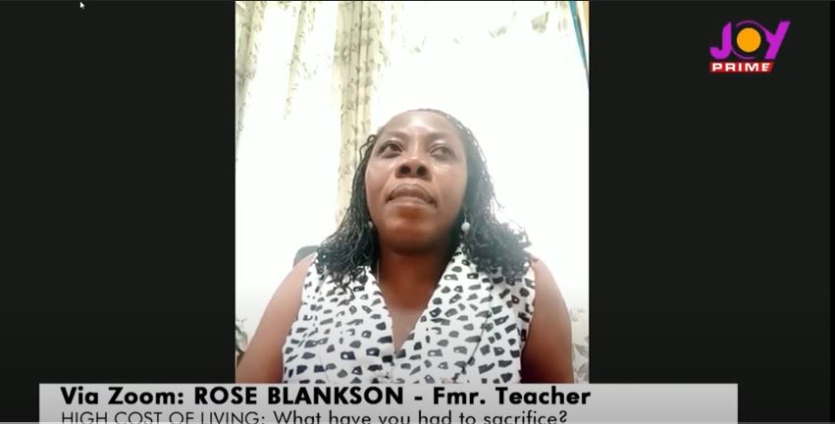
Assessing the new curriculum on Joy News AM Show on Tuesday, November 5, 2024, the Assistant Registrar at the University of Cape Coast, Rose Blankson, speaking from a parent's perspective, said the initiators of the curriculum have not done enough public education on the policy before its implementation.
She argued that parents are not fully aware of how the new curriculum works, and that this lack of understanding will inevitably affect their children's academic journey.
“There hasn’t been much engagement. It's been the teachers – yes, the teachers have been trained, and they have to be trained – but parents also need to guide their children when they come home. They’ll come home with homework, and parents have to be involved. The community also needs to be involved. How much engagement has there been about the curriculum?” she asked.
She further expressed frustration, saying, “I really don’t know much about this new curriculum and what it involves,” adding that the government has, over the years, implemented many “beautiful” policies but has failed to engage the public before rolling them out.
She suggested that the public needs to know more about the curriculum, and therefore, the relevant authorities should consider creating awareness through mass media and other communication channels.
According to the National Council for Curriculum and Assessment (NaCCA), the new educational curriculum for secondary schools was introduced with the aim of improving and modernising the country’s education system to better equip students for the challenges of the 21st century.
Some features of the new secondary education curriculum, which includes changes to Senior High Schools (SHS), Senior High Technical Schools (SHTS), and Science, Technology, Engineering, and Mathematics (STEM) institutions, include a focus on STEM and technical education, flexibility in subject selection, remedial support, and diagnostic assessments.
The new curriculum is also designed to provide personal learning pathways, enhance practical learning skills, and promote digital literacy.
This version adjusts spelling (e.g. "programme" instead of "program" in UK English), grammatical errors, and clarifies some points for a smoother flow of the narrative.
Latest Stories
-
The legal effect of the United Nations resolution declaring the Transatlantic Slave Trade the gravest crime against humanity
1 hour -
KNUST boosts petroleum engineering output with largest MSc cohort
2 hours -
E&P dispatches final batch of 30 dump truck buckets to Tarkwa site
2 hours -
NIB returns to profitability with over GH₵343M Profit After Tax – 2025 financial report
2 hours -
Government to borrow GH¢15.231bn via T-bills, bonds between March and June 2026
2 hours -
UN resolution just the beginning – Mahama on adoption of slave trade declaration
3 hours -
UN adoption of resolution declaring transatlantic slave trade gravest crime historic – Mahama
3 hours -
“This is a proud moment for Ghana, Africa” – Mahama after UN slave trade resolution
3 hours -
New Town building collapse: Two dead, 14 rescued so far as mission intensifies
3 hours -
Prolonged Middle East conflict poses significant risk to economy – BoG
4 hours -
Kafui Dey suggests seat fillers to fix late TGMA start
4 hours -
World Bank, GCEA provide FIDIC contract management training in Accra
4 hours -
T-bills auction: Government records 20.1% undersubscription; interest rates continue to surge
4 hours -
Scientists from Ghana, Brazil and UK gather in Kumasi to tackle biodiversity crisis with technology
4 hours -
ECG announces power outages in Amasaman and Western Region for maintenance and cable fault repairs
4 hours