

Audio By Carbonatix
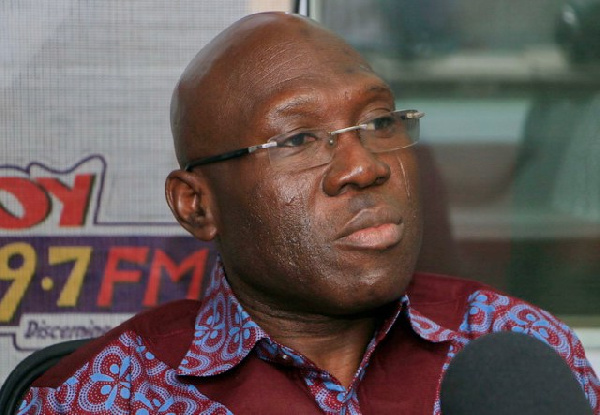
Former Member of Parliament for Tamale Central, Inusah Fuseini, says there is no such thing as ex-gratia in the constitution of Ghana.
According to him, what is often referred to as ex-gratia by the general public is the retirement benefits Members of Parliament and other Article 71 officeholders are entitled to after serving their term of office.
Speaking on JoyNews’ PM Express, he argued that calls for the scrapping of the retirement benefits of Article 71 officeholders are misplaced due to the fact that MPs and other Article 71 officeholders are contract workers and as such must receive their retirement benefits at the end of their tenure.
“There’s no ex-gratia, there’s nothing like ex-gratia. Ex-gratia is a lexicon taken from the ordinary people and put on the payments to Members of Parliament. There’s no ex-gratia in the constitution. The constitution says they should pay you retirement benefits.
He noted that the retirement benefit should not be confused with the Pension scheme Members of Parliament contribute to.
He explained that while the Pension scheme works on intergenerational equity, the retirement benefit is calculated on the basis of one’s salary.
The practice he says is common across the world.
“No because you’re a contract worker. You’re working for four years and at the end of the four years you’re gone. So your retirement benefits will be calculated on the basis of your salary.
“This is not the case, the principle is quite different. With the greatest respect, it’s all over the world. In fact in Britain it’s called gratuity. Even the court in Apasera called it gratuity.
“Gratuity means you’re working, you’re being paid salary and when your contract ends they pay you a percentage of your salary as gratuity,” he explained.
He, however, admitted that said gratuity only benefits public workers at the elite class of government.
“I agree there some kind of conspiracy and that is what is evoking the anger of the people that you can’t bring together a class of people and treat them differently. So when his Excellency John Mahama was in power, I remember this matter came out very seriously, very prominently, and he thought that committee [Presidential Emoluments Committee] should be a standing committee.
“And it should not be at the instance of a sitting President. And any time there’s a new parliament, you don’t need to change the members unless you replace some who are dead or who cannot perform then they take decisions,” he said.
Latest Stories
-
Every neurodivergent child deserves to thrive – AWARE 2026 walk set for North Legon
1 minute -
Ghana-Russia Centre, ATF donate to Princess Marie Louise Children’s Hospital
5 minutes -
NPP increases polling station coverage per election committee from 10 to 25
9 minutes -
Ghana card cannot be used for financial transactions – NIA debunks false reports
10 minutes -
Successful conviction secured for illegal fish processing operation in Watford
15 minutes -
Bowen: Ceasefire means respite for civilians, but it might not last long
16 minutes -
Ofori-Atta not yet formally notified of any charges – Frank Davies
16 minutes -
Asanko Gold supports road rehabilitation to ease transport challenges in Amansie West
28 minutes -
Serial killer pleads guilty to eight murders in case that haunted Long Island, New York
31 minutes -
NPP used Bosomtwe road as ‘election machine’ but failed to dedicate funds for its completion – Dr Amoakohene
37 minutes -
CSOs warns of contraceptive crisis as $500k UNFPA supplies stall at port
43 minutes -
Africa’s youth bulge a ‘defining moment’ that requires urgent action – NYA CEO Osman Ayariga
50 minutes -
No looming power crisis; Ghana’s electricity supply remains stable – Energy Ministry PRO insists
1 hour -
Mahama should reset his stance on LGBTQ -Clinton Baffour
1 hour -
Rising sachet water costs should spark a bigger conversation on plastic waste
1 hour