

Audio By Carbonatix
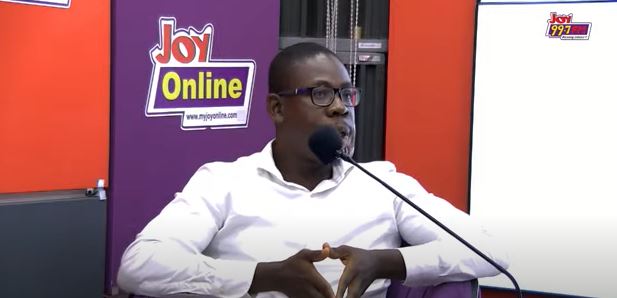
An Associate Professor of Finance at the University of Ghana Business School, Elikplimi Komla Agbloyor, has highlighted a number of factors that have consistently driven the country to the International Monetary Fund (IMF).
According to him, high unemployment and high lending interest rates are among the key factors driving the country to the IMF on a regular basis.
He was speaking on Joy FM’s Super Morning Show, in relation to the country’s decision to seek an IMF bailout.
Government has been blaming the current development on the Covid-19 pandemic and the Russia-Ukraine war.
The Professor, who has developed a module that helps to predict whether or not a country will go to the IMF, says otherwise.
According to him, Ghana's economic woes predate the Russian-Ukraine war and the outbreak of the Covid-19 pandemic.
"We were likely to go to the IMF again as far back as 2017," he stressed.
He acknowledged that the Russia-Ukraine war and the Covid-19, have contributed immensely to the decision, however, the propensity of the country to seek support from the IMF prior to the war was very high due to the aforementioned factors.
“The module identifies traditional factors such as the debt ratio, exchange rate, level of domestic savings, are key predicting factors dragging the country to the IMF,” he added.
That notwithstanding, he called for prudent measures to be adopted to avert the situation.
He believes one way to do that is by changing the structure of Ghana’s economy.
He noted that Ghana can actualise its dream of becoming a wealthy country by changing the structure of the economy, rather than seeking an IMF bailout.
“For me what the IMF programme does for us is to provide for us some space and time to be able to put our house in order. So that gives us time in the short to medium term to be able to implement the necessary policies to ensure that the economy is stronger,” he said on Joy FM’s Super Morning Show.
He was contributing to discussions that centered on the country’s decision to seek an IMF bailout as part of measures to cushion the economy, and how the country can do away with this development.
During the discourse which also sought to provide solutions to the country’s endless economic woes, he emphasised that until Ghana is able to change the structure of the economy, the country will continue to frequent the IMF.
Latest Stories
-
Iran war lands ‘triple blow’ to flood-ravaged Sri Lankans
30 minutes -
Gunmen kill at least 11 people at Afghanistan picnic spot
43 minutes -
Woman, 25, in court for stealing baby at Bogoso
44 minutes -
Trump unveils giant gold-accented victory arch design for US capital
47 minutes -
We spoke to the man making viral Lego-style AI videos for Iran. Experts say it’s powerful propaganda
52 minutes -
Hungarians vote in big numbers on whether to end Orbán rule and elect rival
53 minutes -
At least 30 feared dead in crush at Haitian tourist site
53 minutes -
Boxing: Abdul Ahmed wins WBA Africa Cruiserwight title after dispatching Nigeria’s Eradeye
1 hour -
Nearly 2,000 displaced, schools damaged as windstorm wreaks havoc in Gushegu
1 hour -
Ghana’s Derrick Kohn to work under Marie-Louise Eta as she becomes first woman to coach men’s Bundesliga team
1 hour -
Accra Open Championships conclude with strong performances ahead of African Championships
2 hours -
Ghana to begin camping with 12 athletes after Accra Open Championships – Bawa Fuseni
2 hours -
Anthony Joshua declines showdown with Tyson Fury but admits they ‘probably’ clash next
2 hours -
Tyson Fury dominates Makhmudov, calls out Joshua next
3 hours -
I have supported highway authority financially to fix roads in my constituency – A Plus
4 hours