

Audio By Carbonatix
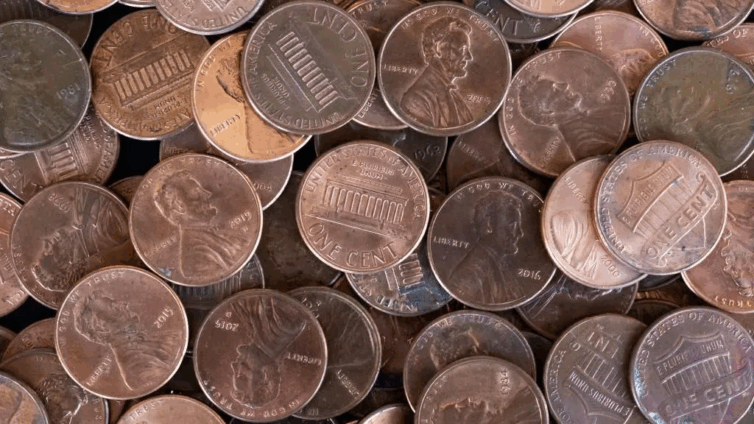
The US is set to make its final penny.
The Philadelphia Mint will strike its last batch of one-cent coins on Thursday, after more than 230 years of production.
The coins will remain in circulation but the phase-out has already prompted businesses to start adjusting prices, as they say pennies are becoming harder to find.
The government says the move will save money, or as President Donald Trump put it in February when he first announced the plans: "Rip the waste out of our great nation's budget, even if it's a penny at a time".
Pennies, which honour Civil War president Abraham Lincoln and are made of copper-plated zinc, today cost nearly four cents each to make — more than twice the cost of a decade ago, according to the Treasury Department. It estimates the decision to end production will save about $56m a year.
Officials have argued that the rise of electronic transactions is making the penny, which first went into production in 1793, increasingly moot.
The Treasury Department estimates that about 300 billion of the coins will remain in circulation, "far exceeding the amount needed for commerce".
Many pennies end up falling out of use. About 60% of all coins in circulation in the US - or about $60-$90 for the typical household - sits stashed at home in piggy banks, deemed not worth trading in, according to a 2022 government analysis.
But penny-pinchers beware: as businesses start rounding up prices, the move is expected to raise costs for shoppers. One study by researchers at the Richmond Federal Reserve estimated that could cost consumers $6m annually.
Other countries have also phased out their lowest value coins. Canada, for example, made its last batch of one cent coins in 2012.
Australia and New Zealand retired one and two cent coins in the 1990s, and New Zealand stopped production of five cent coins in 2006.
The UK floated a plan to scrap 1p coins in 2018, though the proposal was later withdrawn.
But the rise of electronic transactions did prompt the UK to halt production of coins in 2024, after officials decided there were sufficient 1p and 2p coins in circulation.
In the US attention has now turned to the nickel, which has a face value of five cents but costs nearly 14 cents to produce.
Retiring that coin would have a far bigger impact on shoppers, costing consumers some $55m per year, according to the Richmond Fed study.
Latest Stories
-
President Mahama to hold emergency Cabinet meeting on cocoa sector challenges — Kwakye Ofosu
32 seconds -
The Crisis of Institutional Continuity: A Call For Mandatory Succession Planning In Our Public Sector
2 minutes -
Ghana strengthens call for long-term mining partnerships with Australian investors
2 minutes -
‘My mind was already made up’ – Zito opens up on Kotoko resignation
7 minutes -
Bond market: Turnover declined 38.27% to GH¢3.94bn.
8 minutes -
Deploy soldiers, stop ‘pussyfooting’ – Tony Aidoo reacts to JoyNews Amansie galamsey exposé
27 minutes -
My wife called police on me: Inside the hidden crisis destroying diaspora marriages
29 minutes -
Ghana partners with Afreximbank to boost minerals sector development
33 minutes -
Sack Amansie Central DCE immediately, Adorye urges President Mahama
38 minutes -
Police foil arms deal in Dambai, turn down GH¢50,000 bribe
49 minutes -
Annul Ayawaso East primary, ban offenders for life – Tony Aidoo
52 minutes -
King ‘ready to support’ police as they assess Andrew claims over Epstein
54 minutes -
GPL 2025/26: Ibrahim Tanko, Winfred Dormon to battle two others for January award
1 hour -
Boakyewaa Glover Writes: The Fight Within
1 hour -
Sweet abroad, bitter at home: Ghana’s bittersweet cocoa contradiction — Kay Codjoe writes
1 hour