

Audio By Carbonatix
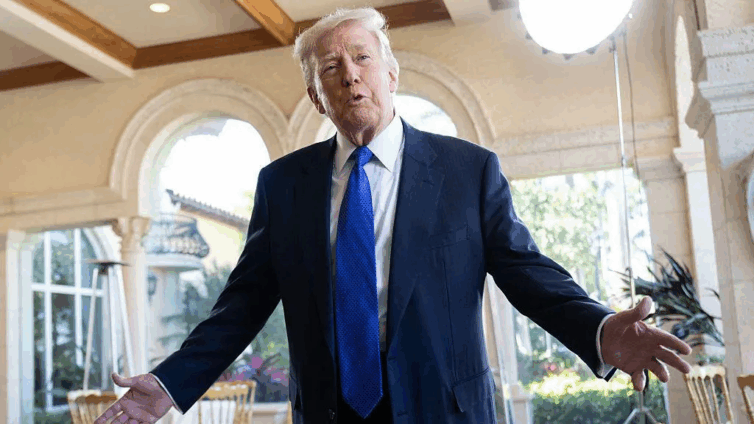
US President Donald Trump announced that he agreed to a trade deal with India's Prime Minister Narendra Modi, where the US will lower tariffs on goods from India to 18% from 25%.
In a post on Truth Social, Trump said India will reduce trade barriers to zero and will also stop buying Russian oil. An additional 25% tariff penalty imposed for Delhi's refusal to stop buying oil from Russia will be dropped.
The announcement comes less than a week after India and the European Union announced a landmark trade deal that capped nearly two decades of on-off talks.
Modi said on X that he is "delighted" that an agreement with the US has been reached.
In the post, Trump said that a morning phone call with Modi included discussions of trade and the Russia-Ukraine war.
"He agreed to stop buying Russian oil, and to buy much more oil from the United States and, potentially, Venezuela," Trump wrote.
Trump added that, at Modi's request, he immediately "agreed to a trade deal" that would see tariffs lowered and India's tariffs and non-tariff barriers reduced to zero.
Additionally, Trump said Modi committed to buying more than $500bn (£366bn) worth of American goods including energy, technology, agriculture and coal products.
The trade relationship between the US and India has been strained since the US imposed 50% tariffs on goods from India - the highest for a country in Asia - in August, including a 25% penalty linked to India's purchase of Russian oil.
A White House official confirmed to the BBC that the Russian oil-linked tariffs will be dropped as part of the agreement and other tariffs lowered to put the rate at 18%.
"Big thanks to President Trump on behalf of the 1.4 billion people of India for this wonderful announcement," Modi said on X.
"When two large economies and the world's largest democracies work together, it benefits our people and unlocks immense opportunities for mutually beneficial cooperation," he added.
Indian exports to the US plummeted sharply as Trump's tariffs took effect.
Officials in Delhi have been seeking partnerships with other countries also grappling with Trump's tariffs.
Last week, India and the European Union announced a free trade agreement that is set to lower taxes on nearly all goods between India and the bloc of 27 European states, as both sides seek to deepen ties in the face of increasing tensions with the US.
The agreement, which European Commission President Ursula von der Leyen called "the mother of all deals", is poised to double EU exports to India by 2032, according to the EU.
Terry Haines, founder of Pangaea Policy, an analysis and forecasting firm, called the Washington-Delhi deal "an answer to those thinking the EU is flanking or gaining speed on the US on trade."
He said he expected US markets to "cheer" the agreement.
US stocks inched higher after Trump announced the trade deal with Delhi on Truth Social.
Latest Stories
-
Ghana’s economic salvation lies not in shifting geo-political allegiances – Dr Atuahene
2 minutes -
BoG proposes tougher rules on loan repayment assessment
7 minutes -
Government plans mandatory drug tests for public service jobs — Muntaka
12 minutes -
Media urged to intensify awareness campaigns on breast cancer
17 minutes -
Interior Minister urges public to share drug intelligence
23 minutes -
Afadzato South DCE commissions water projects, teachers’ bungalow
28 minutes -
Council of State urges sustained dialogue, negotiations as teachers resume work
33 minutes -
We are committed to leaving a legacy in Mandari – Bole-Bamboi MP
37 minutes -
Greater Accra teachers resume work after strike suspension
45 minutes -
Education Minister assures teachers of salary adjustments by October 16
50 minutes -
Abass Osabutey declares bid for NDC Deputy National Organiser position
52 minutes -
Education Minister inaugurates NDU Governing Council, announces $25m seed funding
1 hour -
THE LAW 101: La Beach Demolitions – The State’s own documents, the courts’ orders – and the bulldozers
1 hour -
DVLA contributes GH¢17.7m to Consolidated Fund in 2025
1 hour -
Why disaster risk reduction must connect early warnings, preparedness and financial protection to household-level resilience
1 hour