

Audio By Carbonatix
Consumer prices in the US rose faster than expected last month, in a sign that the fight to slow inflation has stalled.
Prices rose 3.5% over the 12 months to March, up from 3.2% in February, the US Labor Department said.
Higher costs for fuel, housing, dining out and clothing drove the increase.
Analysts warned that the lack of progress in curbing price rises will force the US central bank to keep interest rates higher for longer.
Higher rates help stabilise prices by making it more expensive to borrow for business expansions and other spending. In theory, that in turn slows the economy, and eases the pressures pushing up prices.
The Federal Reserve's key interest rate is now at the highest level in more than two decades, in the range of 5.25%-5.5%.
Forecasters had expected the bank to start lowering borrowing costs this year, reflecting the fact that the inflation rate, which tracks the pace of price rises, has fallen significantly since hitting 9.1% in 2022.
But recent economic data, including strong jobs creation figures last week, has raised doubts about how soon those cuts might come.
Shares on Wall Street closed lower on Wednesday as investors had been betting that rates could soon be cut.
Analysts, who once expected rate cuts as soon as March, have been rapidly revising bets, with many now not expecting any until later this summer and some predicting the bank could wait until next year.
What the Fed decides to do is likely to shape decisions by central banks around the world, said Neil Birrell, chief investment officer at Premier Miton Diversified Funds.
"The Fed has got some head scratching to do and if other central banks were waiting for the Fed to move, they have got a conundrum on their hands now," he said.
Inflation cooled rapidly over 2023 as pandemic-era supply issues healed and the spike in food and energy prices sparked by the war in Ukraine faded, but it still remains higher than the bank's 2% target.
An uptick in oil prices in recent months has also pushed energy costs higher, while prices for services show little sign of stabilising.
The Labor Department said prices had jumped 0.4% from March to February, the same as in February.
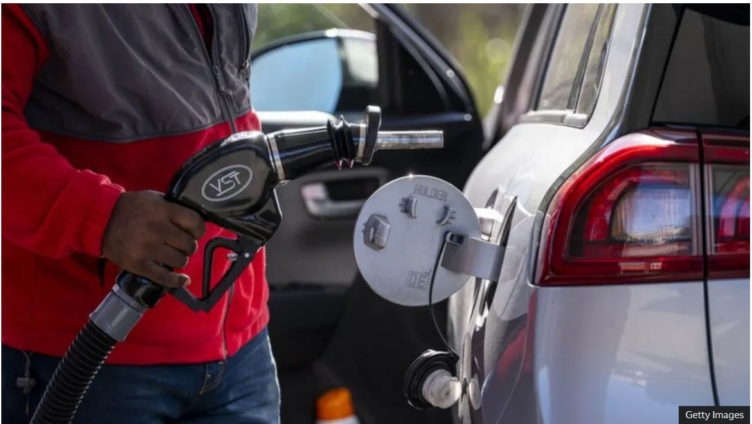
Higher petrol and housing costs accounted for more than half the increase.
Car insurance, medical care and costs for internet also contributed.
So-called core inflation, which is seen by economists as a better indicator of future trends because it does not include more volatile food and energy prices, stood at 3.8%, the same as in February.
"We shouldn't overreact to the jump in headline inflation - which was all about energy," said Brian Coulton, chief economist at Fitch Ratings. But he added: "The details are not at all reassuring for the Fed."
Latest Stories
-
Ghana must value skilled trades, build resilient learners — Ibn Chambas
5 minutes -
Ghana must rethink education around relevance, resilience and responsibility — Ibn Chambas
8 minutes -
Prince Harry faces defamation lawsuit from charity he co-founded
9 minutes -
South Korea deploys thermal cameras to track escaped zoo wolf
11 minutes -
Calls for royal meeting with Epstein survivors grow ahead of US visit
14 minutes -
Ibn Chambas advocates blend of technology and human values in education
16 minutes -
UMA improves healthcare access in Asutifi North with GH₵700k ‘Kim Taylor Legacy’ Walkway
21 minutes -
Scholarships Authority and Fanaka University offer sponsorship for procurement and supply chain studies
24 minutes -
Bisa Kdei drops new single ‘Go N Look’ featuring Medikal
30 minutes -
Benin facing rising terrorism in north as French military presence faces growing criticism
31 minutes -
UEW Public Lecture Series 2026: Education debate ‘about the soul of Ghana’s future’ — Dr Ibn Chambas
32 minutes -
EU fingerprint and photo travel rules come into force from today
59 minutes -
Anti-LGBTQ+ Bill: Ghanaians demand expedited passage, not dialogue – Ntim Fordjour to Mahama
1 hour -
EU airline industry warns of fuel shortages if Strait of Hormuz stays closed
1 hour -
White House staff told not to place bets on prediction markets
1 hour