

Audio By Carbonatix
Usibras Ghana Limited, one of the country’s largest cashew processing companies, has announced plans to relocate its operations to the Ivory Coast, citing persistent challenges that have crippled its ability to sustain production.
The company, which has run a 24-hour production cycle for more than a decade, says Ghana’s cashew supply can no longer sustain industrial-scale processing.
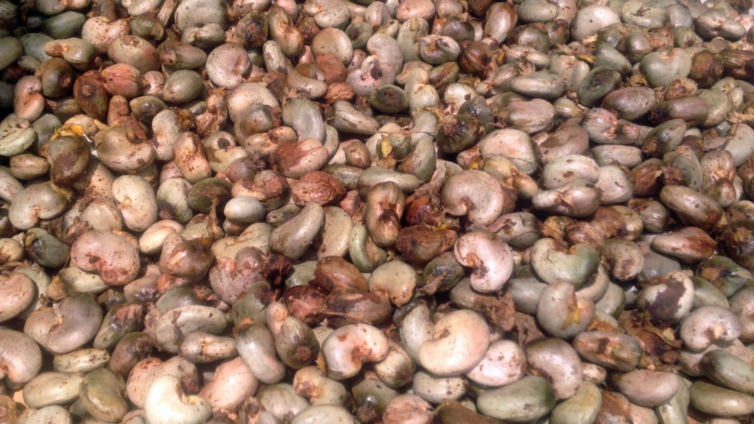
With a plant capacity of 35,000 metric tonnes per year, Usibras managed to secure only 7,000 MT of raw cashew nuts in 2025.
Management also pointed to the rising cost of electricity and other utilities, unfavourable export tariffs—particularly the 15% duty on products exported to the United States—and the difficulty of keeping operations continuous as reasons for the move.
Economic and Social Fallout
The relocation of Usibras could have far-reaching consequences for Ghana’s economy and social structure.
Already, the company has begun cutting back its 700-strong workforce after exhausting the limited volumes of raw nuts available. A complete shutdown would leave hundreds of households without income.
Cashew farmers also stand to lose a key buyer, raising fears of market disruptions and discouraged production.
Ghana’s export earnings could take a hit as well, with Usibras being one of the few processors generating significant foreign exchange inflows through its banking operations.
Industry watchers warn that the exit of Usibras could weaken the Association of Cashew Processors in Ghana, of which the company is a major player, and harm service providers who depend on the processor for business.
Contributions to SSNIT and PAYE tax revenues would also decline, reducing government income.
Call for Government Action
Usibras’ looming departure underscores systemic problems in Ghana’s cashew industry.
A factory with the capacity to process 35,000 MT, securing only 7,000 MT this year, signals a supply crisis, the company warned.
It has urged government to act swiftly by enforcing rules to protect local processors, adopting tax policies similar to Ivory Coast to make the sector more competitive, and establishing a task force to regularise operations in the cashew industry.
Without urgent intervention, Ghana risks not only losing Usibras but also damaging investor confidence in its agribusiness sector.
Latest Stories
-
US, Iran fail to reach peace agreement after marathon talks in Pakistan
55 minutes -
Port crises loom as 11,000 drivers threaten four-day strike
2 hours -
A source of excellence across generations – Vice President Opoku-Agyemang lauds Mfantsipim
2 hours -
(Photos) Mfantsipim School launches historic 150th anniversary
3 hours -
Knights and Ladies of Marshall group backs Catholic Bishops’ stance on anti-LGBTQ+
3 hours -
Bright Simons writes: All the Filla in the Ibrahim Mahama/E&P – Gold Fields Saga
4 hours -
Monetise Idiocy In Ghana
4 hours -
ECG kicks off Phase Two of transformer upgrades at Lashibi; brief outages expected
5 hours -
The Ghanaian prophet and the mysterious death of his scottish wife Charmain Speirs
5 hours -
Nearly 400 sentenced in Nigeria for links to militant Islamists
5 hours -
Ghana’s recovery supported by gold strength despite global oil price pressures – Standard Bank Research
5 hours -
Methodist Church hails Mfantsipim@150; calls for “fresh consecration” to excellence
6 hours -
‘Excellence is our inheritance’ – Nana Sam Brew-Butler hails Mfantsipim’s 150-year reign in leadership
6 hours -
Kwaku Azar writes: A-G vs OSP
6 hours -
Mfantsipim–Adisadel rivalry built excellence, not division – Sam Jonah
6 hours