

Audio By Carbonatix
West Africa’s cashew sector has vaulted from a niche crop to a regional economic powerhouse — supplying raw nuts to global processors, creating rural jobs and drawing investment. But policy choices now will determine whether West Africa captures more value, protects forests and secures reliable market access in an era of tighter European rules and shifting global demand.
Production and processing: the current picture
Côte d’Ivoire dominates the region’s output, driving dramatic expansion in acreage and processing capacity across the subregion. Rapid growth in Ivorian processing — from around 68,500 tonnes in 2015 to some 350,000 tonnes by 2024 — shows what policy and investment can do to keep value in-country. Meanwhile, Ghana’s volumes are more modest and volatile: official reporting and industry accounts point to meaningful year-to-year swings, with a notable drop reported in the 2024 season.
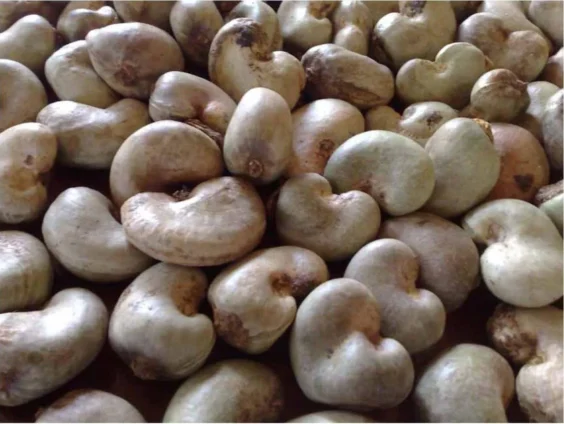
West Africa supplies most of the world’s raw cashew nuts, but much of the high-value kernel processing still lives in Asia. Closing that gap through local processing is a central regional opportunity — but it requires coherent policy, finance and industrial coordination.
Policy levers for value retention
National strategies that combine procurement rules, investment incentives and industrial zoning have worked elsewhere in the region. Government-supported agro-industrial zones, tax incentives for processors, and price-stabilisation mechanisms can encourage processors to invest. Where governments offer predictable offtake guarantees or blended-finance windows for equipment, processing capacity has expanded rapidly — as seen in Côte d’Ivoire’s recent industrial push. Policymakers in Accra and neighbouring capitals should consider similar packages tailored to local realities.
Trade policy — harmonise, don’t fragment
Fragmented standards and border procedures raise transaction costs for small exporters and undermine regional competitiveness. ECOWAS-level coordination on sanitary and phytosanitary (SPS) rules, common MRL guidance and mutual recognition of testing labs would reduce delays and help small processors scale. Harmonised export documentation and a regional traceability framework would also help move from raw-nut exports toward kernel exports sold on merit, not price alone.
Compliance and market access
The EU’s new Deforestation-Free Regulation (EUDR) requires importers to perform due diligence showing commodities are not linked to deforestation after 31 December 2020 and are compliant with local laws. Although the regulation specifically lists certain commodities, its broader market effect is clear: European buyers are progressively demanding verifiable origin, geolocation and legality data — and nuts traders will adapt quickly. For Ghanaian and West African exporters, that means investing in geotagging, producer registries and chain-of-custody systems now, not later.
Sustainability, finance and smallholder inclusion
Sustainable production policies — agroforestry incentives, integrated pest management (IPM), and support for solar-assisted drying and grading — directly improve quality and reduce rejections at destination markets. Blended finance, small grants to co-ops for dryers and digital traceability, and technical-extension bundles can accelerate uptake among smallholders. Supporting women and youth with targeted credit and training will widen the domestic skills base needed for local processing growth.
Regional opportunity — turn competition into complementary growth
Rather than compete solely on raw volumes, West African governments can coordinate complementary strengths: Côte d’Ivoire’s scale, Benin’s processing clusters, and Ghana’s established trading networks should be knitted into a regional value-chain strategy that attracts anchor investors. Shared infrastructure — transport corridors, testing labs, and cross-border trade facilitation — will lower unit costs and make regional processors more competitive versus distant Asian rivals.
What governments and the private sector must do next
1. Fast-track national cashew strategies that combine incentives for processing with safeguards for land use and smallholder incomes.
2. Invest in compliance infrastructure: geolocation registries, accredited labs and digital traceability to meet EUDR-style buyer expectations.
3. Scale blended finance and targeted grants for post-harvest and processing equipment to keep value in-country.
4. Lead an ECOWAS-level harmonisation of SPS, MRLs and trade paperwork to unlock cross-border scaling.
Conclusion
Ghana and West Africa stand at a fork: continue exporting raw materials and ceding value to processors elsewhere, or marshal policy, finance and regional cooperation to capture more of the cashew value chain at home. With global buyers increasingly demanding traceability and deforestation-free sourcing, the window to act is now — and the prize is jobs, rural resilience and a stronger negotiating position in global nuts markets.
Latest Stories
-
Ghana’s economy grows by 7.4% in July 2026
8 minutes -
NDC member challenges Dennis Yeboah Twumasi’s eligibility for Bono Regional Secretary elections
18 minutes -
Popular Nigerian gospel singer Toluwanisings dies
28 minutes -
Spio-Garbrah proposes debt swaps to fund reparative justice in Africa and Caribbean
36 minutes -
Alban Bagbin calls for governance reforms and coordinated action to address Africa’s debt crisis
38 minutes -
AAK Academy Ghana trains 22 chocolate and confectionery companies in production techniques
40 minutes -
Adwumawura Programme trains second cohort of young entrepreneurs in Bono East
41 minutes -
Destroying Jimi River for gold could cost us our lives – Asantehene
48 minutes -
Sammy Gyamfi didn’t say BoG has ceded its forex role to us – GoldBod
2 hours -
High Court sets November 4 for ruling on Wontumi’s bail application
2 hours -
Tetteh Kwetey files nomination for NDC Greater Accra Regional Chairmanship
2 hours -
Korle Bu appeals for more doctors, nurses as A&E Centre struggles under pressure
2 hours -
AFCON 2027Q: ‘I’m optimistic Black Stars can turn things around’ – Agyemang-Badu
2 hours -
Digital innovation could widen Africa’s inequalities if people are left out – Sam Jonah
2 hours -
Galamsey is an economic, health and moral problem – Sam Jonah
2 hours