

Audio By Carbonatix
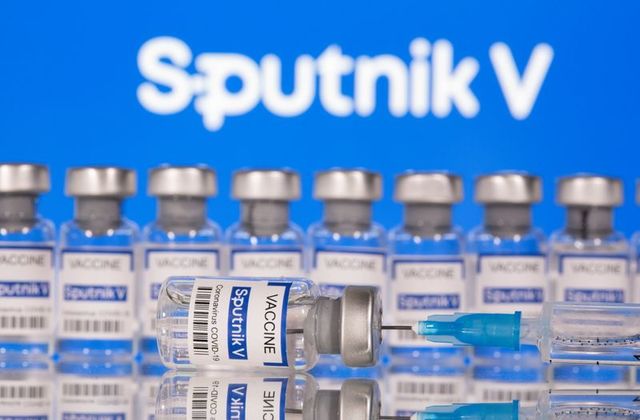
Pharmacist and Fellow of the Ghana Centre for Democratic Development (CDD-Ghana), Kwame Sarpong Asiedu says the issue with Ghana’s use of intermediaries to procure Covid-19 vaccines is not about the quality of vaccines but the legality of the procurement process.
"The issue is not about quality; it is about legality, " Dr Asiedu said.
Explaining his point on Joy News' Newsfile Saturday, he said, “The issue with the middle man, not about the FDA not doing their job, it is about that middleman not having a contract with the local holder of the Emergency Use Authorization, that’s where the issue is.
“So if I register a product in Ghana and it’s within patent, if you want to bring it into Ghana, I either bring it myself, or I can franchise someone to bring it, or the manufacturer, in this case, it is Sputnik, the Russian development fund can bring it on behalf of somebody.
Speaking on quality, he said the Food and Drugs Authority (FDA) has, over the years, proven to be a robust institution ensuring the quality of products on the Ghanaian market; thus, there should not be any cause for alarm concerning the quality of the vaccines.
"Ghana has one of the most robust regulatory authorities when it comes to medicines in Africa," he said.
However, he was concerned about how go-betweens were being employed to bring the vaccines into the country, a situation he says could create some legal bottlenecks for the country in the future.
“If a 3rd person is bringing it because the regulation doesn’t allow you to register the product, twice in the same country, then there are regulatory issues and legality issues there.”
He stated that without a legal contract between the Emergency Use Authorisation holder and the middleman, any adverse event post-immunization, would have to be borne solely by the Ministry of Health.
He further advised the FDA to collate the adverse events post immunisation.
“What I will say is that yes, the FDA will do all that, but another thing that the FDA would have to ensure is the collation of the adverse events, post-immunisation, which is the responsibility of the person who holds the emergency use authorization that is where the real issue will be.
“When the middleman brings it and issues that disclaimer, albeit, the disclaimer is issued by all manufacturers; however, when it comes to the adverse effects post-immunisation, it is the responsibility of the local procurer of the emergency use authorisation.
“The question I ask consistently is if we use a middleman, will the Ministry of Health take over that responsibility and any liability that comes with it? We don’t have answers, and that is where the problem is, so I don’t have an issue at all with the FDA’s robustness,” he said.
Latest Stories
-
Friends of Bridget Bonnie Marks her 35th birthday with donation to Kasseh Model Health Centre
19 minutes -
Landfilling waste management creates no value, it’s an economic waste
46 minutes -
Photos: Speaker Bagbin Commissions MPs constituency office under parliamentary decentralisation programme
1 hour -
Black Stars technical advisor Winfried Schäfer sacked as GFA shakes up backroom staff
1 hour -
Wenchi water project almost complete, critical to gov’t agenda – GWL MD
1 hour -
Anti-LGBTQ+ bill not part of government’s legislative agenda – Inusah Fuseini
1 hour -
Anti-LGBTQ Bill: Forget the rumour mongers, I’m a man of action, and will pass the bill – Speaker
2 hours -
Women and children among those killed in Sudanese army shelling of wedding celebration
2 hours -
President Mahama is not sincere with Ghanaians on LGBTQ bill matter – Hassan Tampuli
3 hours -
Gov’t to establish Prison Industrial Hub to equip inmates with income-generating skills – Prison Service boss
3 hours -
Alhassan Tampuli donates cement, roofing sheets to support storm victims in Gushegu
3 hours -
Alhassan Tampuli appeals for urgent support for storm victims in Gushegu
3 hours -
The hypocrisy must stop; pass Anti-LGBTQ+ Bill now – Alhassan Tampuli to Mahama
3 hours -
Imprisonment should be rehabilitative, not punitive – Ghana Prisons boss at UNGA
3 hours -
Ga Adangbe traditional priests petition Mahama over McDan aviation licence revocation
4 hours