

Audio By Carbonatix
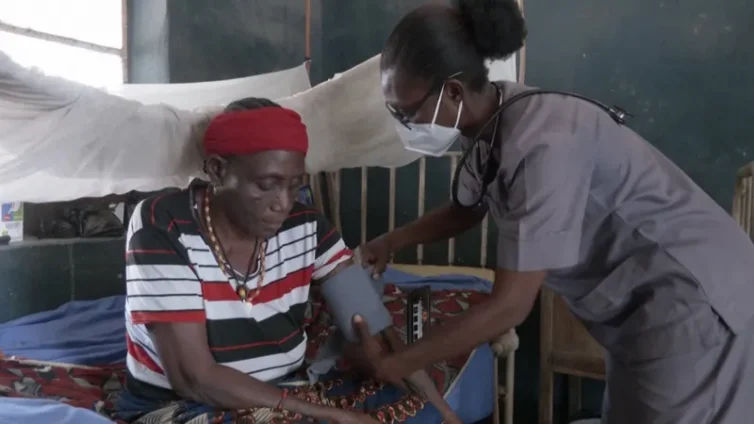
People affected by leprosy in Nigeria should be able to get hold of vital drugs to treat the disease for the first time in a year from this weekend, the World Health Organization has said.
The country, which reports more than 2,000 new cases a year ran out of supplies partly because drugs were held up after new regulations were introduced.
The WHO said it had asked Nigeria to briefly lift its new testing policy and it expects the drugs to arrive from India on Sunday.
Leprosy is curable with a combination of different antibiotics, but if left untreated the patients' health can deteriorate with sores and nerve damage that cause deformities.
The treatment can last between six and 12 months.
But because of the lack of drugs in Nigeria, patients have been sent home from hospitals. As the drugs suppress transmission this increases the risk of the disease spreading.
Dr Samimu Msheliza, a public health expert and medical advisor at the Nigerian branch of the Leprosy Mission, highlighted the urgent need for medication.
"We have thousands of newly diagnosed leprosy patients across various cities who are just waiting for this drug," he told the BBC.
"The quicker we have [the drugs], the better, because currently these people are suffering, their transmission is ongoing because they are not being treated," Dr Msheliza said.
The Reuters news agency spoke to one woman at a hospital in Nasarawa state, who said her condition had got much worse since she was not able to get hold of the combination of drugs.
All Awwal Musa's fingers were clawed and her legs discharged pus. "Before last year, my wounds were getting healed but now they are getting worse. The pain is worse," Ms Musa is quoted as saying.
The nerve damage may be irreversible.
Nigeria's drug authority introduced new regulations for medicines aimed at tackling the importation of counterfeit and sub-standard drugs.
In recent years, several medicines have been recalled for failing to meet safety standards.
But the new measures have had an impact on the availability of crucial treatments, including those for leprosy.
Latest Stories
-
GPL 2025/26: Late Kwartemaa strike downs Hearts in Tema
1 minute -
Ghana Faces Sierra Leone Moment as Prosecutorial Powers come under strain
11 minutes -
Don’t consume fish or seafood from Tema Shipyard until further notice – FDA warns
16 minutes -
Why volunteering might be Africa’s most underrated career accelerator
22 minutes -
ActionAid Ghana raises concern over gender gaps in Feed Ghana Programme
24 minutes -
Windstorm wreaks havoc in Gushegu, displacing nearly 2,000 residents and damaging schools
27 minutes -
Friends of Bridget Bonnie Marks her 35th birthday with donation to Kasseh Model Health Centre
1 hour -
From Ekumfi Kokodo to the Pulpit Stage: Essi Donkor’s gospel journey takes shape
1 hour -
Landfilling waste management creates no value, it’s an economic waste
2 hours -
Photos: Speaker Bagbin Commissions MPs constituency office under parliamentary decentralisation programme
2 hours -
Black Stars technical advisor Winfried Schäfer sacked as GFA shakes up backroom staff
2 hours -
Wenchi water project almost complete, critical to gov’t agenda – GWL MD
2 hours -
Anti-LGBTQ+ bill not part of government’s legislative agenda – Inusah Fuseini
2 hours -
Anti-LGBTQ Bill: Forget the rumour mongers, I’m a man of action, and will pass the bill – Speaker
3 hours -
Women and children among those killed in Sudanese army shelling of wedding celebration
3 hours