


Audio By Carbonatix
Volunteers are to be recruited from today for a world-first study that will mix and match Covid-19 vaccines.
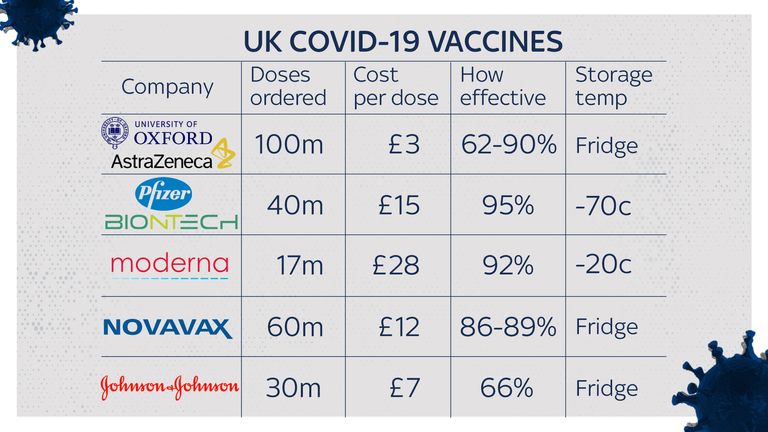
The trial on more than 800 people over the age of 50 will compare the effect of giving a dose of the AstraZeneca/Oxford vaccine followed a few weeks later by the Pfizer/BioNTech jab or vice versa.
The interval between the doses will be either four or 12 weeks to test whether giving the immune response a longer time to mature can improve the result.
Initial results should be available by the summer.
Professor Matthew Snape, a vaccinologist at Oxford University and part of the Oxford vaccine team, said the ability to use different jabs would guard against any supply problems.
He said: "If we do show that these vaccines can be used interchangeably in the same schedule this will greatly increase the flexibility of vaccine delivery, and could provide clues as to how to increase the breadth of protection against new virus strains."
The study, run by the National Immunisation Schedule Evaluation Consortium (NISEC), will be run at eight hospital centres around England. Volunteers will be recruited over the next two to three weeks through the Covid-19 Vaccine Research Registry.
They will have regular blood tests to assess their levels of antibodies and T-cells, which help to clear infections and act as an immune memory.
Further vaccines could also be added to the mix once they are approved by the medical regulator.
Minister for Covid-19 Vaccine Deployment Nadhim Zahawi said: "This is a hugely important clinical trial that will provide us with more vital evidence on the safety of these vaccines when used in different ways."
There are no current plans to alter the current vaccine schedule, which has a gap of up to 12 weeks between two doses of the same jab.
Dr Peter English, a consultant in communicable disease control at Public Health England, said: "Many vaccines work better if a different vaccine is used for boosting - an approach described as heterologous boosting.
"Examples include hepatitis B, where some people respond poorly to vaccination but better if a heterologous booster is given."
Latest Stories
-
Landfilling waste management creates no value, it’s an economic waste
6 minutes -
Photos: Speaker Bagbin Commissions MPs constituency office under parliamentary decentralisation programme
21 minutes -
Black Stars technical advisor Winfried Schäfer sacked as GFA shakes up backroom staff
26 minutes -
Wenchi water project almost complete, critical to gov’t agenda – GWL MD
42 minutes -
Anti-LGBTQ+ bill not part of government’s legislative agenda – Inusah Fuseini
44 minutes -
Anti-LGBTQ Bill: Forget the rumour mongers, I’m a man of action, and will pass the bill – Speaker
2 hours -
Women and children among those killed in Sudanese army shelling of wedding celebration
2 hours -
President Mahama is not sincere with Ghanaians on LGBTQ bill matter – Hassan Tampuli
2 hours -
Gov’t to establish Prison Industrial Hub to equip inmates with income-generating skills – Prison Service boss
2 hours -
Alhassan Tampuli donates cement, roofing sheets to support storm victims in Gushegu
2 hours -
Alhassan Tampuli appeals for urgent support for storm victims in Gushegu
2 hours -
The hypocrisy must stop; pass Anti-LGBTQ+ Bill now – Alhassan Tampuli to Mahama
2 hours -
Imprisonment should be rehabilitative, not punitive – Ghana Prisons boss at UNGA
3 hours -
Ga Adangbe traditional priests petition Mahama over McDan aviation licence revocation
3 hours -
Anti-LGBTQ Bill: NDC’s arrogance is worrying – Hassan Tampuli
3 hours