

Audio By Carbonatix
The Executive Director of the West Africa Civil Society Institute (WACSI), Nana Afadzinu, has called for a more inclusive approach that incorporates new voices and actors in addressing the challenges facing democracy and governance in West Africa.
She emphasised the need for a more nuanced understanding of the current challenges, acknowledging both the shortcomings of existing democratic models and the importance of safeguarding democratic principles.
She said this at a roundtable discussion aimed at fostering collaboration among Civil Society Organisations (CSOs) in West Africa to strengthen democracy and good governance in the region.
"In today's democracy, marked by shifting geopolitical dynamics and a weaker ECOWAS, we must address challenges such as the resurgence of coup d'état threats in the region. This roundtable provides a vital platform for CSOs to share insights and collaborate on collective solutions, drawing from experiences in affected countries like Mali, Burkina Faso, and Niger.
"Furthermore, the evolving landscape sees new voices within CSOs, including individuals acting as institutions, necessitating adaptive strategies to confront issues worsened by technology and insecurity”, she said.
ChiChi Aniagolu-Okoye, the Regional Director for Ford Foundation West Africa, echoed Nana Afadzinu’s concerns and commended the role of CSOs in promoting democratic ideals.
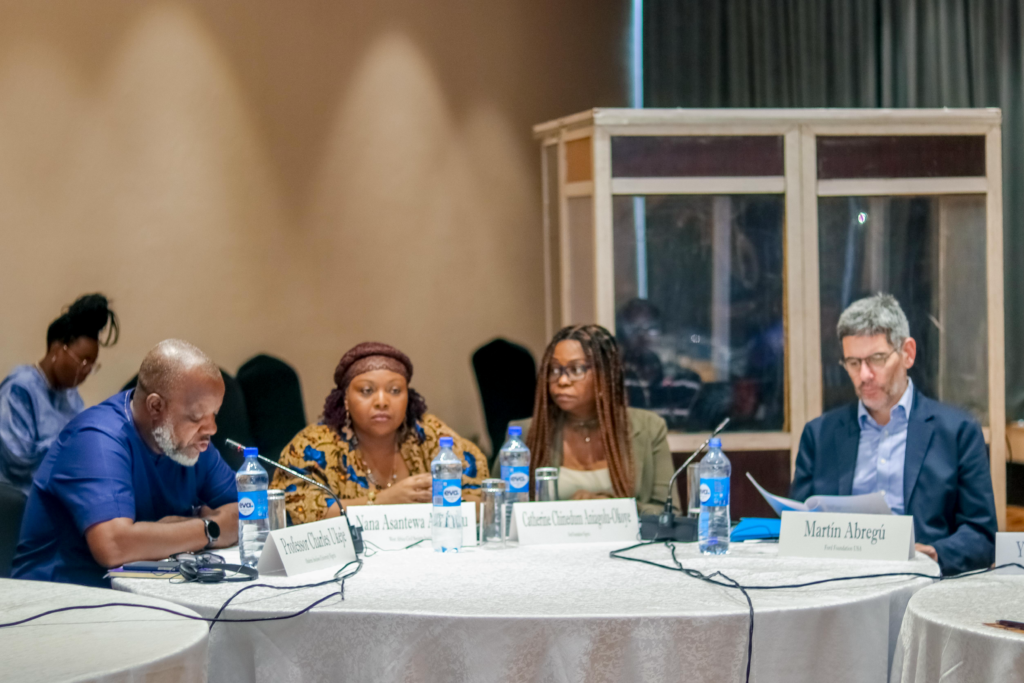
She stated the need for self-reflection within the CSO community and urged a renewed commitment to advocating for citizen-centred democracy that delivers tangible benefits to the people.
”To safeguard against future military interventions, it's important for CSOs to engage in shaping democratic governance that serves the people. By identifying systemic failures and working towards civilian-led solutions, we can ensure a future where democracy benefits everyone.
"This necessitates open dialogue and honest conversations to address existing challenges and restore ECOWAS's commitment to democratic principles”, she mentioned.
For her part, Martin Abregu, Vice President of International Programs at the Ford Foundation, said, “Participants should embrace humility and adaptability in navigating the complexities of the current political landscape.
"We must look at the importance of rethinking transnational solidarity and international cooperation in the face of evolving global dynamics”.
The civil society organizations who spoke at the event argued that democracy was declining in West Africa because people want good governance regardless of what form it comes in, including military rule and civilian governments are not providing good governance.
They blamed worsening economic conditions, authoritarian civilian governments, imperialism, manipulation of election results, corruption and weak judiciaries for citizens tilting towards a preference for military rule.
However, the participants also highlighted key priorities for advancing democracy in West Africa. Learning from success stories like Senegal's recent transition, they emphasised the importance of boosting public engagement through innovative channels such as social media.
Strengthening democratic institutions, including the media and judiciary, alongside the need to reform electoral processes for greater inclusivity and credibility.
Additionally, fostering collaboration among civil society organisations, involving new stakeholders like the private sector and diaspora, was emphasized. Participants also underscored the imperative of countering external influence on democratic processes, advocating for African-driven solutions.
The Civil Society Roundtable Discussion, co-convened by the West Africa Civil Society Institute (WASCI) and Ford Foundation is expected to stimulate continued dialogue and collaboration among stakeholders committed to advancing democracy and governance in West Africa, amid ongoing political transitions and emerging threats as well as inform future efforts to promote inclusive and resilient democracies across the continent.
Latest Stories
-
A source of excellence across generations – Vice President Opoku-Agyemang lauds Mfantsipim
45 minutes -
(Photos) Mfantsipim School launches historic 150th anniversary
1 hour -
Knights and Ladies of Marshall group backs Catholic Bishops’ stance on anti-LGBTQ+
2 hours -
Bright Simons writes: All the Filla in the Ibrahim Mahama/E&P – Gold Fields Saga
2 hours -
Monetise Idiocy In Ghana
3 hours -
The Ghanaian prophet and the mysterious death of his scottish wife Charmain Speirs
3 hours -
Nearly 400 sentenced in Nigeria for links to militant Islamists
4 hours -
Ghana’s recovery supported by gold strength despite global oil price pressures – Standard Bank Research
4 hours -
Methodist Church hails Mfantsipim@150; calls for “fresh consecration” to excellence
4 hours -
‘Excellence is our inheritance’ – Nana Sam Brew-Butler hails Mfantsipim’s 150-year reign in leadership
4 hours -
Kwaku Azar writes: A-G vs OSP
4 hours -
Mfantsipim–Adisadel rivalry built excellence, not division – Sam Jonah
5 hours -
Vice President launches Mfantsipim’s 150 years of shaping Ghana’s greatest mind
5 hours -
I assure Otumfuo, Mahama will join him to commission KNUST Teaching Hospital by end of this year – Haruna Iddrisu
6 hours -
Barcelona dominate derby to extend La Liga lead
6 hours