

Audio By Carbonatix
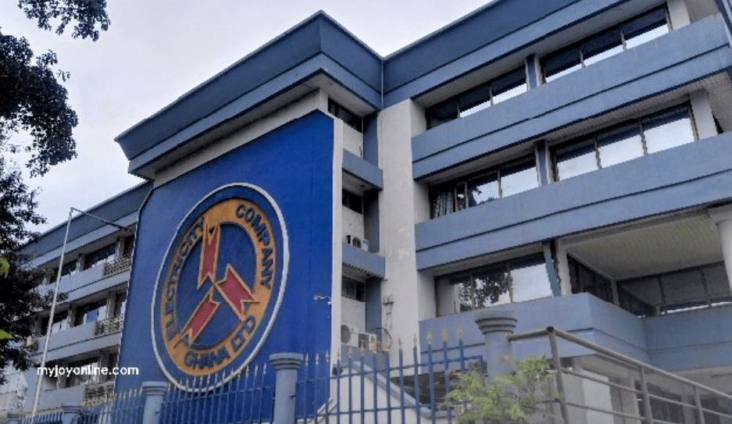
The Association of Ghana Industries (AGI) has fired salvos at the Electricity Company of Ghana (ECG), accusing the power distributor of deliberately undermining local manufacturers by importing massive quantities of electrical cables.
In a statement issued on April 5, AGI CEO Seth Twum-Akwaboah expressed outrage over reports that over a thousand containers of electrical materials—mainly aluminium conductors—have been imported, with many allegedly unaccounted for.
This, the AGI argues, directly contravenes Ghana’s local content law, L.I. 2354, and deals a harsh blow to local industry.
“For a state institution that is already saddled with huge debts, this is most unfortunate,” the AGI stated, while acknowledging the efforts of the Energy Minister to promote local content.
But the frustration from AGI is palpable, as they question why ECG would opt for imports when local factories have already responded to ECG’s own call to develop domestic capacity.
“ECG over the years has distinguished itself as a proponent of local content,” the AGI noted, recalling that government in 2017 passed the Local Content Law, L.I. 2354, to support this effort.
“Thousands of jobs were created. Local manufacturers further responded and actively started using aluminium from VALCO as raw material.”
The AGI stressed that Ghana currently has 100% local production capacity for aluminium conductors using raw materials from VALCO.
“Importing such huge volumes breaches L.I. 2354,” the group stressed.
“It is sad to note that our local manufacturers of aluminium conductors, who continue to create jobs, are owed huge sums of money, yet importers are promptly paid.”
This revelation not only raises questions about ECG’s procurement practices, but also highlights a glaring contradiction: while local industries are left starving for payments, importers of foreign goods are allegedly being favoured and paid without delay.
The AGI is demanding urgent action. It called on the Minister of Energy and Green Transition to immediately investigate these imports, which it says are illegal and must be nullified.
“All imports which are contrary to L.I. 2354 must be investigated, and the state must refuse responsibility for such imports,” the statement read.
In addition, the AGI urged the government to strengthen public financial management systems to ensure robust internal controls and frequent audits, as well as prioritize payment of arrears owed to local manufacturers.
“Payment for local manufacturers must be prioritized in the same manner as local power generators,” it added.
AGI warned that without serious enforcement of the local content law, Ghana’s dream of industrialization will remain elusive.
“Local suppliers who merely import finished items do not qualify to be classified as local content suppliers,” it clarified.
“We await government action on this critical matter and are ready to engage and support in every way possible,” the statement concluded, leaving little doubt that the AGI expects more than lip service.
Latest Stories
-
Sir Sam Jonah slams political interference in insurance industry
15 minutes -
Yemen’s Houthis enter Iran war with attacks on Israel, while US Marines arrive in region
1 hour -
Potential Houthi threat to Red Sea shipping could further damage global economy
3 hours -
Sir Sam Jonah unveils five-point plan to boost Ghana’s insurance industry
4 hours -
Abstention not a rejection of Ghana’s slavery resolution — EU
4 hours -
‘DDEP was a big blow; full recovery not achieved yet’ – Sir Sam Jonah
4 hours -
The hypocrisy of the global north and the truth about the Transatlantic Slave Trade
5 hours -
2,280 students graduate with B-Tech, M-Tech from Takoradi Technical University
5 hours -
“We are losing ourselves” – Special Prosecutor laments cultural erosion in Ghana’s education system
5 hours -
‘We were trained to serve, not lead’ – Special Prosecutor condemns colonial education legacy
6 hours -
Education must preserve identity and drive innovation – Special Prosecutor
6 hours -
Corruption raises bank risk, weakens diversification benefits, research finds
7 hours -
The Apostolic Church-Ghana bans ‘you may kiss your bride’ during marriage ceremonies
9 hours -
Ɔdadeɛ 95 marks reunion with GH₵200k Solar Project at PRESEC-Legon
10 hours -
AI is the new phase of the digital age, and Africa must be ready or risk being left behind – Dr Bawumia warns at LSE Africa Summit
10 hours