

Audio By Carbonatix
There have been times during the present Covid-19 pandemic when it has felt a bit like being inside a disaster movie.
Only instead of the giant spaceship in "Independence Day," there is a massive lens hovering above humanity magnifying all the things we need to put right before we can continue with this process of evolution also known as living on planet Earth.
Suddenly, some really ugly realities have become glaringly obvious. That we put profits over people, always, as default.
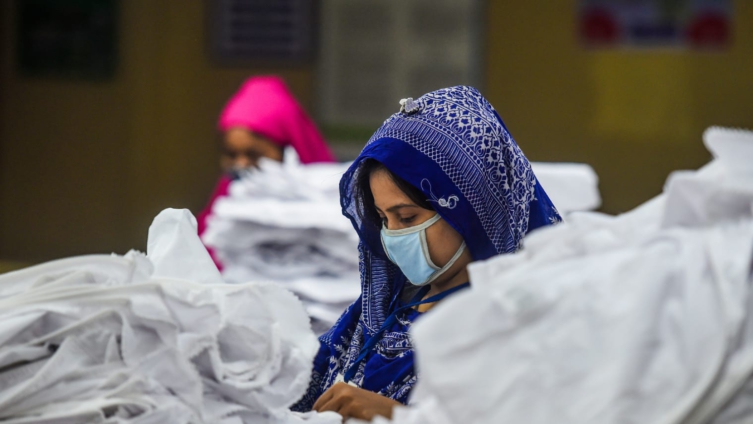
That we can tolerate millions of supply chain workers going unpaid and losing their jobs, while a handful of individuals make billions they will never, ever need.
That systemic racism is another pandemic we never took steps to eradicate. That colonialism is still embedded in supply chains.
That we are so dependent on buying stuff that entire economies collapse if we stop. That all of this cheap stuff, mass-produced and left unsold, will decompose in landfill or be incinerated.
On the other side, while in lockdown, nature came out to play, in a poignant display of what we are about to lose if we're not careful.
I can only speak from my London-centric, European point of view, but I saw roads with no cars, and star-filled skies with no planes. On Zoom I saw my mother in Venice, and the city looked empty, crisp, clean, glorious.
There were so many beautiful stories of nature's creatures reclaiming ground in the wake of our disappearance. It seemed clear the planet was getting what she needed while we self-isolated: a much needed break from our excesses.
Nobody could have imagined us -- all of us, pretty much the entire world -- having to give up on our normality and run inside, but it happened.
Like a dystopian version of what the more radical environmental campaigners have long maintained is necessary, we had to stop. The world closed.
Only last summer I was writing an op-ed on whether international fashion weeks should be canceled because of their hefty environmental footprint. It felt speculative, like making a point for the sake of an argument.
But this year, many of them were canceled or moved online to protect lives threatened by a seemingly more tangible menace than the climate crisis.
Unsurprisingly, the planet thrived while we were stopped in our tracks, so much so that this year's Earth Overshoot Day, marking the point where we've used the up the resources that the planet can generate in 12 months, came more than three weeks later than last year, slowed down by lockdown.
However, lockdown's environmental benefits were overshadowed by the irreverence toward people, by people, and a broken system that is focused on growth without considering gratitude.
If I were a single parent, mother of young kids, in lockdown, what difference would it make to my life that Venice looks glorious and that there are no planes flying about in the London skies?
If I could barely afford to put food on my table, am I going to be thinking about going plastic-free when I shop?
Where is the time to scout for a charity shop in the vague hope it has what I am looking for, or to repair my cheap Zara dress so that I can re-wear it to avoid buying a new fast fashion piece?
Or if I were a supply chain worker, witnessing firsthand the negative environmental impact of the products I make, how could I raise that issue if I am not allowed to speak up for fear of losing my job?
The profound inequality and the lack of dignity and equity in our society prevent us from being equally invested in the conservation and regeneration of our shared surroundings.
Many sustainability and environmental movements remain very much in the realm of people like me: white, privileged, well-meaning for sure, but certainly of a type.
This is why governments, organizations and civil society need to be anti-racist and anti-discriminatory, respectful, empathic and rooted in justice if we want to save the planet.
Because it needs to matter to everybody. We all need to be on the same page.
Without considering the intersection between people and planet, and that respect for nature requires unconditional respect between its people, we will not accomplish the drastic changes we need to survive.
We may not yet be able to fully rely on technology and innovation to mitigate the climate crisis, but there is one innovation that doesn't require technology that we haven't tried: treating each other as equals.
Latest Stories
-
Black Star Experience announces national choral music contest to discover new Ghanaian talent
9 minutes -
Melcom serves 1,000 meals to children in selected orphanage homes
10 minutes -
Miracles Aboagye questions Mustapha Gbande’s authority to direct EOCO arrest of Manhyia South MP
11 minutes -
My music is a true reflection of who I am – Nigerian singer Ladé
11 minutes -
Activa International Insurance Ghana reinforces culture of compliance and customer protection
17 minutes -
Mining must prove its impact, not just publicise it — Chamber of Mines
27 minutes -
NDC disqualifies Dzifa Gunu from La Dadekotopon contest
34 minutes -
Togbe Afede XIV opposes proposed 5-year presidential term
37 minutes -
World Vision targets 90 percent universal WASH access in Asunafo North, Asutifi North
55 minutes -
I told EOCO to arrest Manhyia South MP – Mustapha Gbande
1 hour -
2028 election will be a combination of strategy and ‘buga’ – Miracles Aboagye
1 hour -
Bombs preventing rescue of kidnapped youths, Nigerian police say
1 hour -
Flydubai co-pilot planned to crash plane into Tel Aviv airport or building, reports say
1 hour -
National security must be built beyond Accra – Muntaka
1 hour -
Ghana bans preaching on buses with jail terms for offenders
1 hour