

Audio By Carbonatix
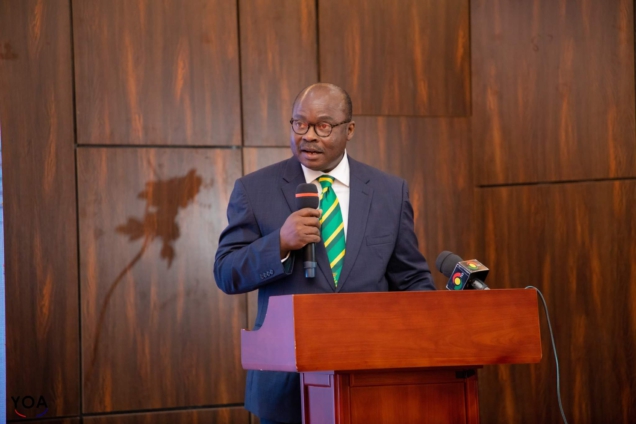
The Governor of the Bank of Ghana, Dr. Ernest Addison, has stated that his administration started with a robust fiscal stance as the central bank financing from 2017 through to 2019 and 2021 was zero, even though the Bank of Ghana Act pegged it at 5% of the previous year’s tax revenue.
According to him, this pushed inflation down quickly.
Therefore, he added, the monetary policy rate also came down, and growth rebounded strongly, alluding that “This was the context for the first three years of the current administration”.
Furthermore, the Governor said on the sidelines of the ECCB 40th anniversary and Central Banking Autumn meetings in Saint Kitts and Nevis that “The early stages of the Covid-19 crisis also seemed manageable, growth was robust, but debt built up and restructuring was a challenge. The Bank of Ghana also engaged in monetary financing at a time when many central banks adopted accommodative policies.”
He mentioned that it was difficult to finance the government before the Covid-19 pandemic as “Prior to that, we had not done any monetary financing, that is financing of the budget had been zero”.
Providing financing support to government was not easy
Therefore, providing financing support to the government, he pointed out, was not an easy transition for the Central Bank to make.
“We had some good discussions going into it. The Finance Minister [Ken Ofori-Atta] went to Parliament and requested for a suspension of the Fiscal Responsibility Act due to the pandemic. This enabled us to trigger emergency provisions in the Bank of Ghana Act to provide exceptional financing for the government budget. And that’s what we did.”
“For me, it was a big reawakening, because I did not foresee that the Central Bank would be drawn into budget financing. But, given global developments, especially with central banks in advanced economies, it seemed like monetary accommodation of fiscal policy to meet Covid expenditures had become part of the norm.”, he noted.
In addition, the Governor said, the International Monetary Fund itself allocated additional SDRs, which are assets held by central banks, and designated these SDRs to help governments meet their Covid expenditures.
This meant the central bank could automatically lend on these additional resources to meet the needs of the budget, adding, this changed the psyche – having to on-lend IMF resources plus triggering the emergency provisions to provide central bank financing to the budget. This was difficult for me.
“Even in 2021, the government was able to successfully issue nearly $3 billion in debt. That helped to ensure the central bank didn’t have to provide financing", he concluded.
Latest Stories
-
The Ghanaian prophet and the mysterious death of his scottish wife Charmain Speirs
23 minutes -
Nearly 400 sentenced in Nigeria for links to militant Islamists
44 minutes -
Ghana’s recovery supported by gold strength despite global oil price pressures – Standard Bank Research
51 minutes -
Kwaku Azar writes: A-G vs OSP
1 hour -
Mfantsipim–Adisadel rivalry built excellence, not division – Sam Jonah
2 hours -
Vice President launches Mfantsipim’s 150 years of shaping Ghana’s greatest mind
2 hours -
I assure Otumfuo, Mahama will join him to commission KNUST Teaching Hospital by end of this year – Haruna Iddrisu
3 hours -
Barcelona dominate derby to extend La Liga lead
3 hours -
Gov’t to roll out free special education for persons with disabilities from July 1 – Education Minister
3 hours -
Importers and Exporters Association declares full support for Publican AI port system
3 hours -
“We used it to test our officiating officials’ readiness” – Bawah Fuseini after CAA Athletics event
4 hours -
Volleyball emerges as Ghana’s fastest rising sport
4 hours -
National Sports Fund needs strong leadership from the top – Administrator David Wuaku
4 hours -
JoySports Exclusive: Steve McLaren in talks with GFA after expressing interest in Black Stars job
4 hours -
Fire guts auto parts warehouse at Bubuashie, one fire officer injured
4 hours