

Audio By Carbonatix
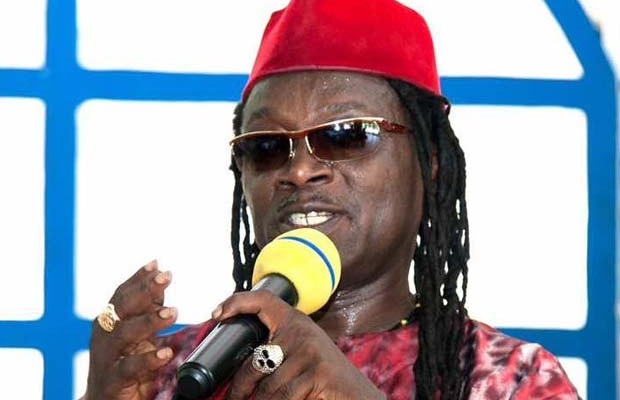
Veteran highlife musician Amandzeba has spoken about the seeming nonchalance of Ghanaians in helping promote and preserve Ghana's highlife music genre.
He told Kwame Dadzie on Joy FM's Showbiz A-Z that although highlife is rich in Ghanaian culture and has the potential to represent the country globally, Ghanaians seem to have failed in projecting it.
He made this comment while discussing UNESCO’s move in to list highlife as intangible cultural heritage.
“Collectively, we seem to have failed. We normally trivialize our heritage, everything. The Chinese can make our kente, they can do anything at all with our own heritage and then we sit in silence and keep admiring them while we know that we have the thing and must be developed here.
It’s just like music. When we had highlife, right from the outset, it affected everybody along the coast even all the way to Zaire, Congo and other places. Take the likes of Fela Kuti, Miriam Makeba, Hugh Masekela. They were here [because of highlife]," he said.
He also recounted that a lot of music stars across the world keep asking what Ghanaians are doing to project the highlife genre.
According to Amandzeba, while National Folkore Board is working at making UNESCO list highlife as intangible cultural heritage is commendable, the media must also take the responsibility to make sure the genre lives on.
A few weeks ago, Ama Serwah Nerquaye-Tetteh, the Secretary General of the Ghana Commission for UNESCO, mentioned that highlife will be listed by UNESCO as Ghana’s intangible heritage soon.
This comes after series of engagements and conferences organised by the Ghana Folklore Board and the Ghana Cultural Forum to discuss plans by which Ghana’s highlife can be listed as a UNESCO’s list of Intangible Cultural Heritage (ICH).
An intangible cultural heritage (ICH) is a practice, representation, expression, knowledge, or skill considered by UNESCO to be part of a place’s cultural heritage.
Intangible heritage consists of non-physical intellectual wealth, such as folklore, customs, beliefs, traditions, knowledge, and language.
Intangible cultural heritage is considered by member states of UNESCO in relation to the tangible World Heritage, focusing on intangible aspects of culture.
Jamaica’s reggae and Congo’s rhumba are some music genres listed by UNESCO as intangible heritage.
Latest Stories
-
From Golgotha to Kwahu: The Easter Migration of the Faithful and the Faithless
2 minutes -
How the Ghanaian onion traders’ standoff with Nigeria unfolded and threatened local supply
5 minutes -
No compensation for demolished structures on 24-Hour Economy market lands — Gov’t to structure owners
13 minutes -
Financial Institutions must back local enterprises to spur growth – Deputy Minority Whip
35 minutes -
Photos: Gomoa Easter Carnival 2026 ends in a burst of colour and celebration
56 minutes -
Gomoa Easter carnival ends in colour as fashion, music and celebrity appearances light up final night
57 minutes -
Families pick Luv Fm Family Party to celebrate Easter Monday with music and more
1 hour -
Legal and procurement red flags in Ghana Gas insurance change — IMANI
2 hours -
Kaneshie footbridge rehabilitation to take up to 9 months — AMA
2 hours -
AMA confirms trading will be banned on Kaneshie footbridge after rehabilitation
2 hours -
IMANI flags procurement concerns in state insurance placements
2 hours -
Mahama’s push for visa-free Africa reflects Nkrumah’s Pan-African vision – Rashid Tanko-Computer
2 hours -
Redefining sweetness: Why our celebrations must heal, not harm
2 hours -
IMANI urges Mahama to reaffirm his 2014 directive on competitive state insurance placements
2 hours -
Maiden Katon Praise comes off at Accra Sports Stadium on April 17
3 hours